Stored water
Pools, tanks, wells, cisterns, ponds, and hot tubs may be valuable only when access, filtration, legal use, contamination risk, and delivery are reviewed.
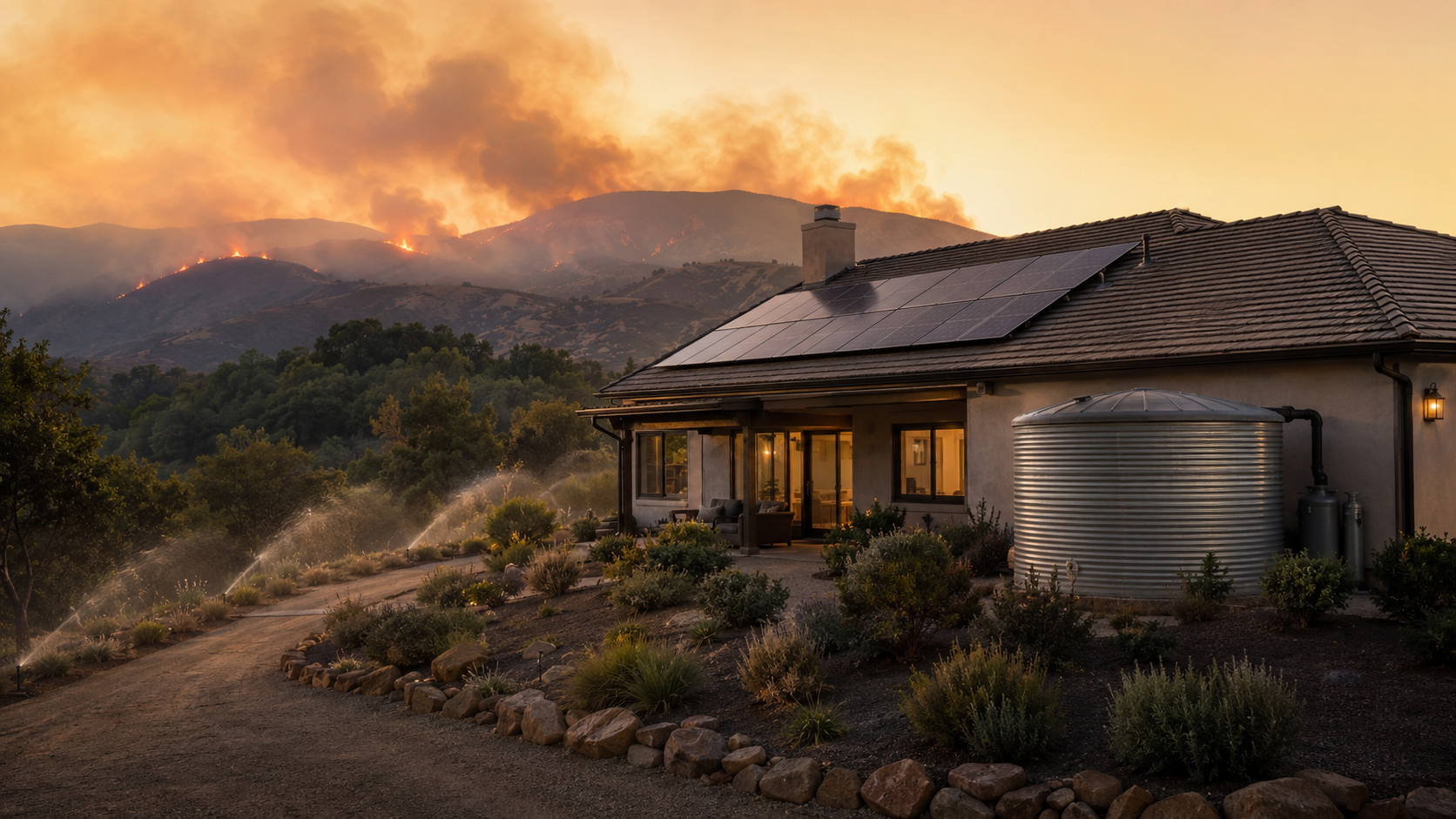
SolarFireSuppression.com is an educational preparedness concept site by ABC Solar Incorporated. It explores how stored water, pressure tanks, pumps, sprinklers, solar, and batteries may fit into a safer wildfire-readiness conversation.
Many properties already have water: pools, hot tubs, tanks, wells, cisterns, ponds, or domestic supply. Many properties also have solar, batteries, pumps, and control systems. The question is not whether these pieces exist. The question is whether they are safely planned, professionally reviewed, tested, labeled, and understood.
SolarFireSuppression.com was created to frame that conversation. It asks property owners to think about water source, pressure, pump power, sprinkler coverage, defensible space, battery runtime, manual fallback, maintenance, and evacuation discipline before fire danger arrives.
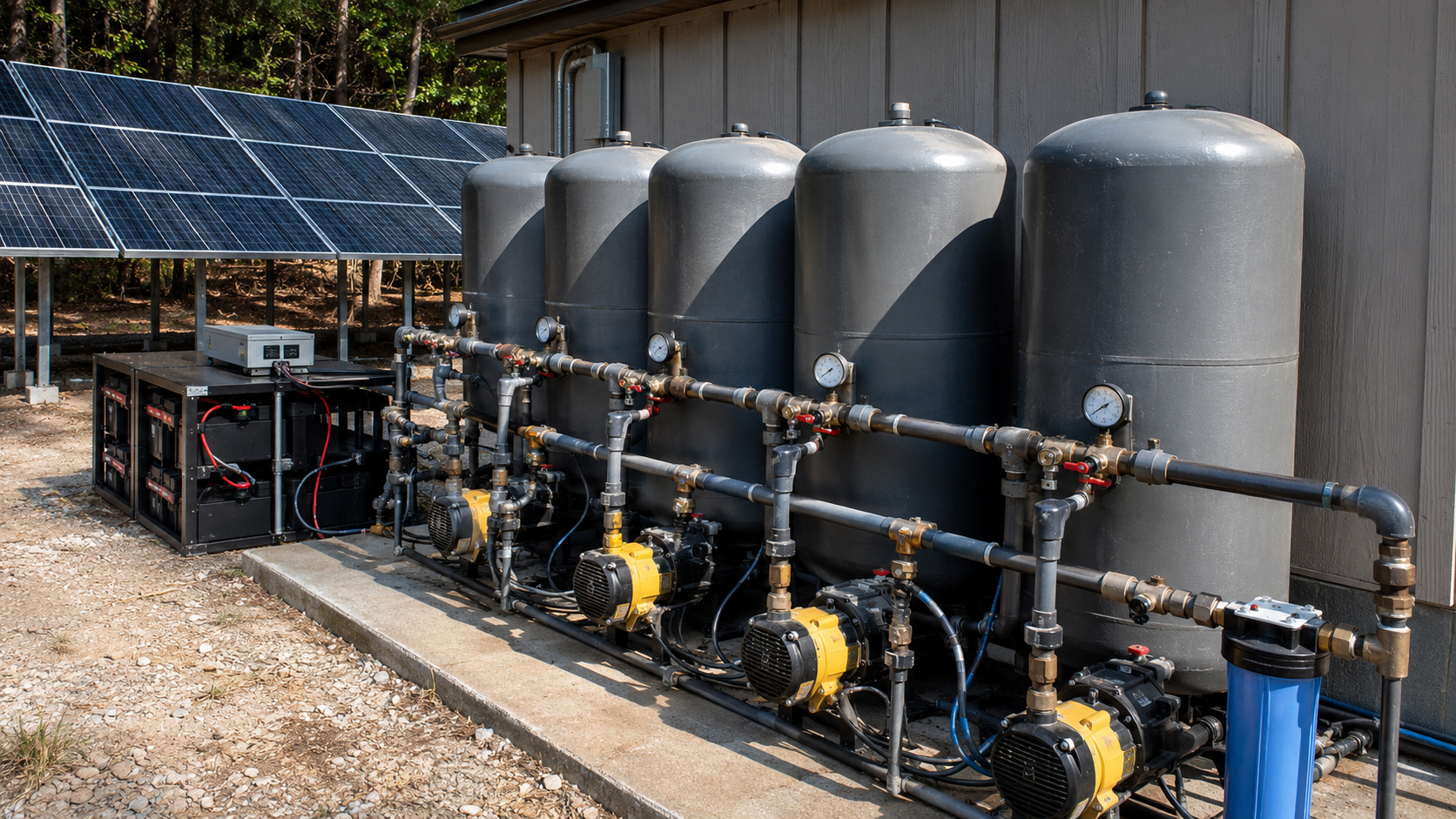
The Solar Fire Drum concept connects stored water, pressure tanks, a pump bank, solar-backed critical-load power, and controlled water delivery ideas. It is designed to provoke better planning questions, not to replace fire protection engineering.
Pools, tanks, wells, cisterns, ponds, and hot tubs may be valuable only when access, filtration, legal use, contamination risk, and delivery are reviewed.
Water readiness depends on real pressure and flow at the outlet, not confidence from a gauge, pump label, hose, or tank alone.
Solar and batteries may support selected pump and control loads, but only with proper sizing, critical-load planning, code-compliant wiring, and professional review.
ABC Solar Incorporated brings practical solar and battery experience to the energy side of the topic: panels, inverters, batteries, critical-load planning, pump circuits, blackout resilience, and safe power design.
Fire suppression, plumbing, pressure systems, sprinkler systems, and wildfire protection design require the right licensed professionals and local authority review. SolarFireSuppression.com does not blur that responsibility.
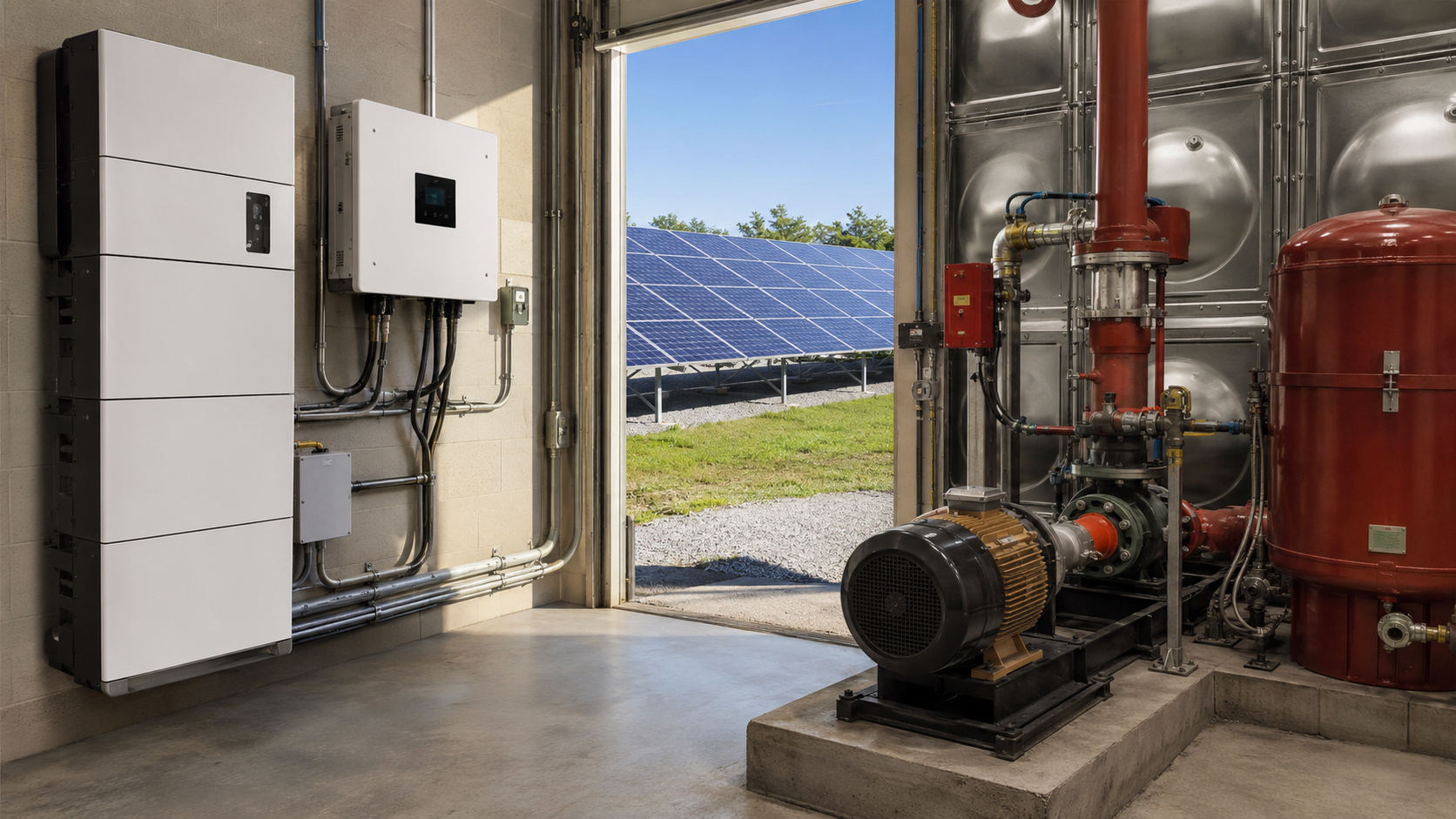
The site repeats one principle across serious pages and manga episodes: if one link fails, the system may fail.
The source must be identified, legal, accessible, filtered when needed, protected from contamination risk, and sufficient for the intended duration.
The useful question is not what the pump says or what the gauge shows. The useful question is what water reaches the actual outlet under real conditions.
If a pump is part of readiness, then startup surge, runtime, inverter capacity, battery reserve, wiring, transfer safety, and manual fallback are part of readiness.
Water should support clearing, home hardening, gutter cleaning, ember-risk reduction, and maintenance. It should not compensate for unmanaged fuel.
Equipment is never worth a life. Evacuation orders, emergency alerts, law enforcement instructions, and fire authority guidance override everything.
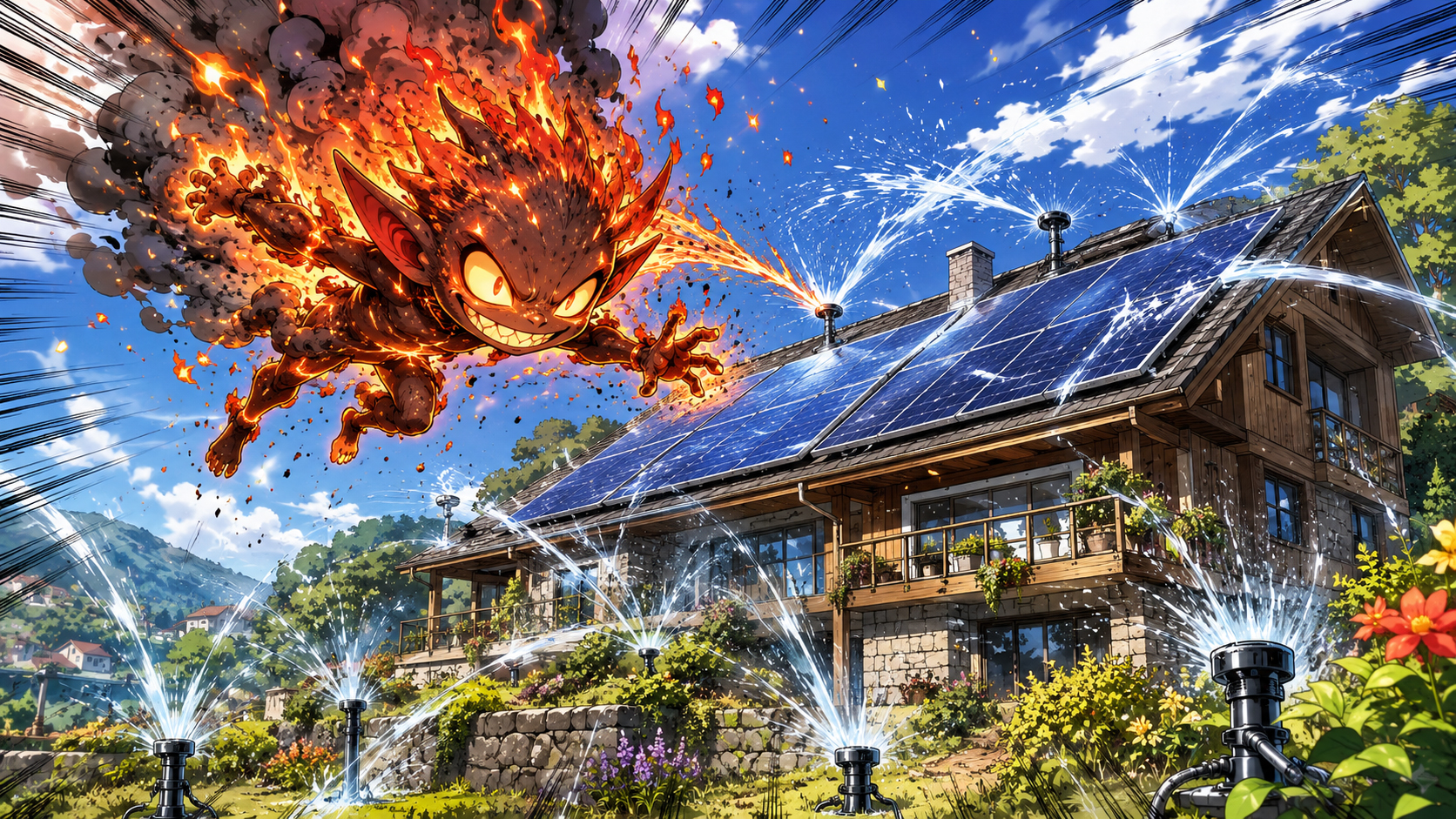
The manga side of the site gives technical ideas a memory hook. Ember Goblin teaches ember risk. Pressure Tank Sensei teaches stored pressure. Pool Dragon Reservoir teaches water access. Battery Beast teaches pump runtime. Permit Goblin reminds everyone that paperwork can be safety.
The comedy is not there to make wildfire casual. It is there to make the core lessons stick: test before fire season, remove fuel, respect pressure, size pump backup correctly, and leave when told to leave.
The site is written for people who want to ask better questions before they spend money, install equipment, or assume they are ready.
Especially homeowners with pools, hot tubs, hillside exposure, solar, batteries, backup systems, or wildfire concerns.
Properties with wells, tanks, ponds, barns, animals, gates, long driveways, weak utility water, and longer response times.
Solar, battery, pump, plumbing, fire, and preparedness professionals who want a clear language bridge for safer client conversations.
The central concept: pressure tanks, pumps, stored water, and solar-backed readiness.
Pools, tanks, wells, cisterns, ponds, and hot tubs as preparedness questions.
How critical-load planning connects water readiness to real electrical design.
The final rule: preparedness must never become false courage.