Before the event
Fill tanks, test pumps, charge batteries, clear gutters, remove combustibles, stage hoses, verify labels, and confirm evacuation routes before fire danger peaks.
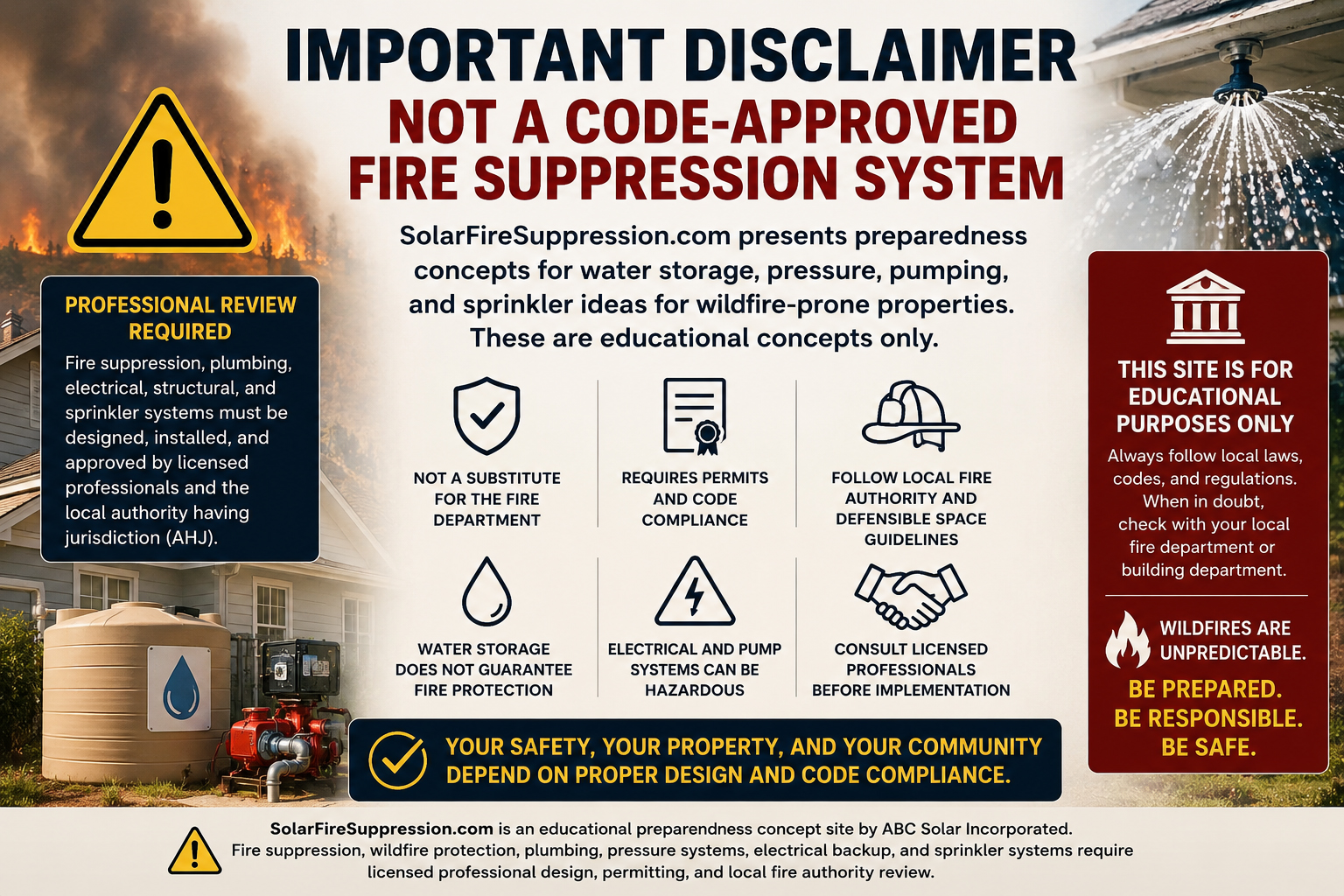
Stored water, pressure tanks, pumps, sprinklers, solar backup, and hoses can support preparation. They must never become a reason to ignore evacuation orders, wait too long, or take unsafe risks during wildfire conditions.
A water readiness system is useful only when it improves pre-fire preparation and supports safer decisions. If it makes someone feel brave enough to stay behind during dangerous conditions, it has become part of the problem.
The safest time to use preparedness equipment is before the emergency window becomes dangerous: clear debris, test pumps, fill tanks, charge batteries, label valves, stage hoses, and leave when instructed.
Fill tanks, test pumps, charge batteries, clear gutters, remove combustibles, stage hoses, verify labels, and confirm evacuation routes before fire danger peaks.
Do only safe, quick, pre-planned actions. Avoid roof work, wet electrical work, risky pump changes, ladder use, hose tangles, and last-minute improvisation.
Leave. Water equipment, solar backup, batteries, pressure tanks, sprinklers, and cameras are not reasons to delay when authorities say to go.
The most dangerous failure is not always a broken pump. Sometimes it is false confidence: “I have tanks.” “I have solar.” “I have sprinklers.” “I can wait a little longer.”
Fire, wind, embers, smoke, road closures, falling power lines, blocked driveways, and panic do not respect equipment lists. Readiness should make departure cleaner, not later.
These are preparedness prompts, not emergency instructions. The emergency instruction is to follow authorities.
Pre-fill tanks, charge batteries, close valves, stage hoses, wet selected zones, test pump readiness, and clear debris only when there is time and conditions are safe.
A last-line readiness system should not require a homeowner to stand outside in smoke, climb a roof, hold a hose, restart pumps, troubleshoot Wi-Fi, or guess which valve matters.
Valves, breakers, disconnects, pressure gauges, pump controls, and emergency notes should be clear. Confusion during an evacuation window wastes time and increases danger.
Hoses, cords, tanks, trailers, vehicles, gates, and equipment should not block driveways, walkways, animal loading, or emergency vehicle access.
If authorities issue evacuation instructions, the water system’s job is over. Human life, family safety, animal evacuation, and emergency access come first.
Ranches, hillside homes, cabins, and remote properties may have longer evacuation routes, private gates, animal trailers, narrow roads, poor visibility, and limited response access. Those conditions make early decisions more important.
Water readiness can support pre-event preparation: fill tanks, confirm pump backup, clear around barns, stage trailers, label hose stations, and verify gates. But if smoke is visible, roads are threatened, or alerts escalate, the priority shifts to departure.
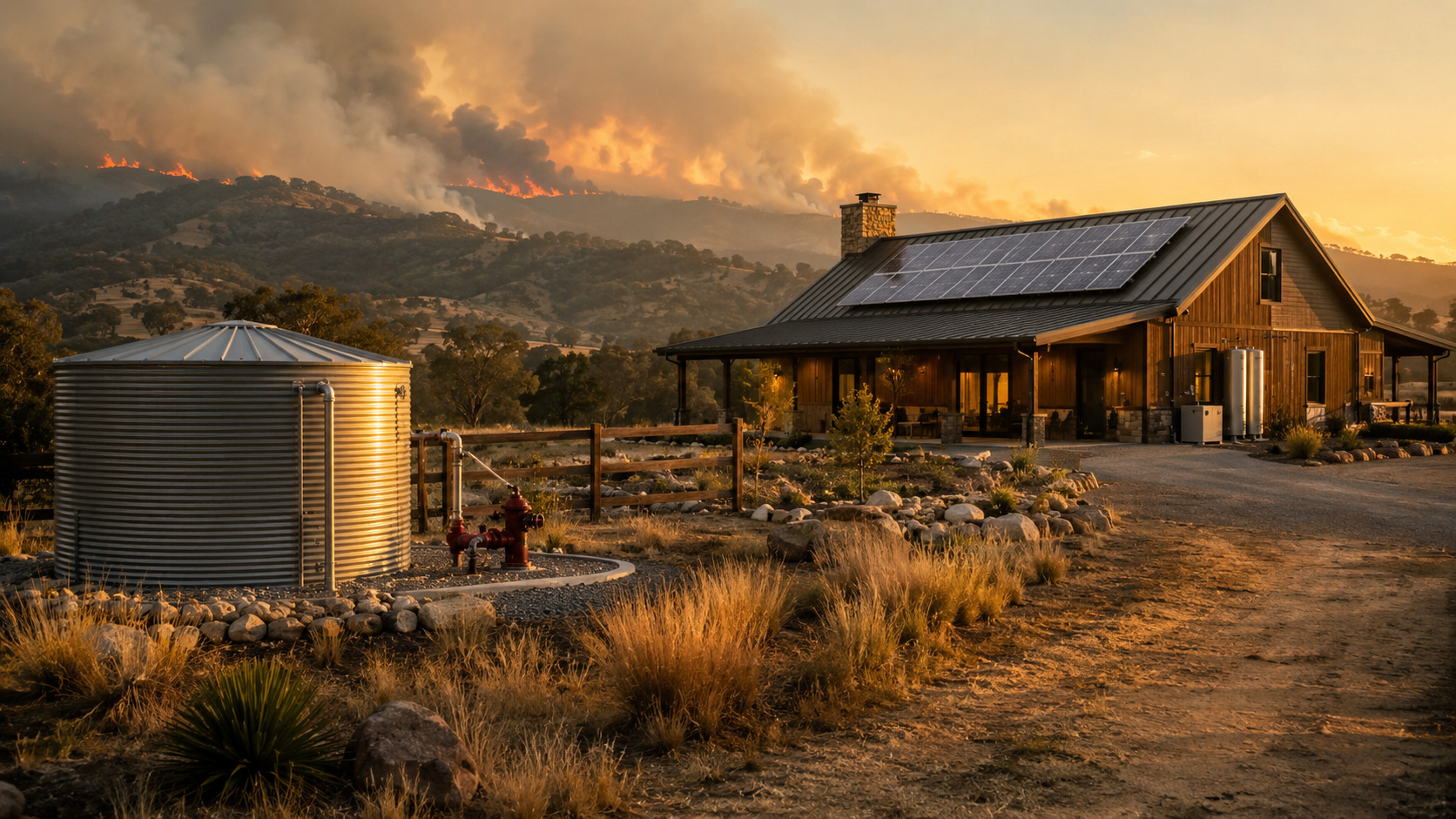
Sprinklers can clog, miss the target, lose pressure, run out of water, lose power, or be overwhelmed by wind and embers.
Batteries can be drained by other loads, limited by inverter surge, affected by heat, or unable to run the pump as expected.
Roads can close quickly because of fire, smoke, falling lines, accidents, emergency traffic, or law enforcement control.
Five minutes can disappear into smoke, panic, animals, locked gates, bad visibility, missing keys, or blocked exits.
Apps, routers, cloud services, cell towers, and Wi-Fi can fail. Manual fallback is useful, but evacuation still comes first.
Batteries age, pumps seize, filters clog, hoses crack, valves stick, labels fade, and vegetation grows back.
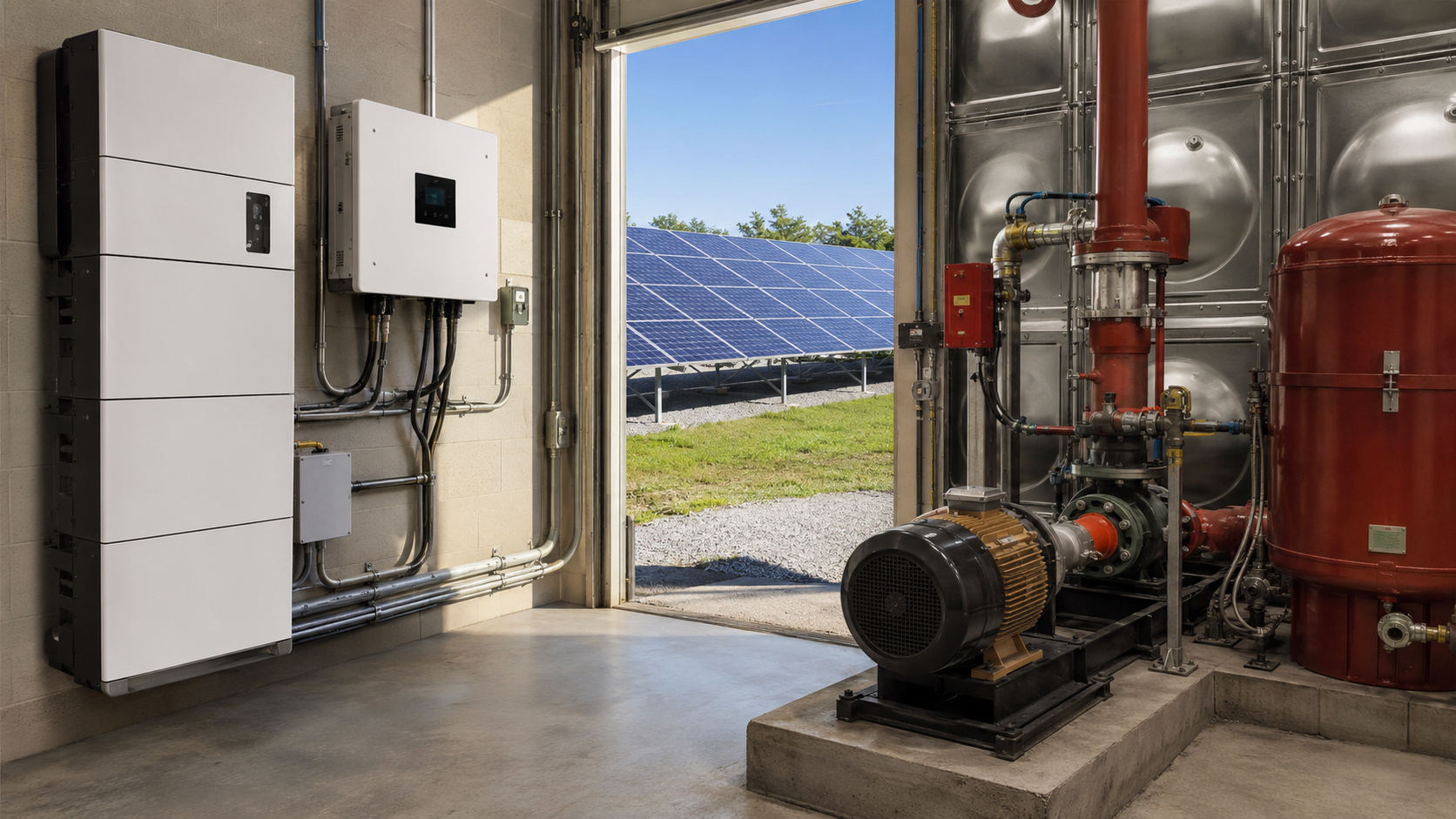
Timers, Wi-Fi valves, pressure sensors, battery monitors, and remote controls may help pre-event readiness. But emergency equipment should not depend entirely on internet service, cloud access, phone battery, or a homeowner remaining nearby.
Who leaves first? Where do they go? Are go-bags ready? Are pets, horses, livestock, trailers, medications, documents, and contact plans handled before smoke arrives?
Are gates openable? Are keys available? Are roads clear? Are vehicles fueled? Are hoses, cords, tanks, and trailers positioned so they do not block departure?
Are tanks filled, pumps tested, batteries charged, filters clean, valves labeled, and selected zones ready before dangerous conditions begin?
What is the trigger to leave? Official evacuation order, warning level, visible smoke, road-risk threshold, animal-loading time, or family safety decision? Decide early.
The full “not a code-approved fire suppression system” explanation.
How water readiness supports clearing, hardening, and ember-risk reduction.
Remote property water, access, animal, and pump planning.
Critical-load planning for pump power during outage conditions.