Solar generation
Solar can help recharge batteries and support daytime loads, but wildfire conditions may include smoke, ash, clouds, heat, grid shutdowns, and reduced production.
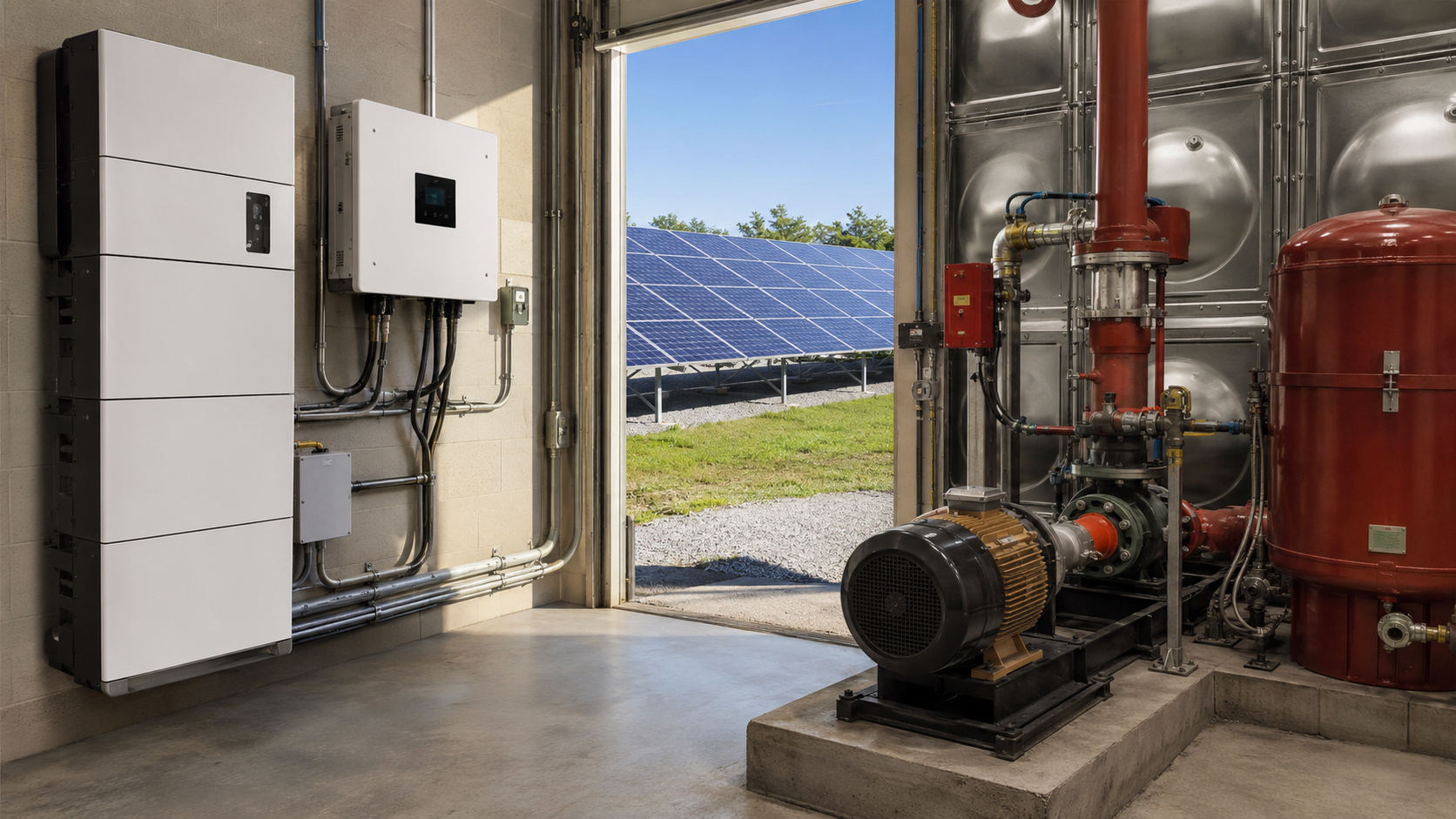
Stored water is only useful if it can move. A solar and battery system can support selected pump and control loads during outages, but pump backup must be engineered around real startup surge, runtime, voltage, wiring, transfer equipment, and safety requirements.
A pump is backed up only when it is intentionally placed on a properly designed critical-load path. That means the inverter, battery, wiring, breakers, disconnects, grounding, controls, and transfer method are all designed for the pump’s actual electrical behavior.
A water system can fail electrically before it fails hydraulically. The pump may be correct, the tank may be full, and the hose may be ready — but if the circuit is dead, the water stays put.
Solar can help recharge batteries and support daytime loads, but wildfire conditions may include smoke, ash, clouds, heat, grid shutdowns, and reduced production.
Batteries provide usable energy during outages, but runtime depends on pump draw, surge, battery capacity, inverter efficiency, temperature, age, and other critical loads.
Pumps can start hard. An inverter that runs lights and Wi-Fi may not start a pump. Surge ratings and continuous ratings must be matched to real equipment.
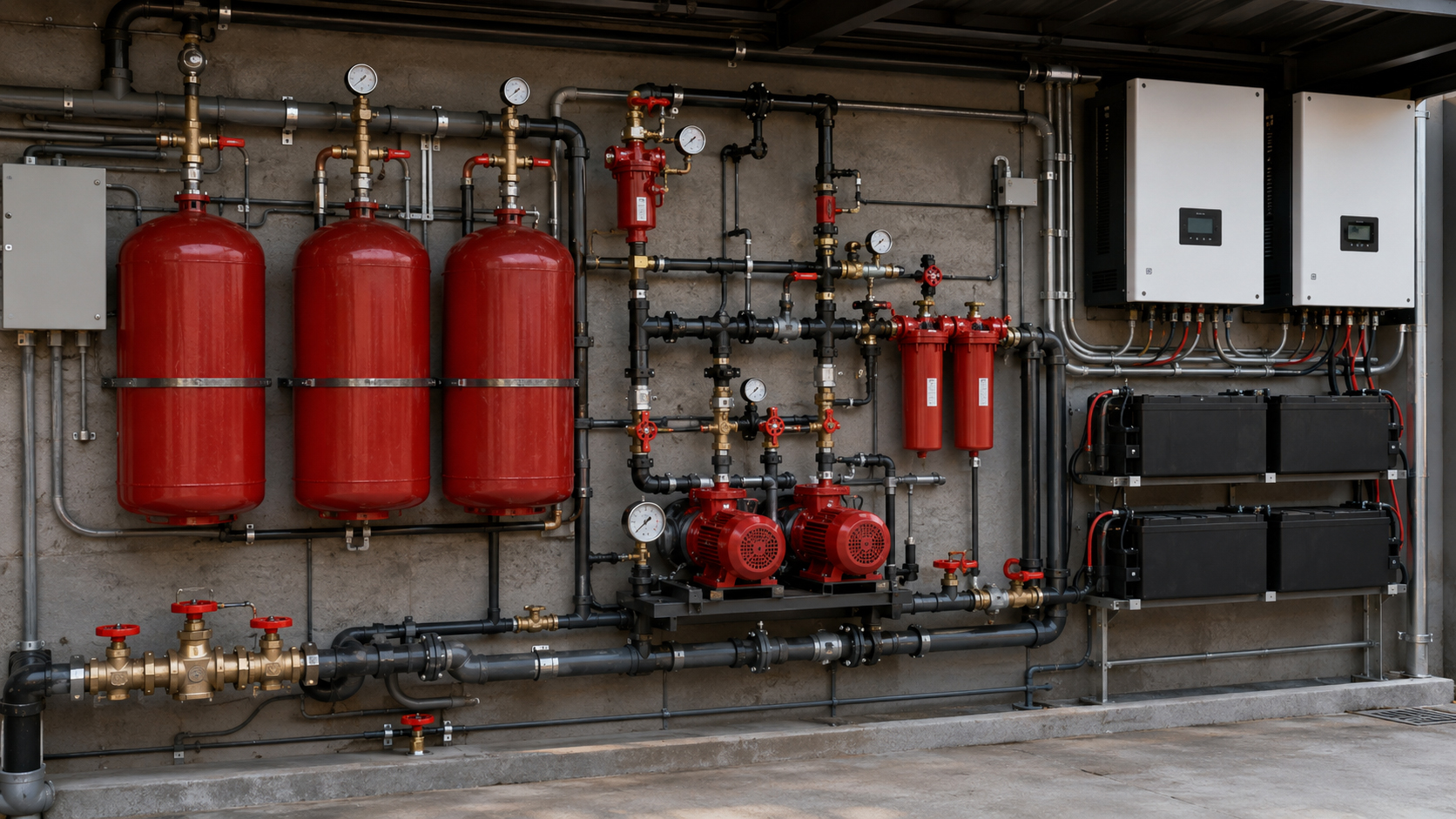
Emergency pump backup should not depend on extension cords, improvised generator plugs, unlabeled breakers, mystery switches, or wet-location mistakes. The system should be obvious, serviceable, inspectable, and safe.
These are planning prompts for licensed solar, battery, electrical, plumbing, and fire protection professionals. They are not installation instructions.
Record pump voltage, phase, horsepower, running watts, starting surge, duty cycle, control requirements, pump curve, and whether the pump is expected to run continuously or intermittently.
Decide what “backup” means. Fifteen minutes for pressure recharge is different from hours of sprinkler operation. Battery size and inverter choice depend on the actual required runtime.
The pump, controls, communications device, sensors, and selected outlets may need a dedicated critical-load plan. Large non-critical loads can drain batteries and defeat the emergency purpose.
Backup systems must prevent unsafe backfeed, protect utility workers, protect equipment, and comply with electrical code. Transfer equipment, disconnects, breakers, grounding, and labels matter.
A backup pump system should be tested with the real pump, real water source, real hose or sprinkler, real elevation, real battery state, and realistic runtime. Paper ratings are not enough.
Solar panels are valuable, but wildfire smoke, ash, heat, and grid shutdown conditions can reduce practical performance. A battery-backed pump plan should not assume perfect solar production during the exact emergency window.
Good planning treats solar as part of the system and batteries as the immediate reserve. The design should consider pre-charging, battery state of charge, dedicated emergency loads, and how long the pump must operate without strong sunlight.
A backup system may look impressive on the wall while failing the actual emergency job.
Pumps often require much more power to start than to run. Surge demand can trip or overload undersized backup equipment.
Refrigerators, air conditioning, pool equipment, chargers, and house loads can consume emergency battery capacity.
Improvised backfeed, wrong cords, wet plugs, and missing transfer equipment can create shock, fire, and utility-worker hazards.
App control is useful until internet, router power, phone service, or cloud access fails. Manual fallback should be part of the discussion.
Pump backup often lives near water. Electrical equipment, conduits, outlets, and controls must be selected for the environment.
Batteries age, firmware changes, breakers trip, pumps seize, and labels fade. Testing before fire season is essential.
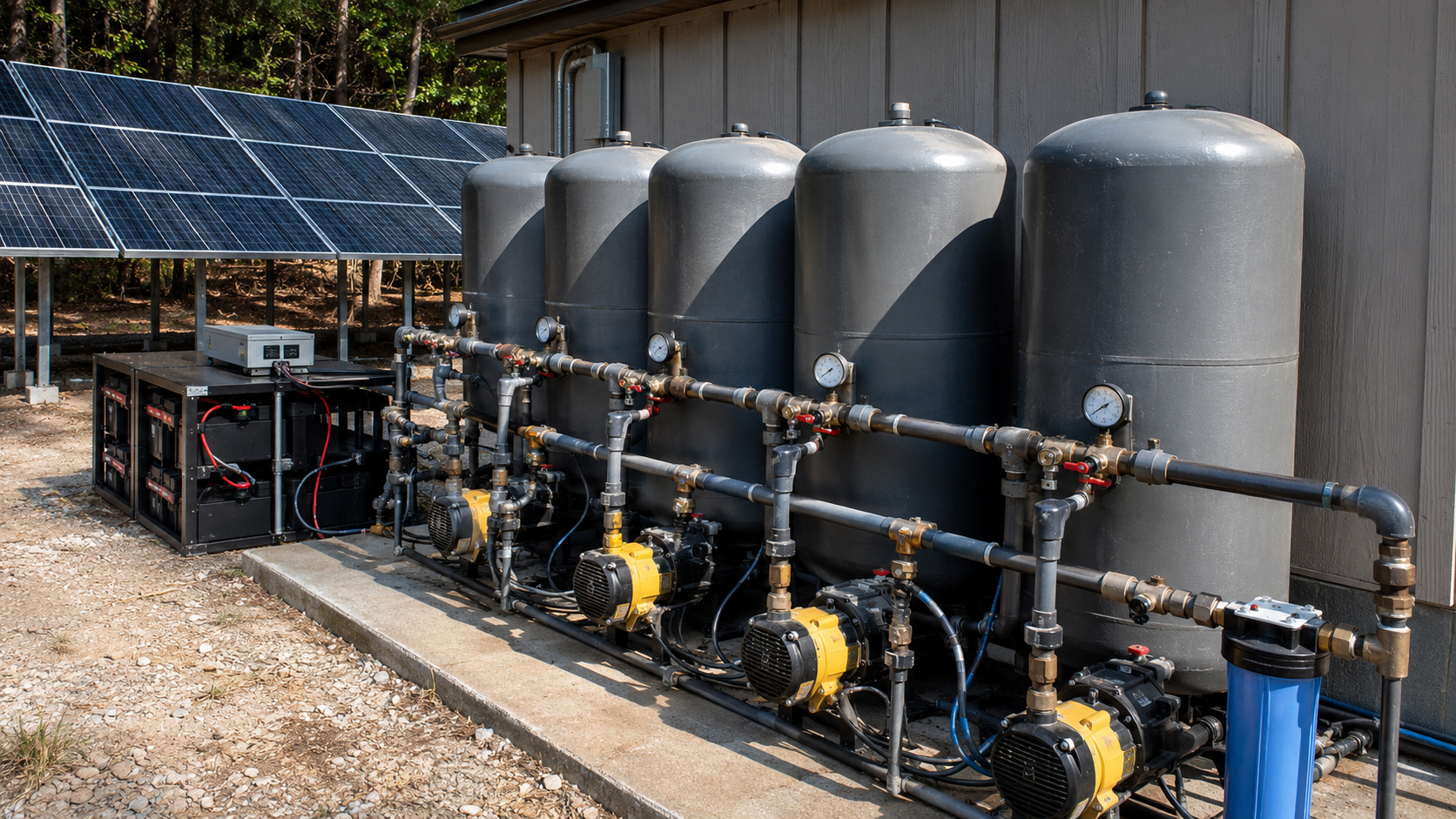
In the Solar Fire Drum concept, the pressure tanks may provide immediate stored pressure, but pumps are still needed to recharge pressure, move water, run selected zones, or support refill.
That makes pump backup central to the concept. The water system and the electrical system must be designed together, not glued together after the fact.
What are the pump voltage, running watts, starting surge, phase, horsepower, duty cycle, controller load, and expected run pattern?
How many minutes or hours must the pump operate? What other loads are on the battery? What battery reserve should remain after operation?
Are breakers, wire, disconnects, transfer equipment, grounding, labels, surge protection, and wet-location protections correct for the system?
Can the system be operated if Wi-Fi fails, the app fails, the router is down, or the homeowner is not present? Are instructions clear and visible?
The pressure-tank, pump-bank, and solar-backed water readiness concept.
Flow, pressure, pump duty cycle, tank ratings, and safe mechanical design.
Roof, yard, ember-zone, and perimeter water delivery concepts.
Why evacuation discipline remains the controlling rule.