Pools and spas
Pools may hold thousands of gallons, but using that water requires safe suction planning, proper pump intake, debris protection, electrical safety, and clear emergency procedures.
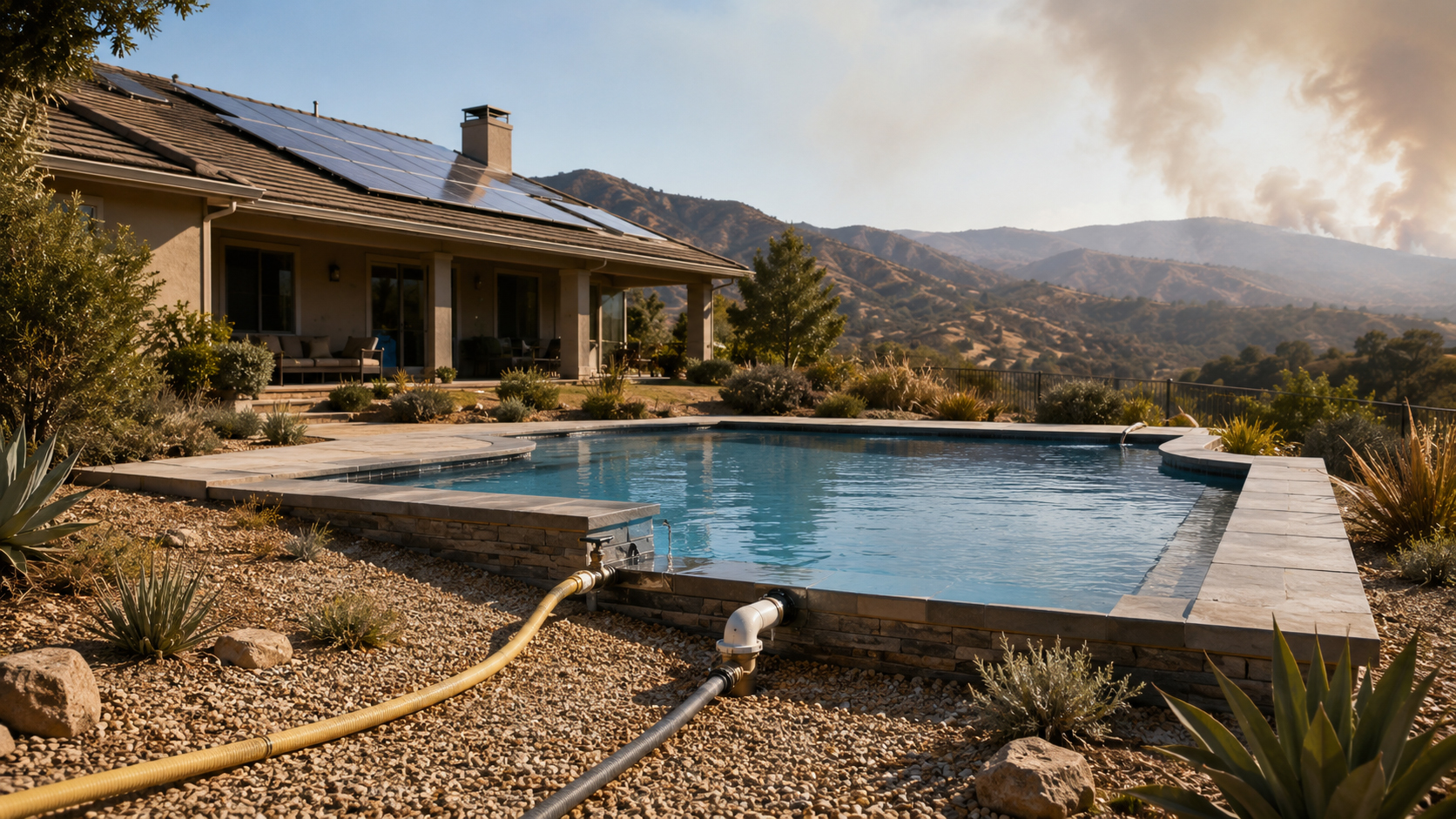
Pools, spas, tanks, wells, cisterns, and ranch reservoirs may hold useful water. The real question is whether that water can be accessed safely, legally, and reliably before fire danger arrives.
Stored water only helps when it is planned before the emergency. A pool full of water, a ranch tank, or a cistern can still be useless if the pump has no power, the intake clogs, the hose is too small, the elevation loss is too great, or the connection creates an unsafe plumbing condition.
A good readiness plan treats each water source honestly. Quantity matters, but so do access, cleanliness, pumping limits, legal use, and safety.
Pools may hold thousands of gallons, but using that water requires safe suction planning, proper pump intake, debris protection, electrical safety, and clear emergency procedures.
Above-ground tanks, buried tanks, and ranch tanks can be designed for emergency access, but they still need structural support, pipe sizing, fittings, valves, freeze/heat exposure review, and maintenance.
Wells and domestic supplies may fail during outages or heavy demand. Pump backup, utility pressure, backflow prevention, and local rules must be reviewed before relying on them.
Rainwater storage may help in some locations, but rules vary. Water quality, sediment, mosquito control, tank access, and cross-connection concerns must be managed.
Ranch ponds and small reservoirs may offer volume, but mud, algae, elevation, distance, priming, hose friction, and pump suction limits can become the real problem.
Improvised emergency connections are dangerous. Fire-season planning should happen in advance, with proper parts, labels, valves, training, and professional review.
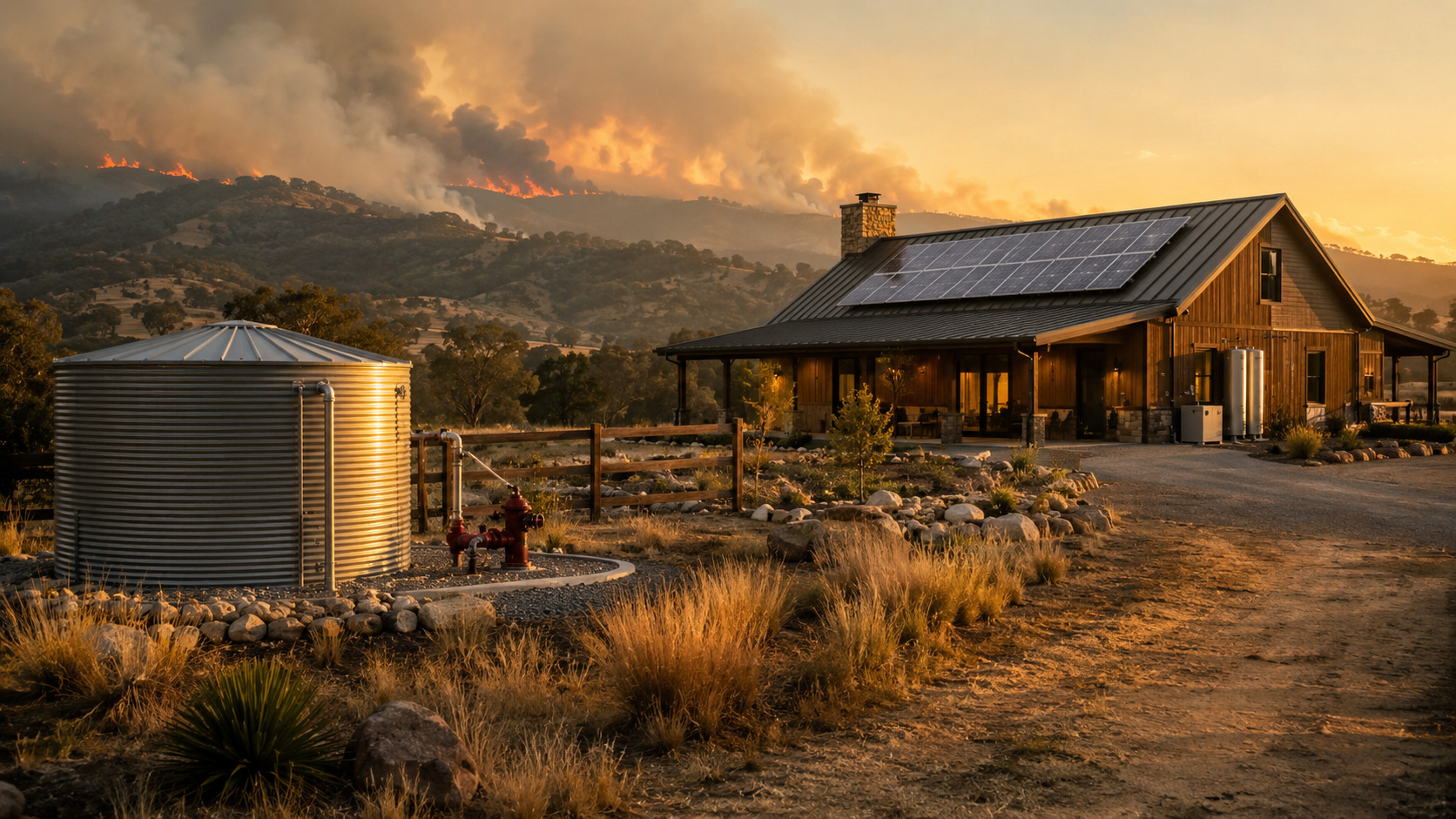
Stored water needs a delivery path. That path includes intake, filter, pump, power, pipe, valve, pressure tank, hose, sprinkler, nozzle, and a person or control system that knows what to do.
If one link fails, the system may not deliver water when it matters. These steps are planning prompts, not a construction design.
Identify the source, usable volume, refill method, seasonal limitations, contamination risks, and whether the water may legally be used for emergency preparedness.
Pool drains, skimmers, suction lines, pond pickups, and tank outlets can create hazards. Intake design must prevent clogging, air ingestion, unsafe suction, and contamination pathways.
Pumps need filtration, priming, correct voltage, dry-run protection, duty-cycle review, thermal protection, and enough battery or generator support to run when utility power is unavailable.
Pressure at the pump is not pressure at the sprinkler. Pipe length, hose length, elevation, fittings, valves, filters, and nozzle size can consume the pressure before water reaches the target.
Stored water should support defensible-space work, pre-wetting concepts where appropriate, equipment protection, and responsible preparedness. It should never encourage someone to ignore evacuation.
A swimming pool can hold more water than many homeowners realize. But pool water use for emergency readiness should be planned with suction safety, electrical isolation, pump access, filter protection, and local requirements.
A bad connection can damage equipment, create shock hazards, introduce cross-contamination, starve the pump, or deliver a weak spray pattern that looks impressive but fails under fire conditions.
A tank or pool may contain water, but not all water is practically reachable at useful flow and pressure.
Long hoses, small pipes, filters, elbows, check valves, and elevation can dramatically reduce delivery.
The best stored water plan can fail if the pump, controller, valve, or pressure system loses power.
Cross-connection and contamination risks are serious. Domestic water systems need proper protection.
Valves seize, pumps fail, filters clog, batteries age, hoses crack, and labels fade unless the system is inspected.
Local fire, building, plumbing, electrical, and insurance requirements may affect what is allowed.
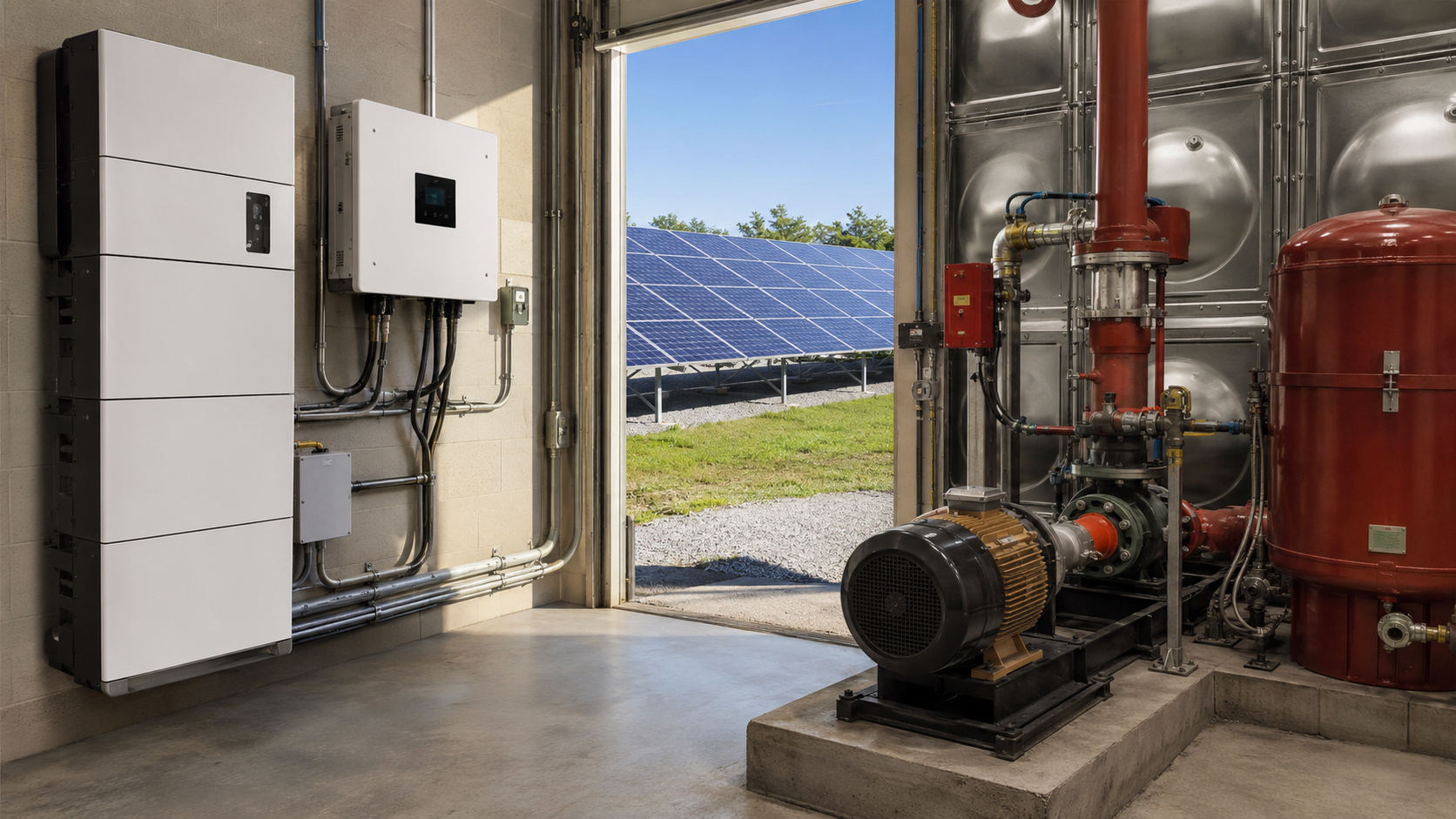
Wildfire preparation often overlaps with power shutoffs, outages, and damaged utility infrastructure. Solar and batteries can support selected pump and control loads when designed as a permitted critical-load system.
Pump startup surge, voltage, run time, inverter capacity, battery size, wire length, transfer method, disconnects, grounding, labeling, and emergency access all need professional review.
Pressure tanks, pump banks, stored water, and solar-backed readiness.
Flow, pressure, pump limits, tank ratings, and safe delivery planning.
Roof, yard, ember-zone, and perimeter delivery concepts.
How water readiness can support defensible-space work without replacing it.