Pressure
Pressure is the force available to move water. It must be controlled, measured, relieved safely, and kept within the ratings of tanks, pipe, pumps, valves, and fittings.
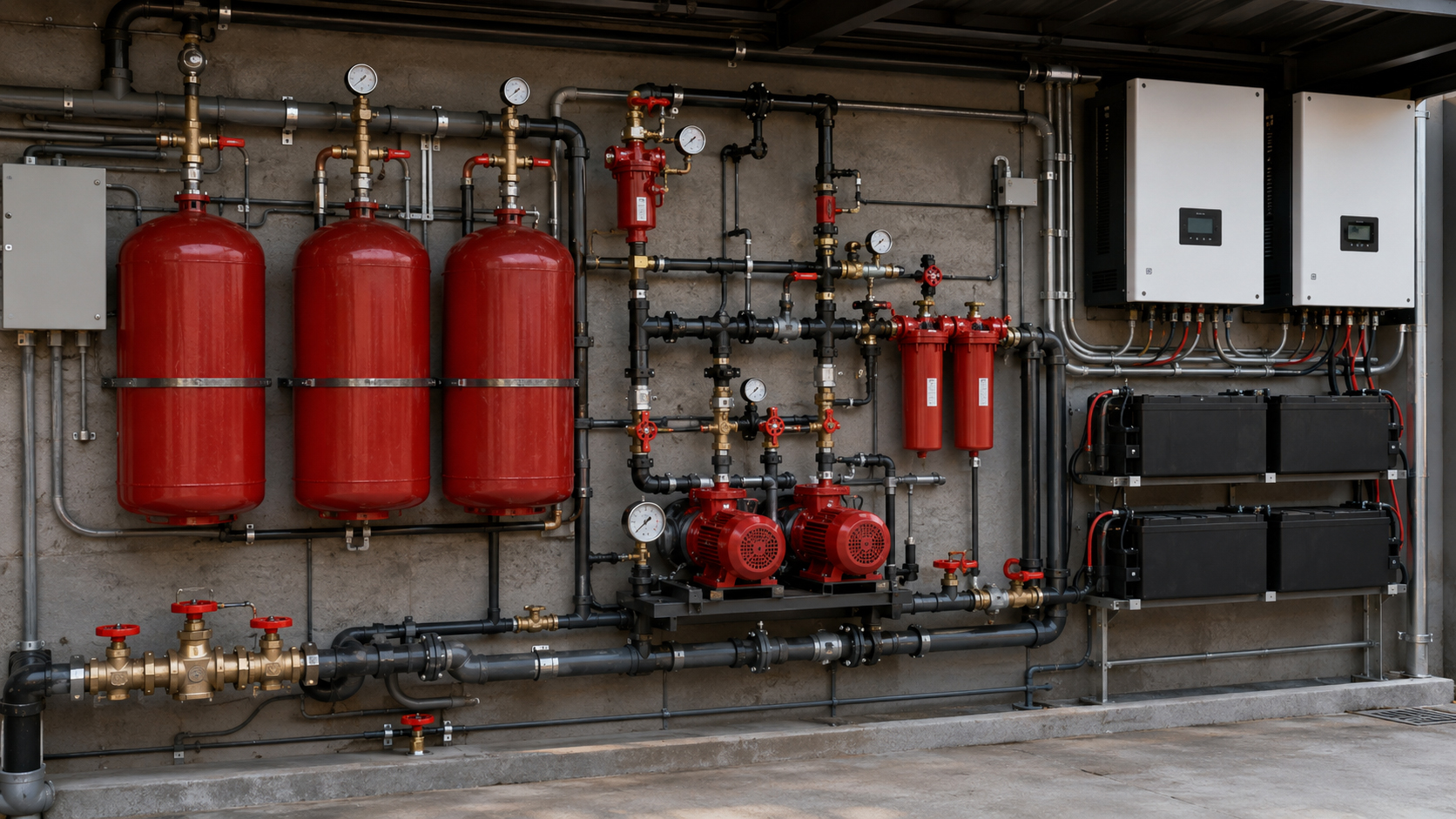
Water readiness is not only about gallons. It is about safe stored pressure, pump capacity, real flow at the outlet, electrical backup, valves, controls, maintenance, and professional review.
Pressure tanks can make water available quickly. That is the attraction. But the same stored energy that makes pressure useful also makes pressure dangerous when tanks, fittings, pipe, gauges, valves, or controls are wrong.
A gauge can show impressive pressure while the actual sprinkler or hose still receives poor flow. Real performance depends on the whole path from water source to outlet.
Pressure is the force available to move water. It must be controlled, measured, relieved safely, and kept within the ratings of tanks, pipe, pumps, valves, and fittings.
Flow is the amount of water delivered over time. Fire readiness may require sustained flow, not just a short burst from a pressurized tank.
Long hoses, small pipes, elbows, filters, valves, elevation, and nozzles can consume pressure before water reaches the place it is needed.
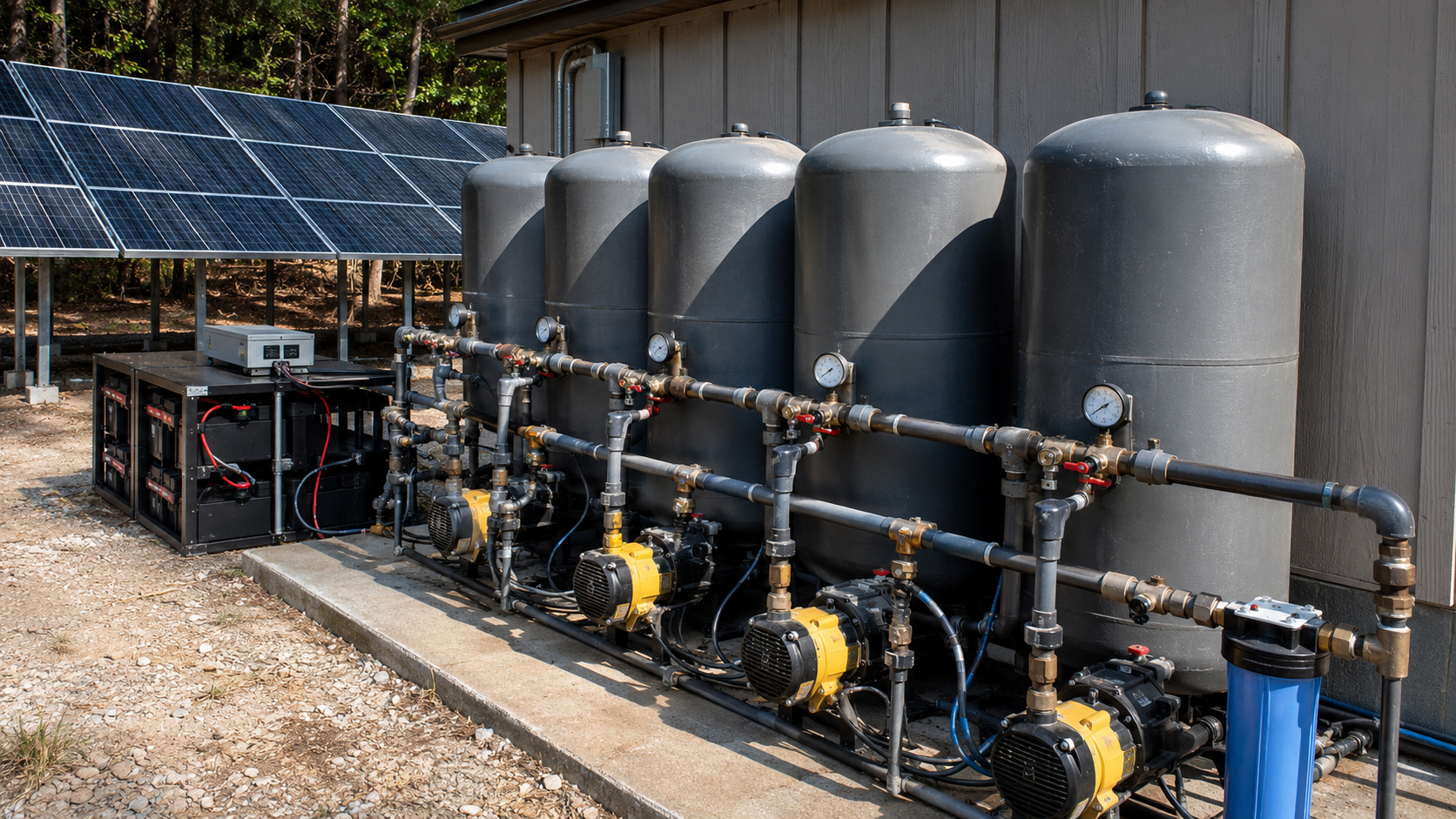
A reviewed pump bank can provide redundancy, staged operation, and easier service. But pump banks also add controls, check valves, wiring, filters, fittings, and failure points.
The planning goal is not “more pumps.” The goal is correct flow, correct pressure, correct runtime, safe electrical support, and serviceable design.
Fire-season equipment should not be a tangle of mystery valves and extension cords. A useful system is understandable before the emergency.
Do not begin with the pump catalog. Begin with the actual job: how much water must be delivered, at what pressure, through what hose or sprinkler, at what elevation, for how long.
Calculate loss through nozzles, sprinklers, hoses, pipe, fittings, filters, valves, backflow devices, elevation, and intake. The pump must overcome the real system, not the imaginary one.
Pumps can be damaged by debris, air, heat, dry running, incorrect voltage, blocked discharge, and excessive cycling. Filters, controls, sensors, and maintenance access matter.
Pressure tanks need correct ratings, isolation valves, pressure gauges, relief valves, mounting, corrosion review, freeze/heat exposure review, and safe access for inspection.
Pumps can require high startup current. Batteries, inverters, breakers, wire, disconnects, grounding, labels, and transfer equipment must be sized and permitted for the actual load.
Wildfire events often overlap with power shutoffs and utility failures. A solar and battery system can support selected pump and control circuits, but only if the loads are engineered as critical loads.
Pump startup surge, battery runtime, inverter capacity, transfer method, weather exposure, disconnects, labeling, and emergency access should be part of the design conversation.
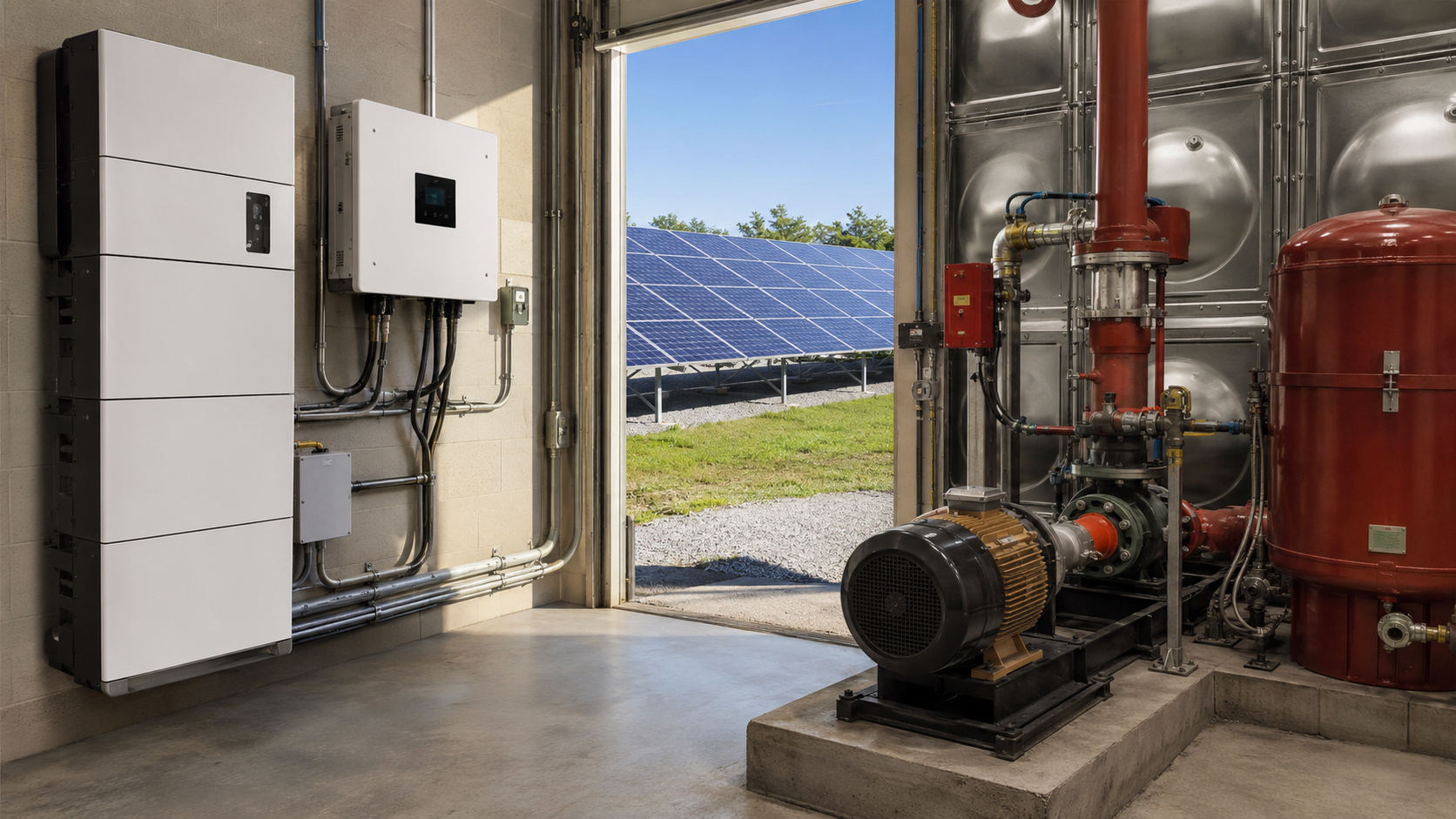
Horsepower alone does not describe flow, pressure, head, duty cycle, voltage, startup surge, or actual field performance.
Pumps do not magically pull water from any source. Suction lift, air leaks, intake clogging, priming, and line diameter can ruin performance.
Hose diameter and length can dominate pressure loss. A long undersized hose can turn a strong pump into a disappointing trickle.
Any pressurized system needs safe pressure management. Relief devices must be correctly selected, installed, and routed.
A pump system that has not been tested may not prime, hold pressure, switch correctly, or run when the emergency arrives.
Extension cords, undersized circuits, unpermitted wiring, wet locations, and wrong transfer methods can create shock and fire hazards.
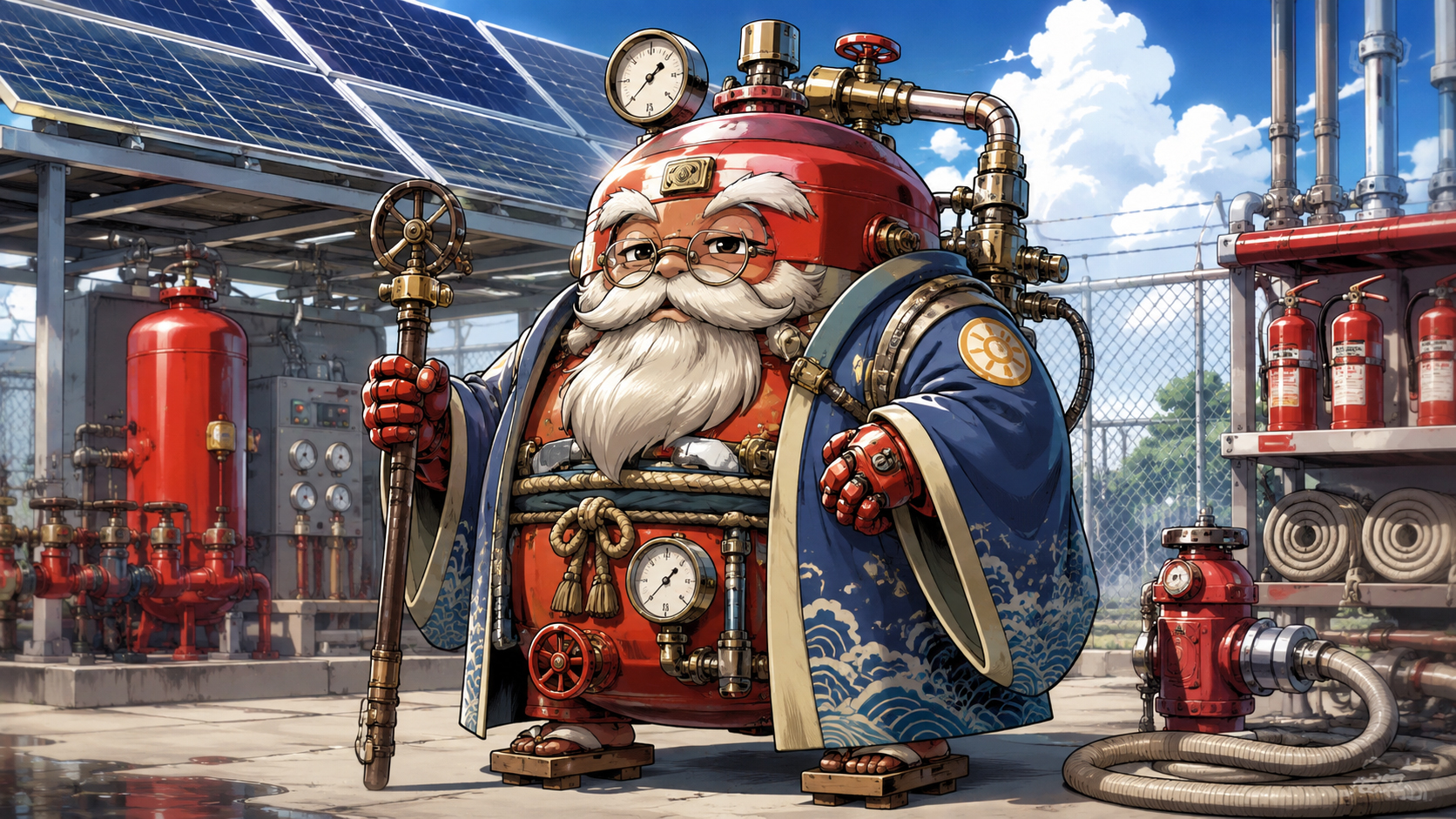
Pressure Tank Sensei teaches the core lesson: a gauge reading is not a fire plan. The system must deliver useful water safely at the actual point of use.
The full concept: stored water, pressure tanks, pump bank, and solar backup.
Pools, tanks, cisterns, wells, ponds, and water-source planning.
Roof, yard, ember-zone, and perimeter water delivery concepts.
Critical-load planning for pumps, control circuits, and outage conditions.