Sitemap
All pages.
Browse the SolarFireSuppression.com concept pages, manga episodes, safety notices, FAQ, contact, privacy, license, and disclaimer pages.
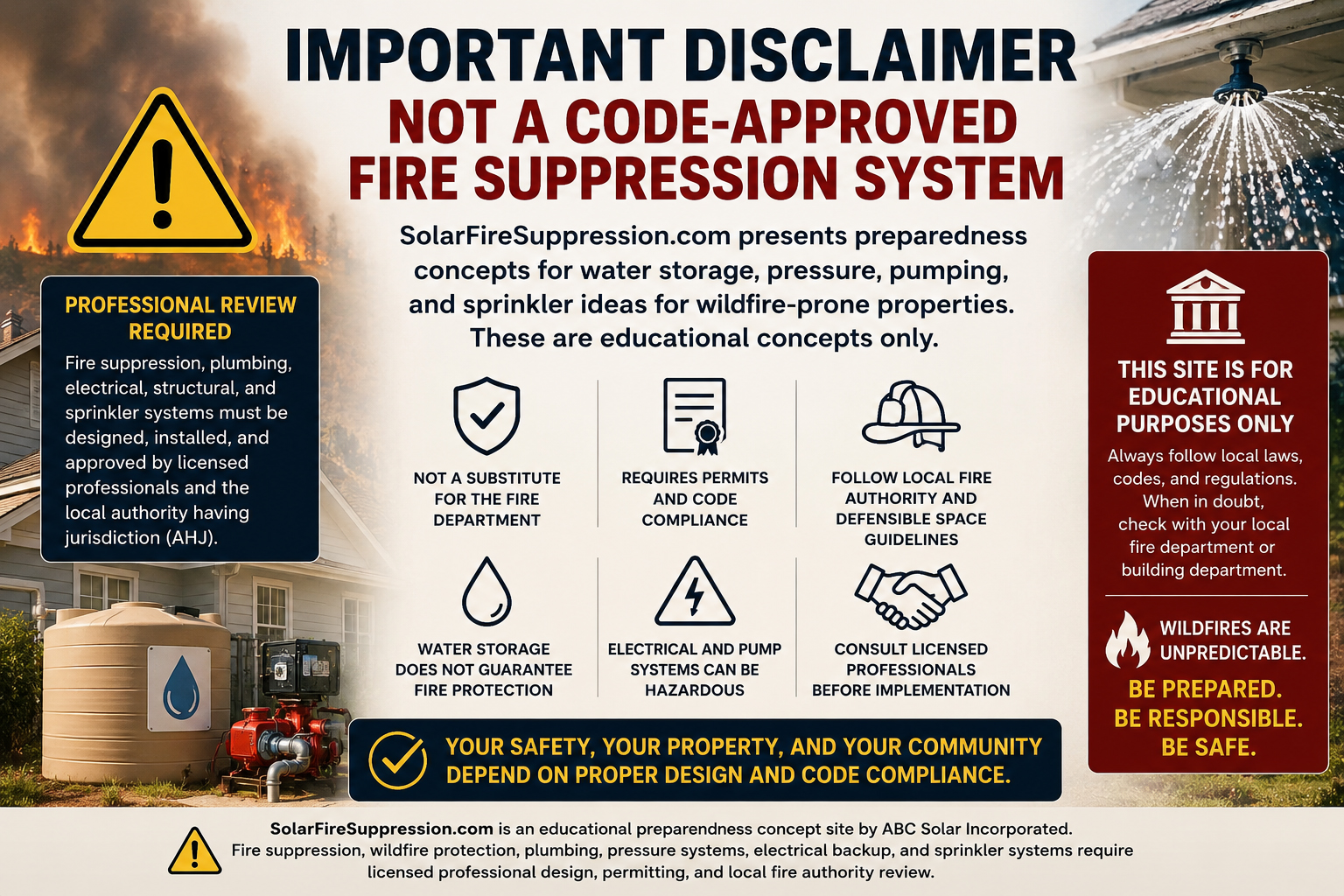
SolarFireSuppression.com is educational only. It is not a code-approved fire suppression system,
not a fire sprinkler design, and not a substitute for evacuation or professional review.
Site index
SolarFireSuppression.com pages
Use this sitemap to reach every published page. The canonical homepage is https://solarfiresuppression.com/, not a duplicate index.html listing.
Manga episodes
Information and legal
Best reading order
Start with the safety boundary, then the concept.
SolarFireSuppression.com is strongest when read in the correct order: understand the safety limits first, then study the water, pressure, pump, battery, sprinkler, defensible-space, and evacuation pages.
Read the safety notice.
Start with Not a Fire Code System. The whole site depends on that boundary.
Study the Solar Fire Drum.
The Solar Fire Drum page connects stored water, pressure tanks, pump backup, and controlled water delivery ideas.
Review evacuation-first readiness.
The Evacuation and Last-Line Readiness page explains why equipment must never become permission to stay.
Main sections
What each section covers
Stored water and reserves
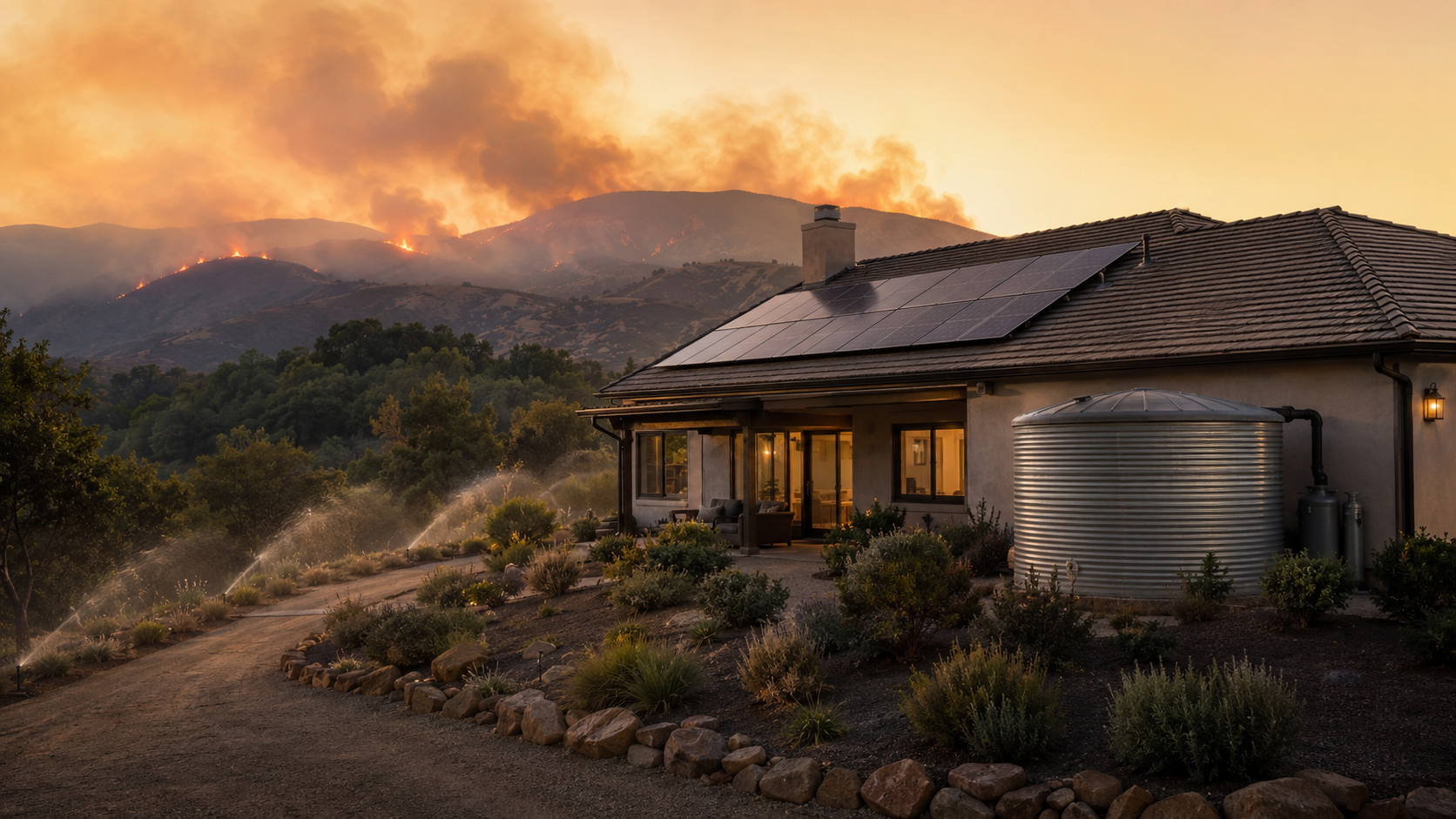
Pools, tanks, wells, cisterns, hot tubs, ponds, and ranch water sources as preparedness questions.
Pumps, tanks, and flow
Pressure tanks, pump sizing, flow, friction loss, outlet testing, and the full water delivery chain.
Solar battery pump backup
Critical-load planning, battery runtime, inverter capacity, pump surge, transfer safety, and code-compliant wiring.
Defensible-space water
Water readiness as support for clearing, hardening, ember-risk reduction, maintenance, and official guidance.
Memorable safety lessons
Ember Goblin, Pressure Tank Sensei, Pool Dragon Reservoir, Battery Beast, and the Pump Triplets teach the technical lessons.
Evacuation first
The controlling rule: no tank, pump, sprinkler, solar panel, battery, camera, or app is worth a life.