Store water before the danger window.
The first question is where the water comes from: dedicated storage tank, approved pool connection, hot tub reserve, domestic water, rain capture where legal, or another reviewed source.
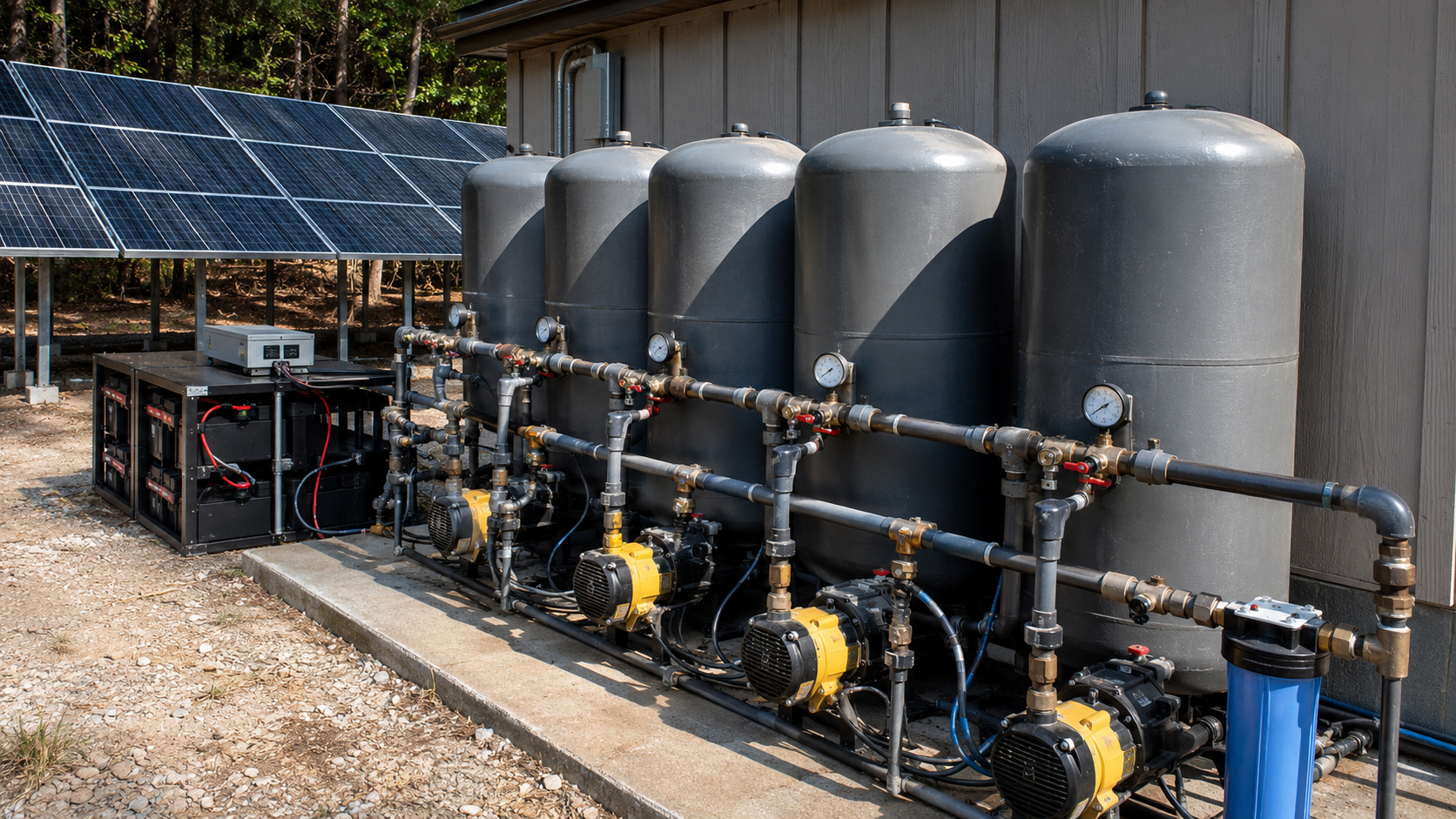
The Solar Fire Drum is a preparedness concept built around stored water, pressure tanks, a small pump bank, solar-backed power, and controlled sprinkler or hose readiness.
The Solar Fire Drum idea starts with a simple problem: when fire danger rises, waiting for grid power, utility pressure, or last-minute hose work may be too late. A prepared property needs water, pressure, pump power, and a reviewed delivery plan before the emergency.
The Fire Drum is not just a tank. It is the relationship between storage, pressure, pump power, control, plumbing, code review, and safe operation.
The first question is where the water comes from: dedicated storage tank, approved pool connection, hot tub reserve, domestic water, rain capture where legal, or another reviewed source.
Pressure tanks store energy. That makes them useful, but also serious. Tank ratings, relief valves, gauges, fittings, pipe sizing, mounting, freezing exposure, backflow protection, and inspection access all need professional review.
A small pump bank may help recharge pressure or supply limited zones, but flow rate, head, pressure loss, duty cycle, filtration, priming, and heat must be calculated. Guessing is not design.
Solar and batteries can support selected pump and control circuits, especially during outages or utility shutoffs. The electrical system must be isolated, protected, labeled, permitted, and reviewed by qualified professionals.
Roof sprinklers, yard sprinklers, ember-zone misting, hoses, and perimeter lines all require proper hydraulic planning. A weak spray pattern can create false confidence.
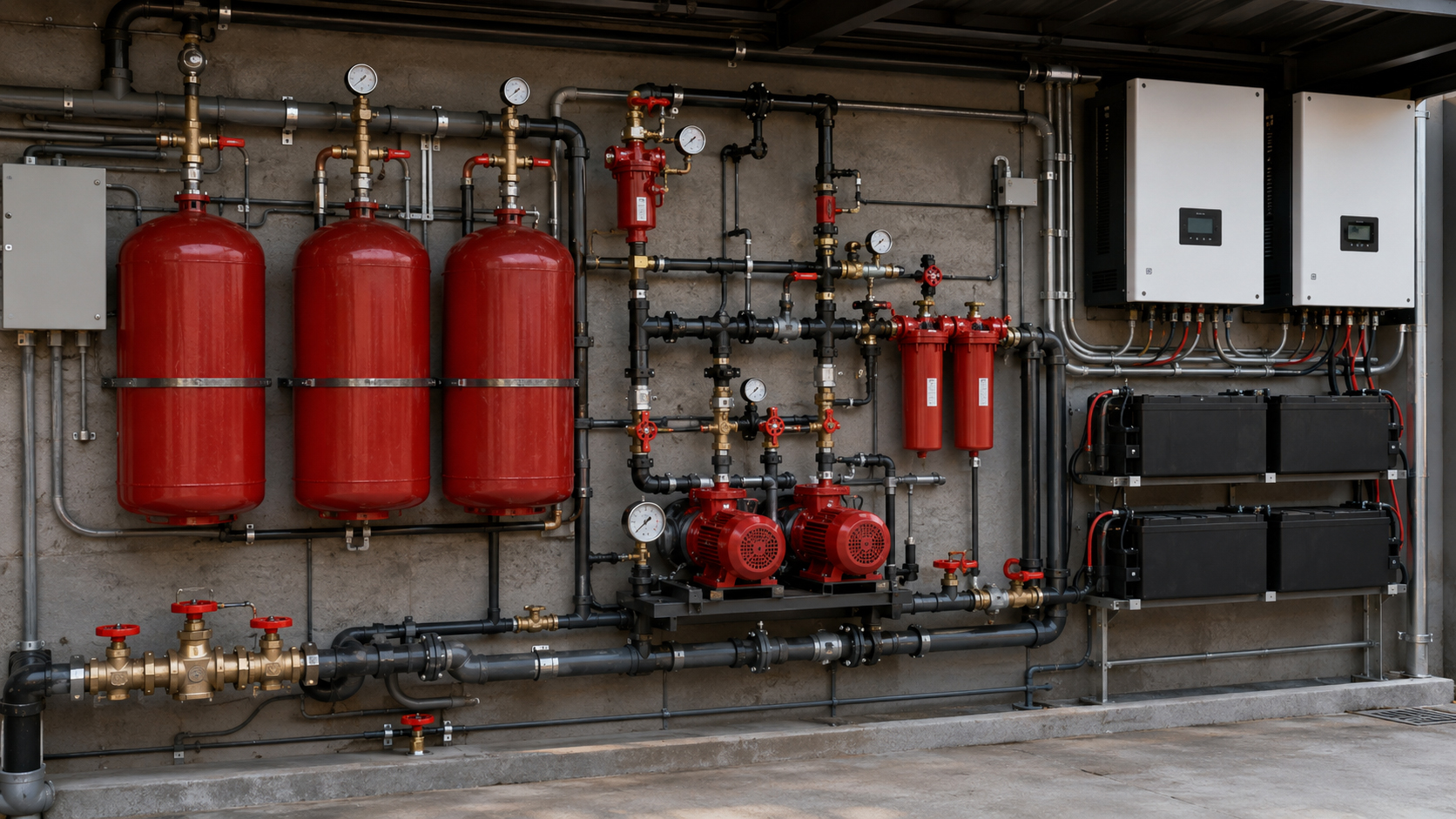
A real readiness system should be organized, inspectable, labeled, drainable, serviceable, and understandable. Fire-season equipment cannot be a mystery box.
These are planning questions for discussion with licensed fire protection, plumbing, electrical, structural, and local authority professionals.
Is the water coming from a dedicated tank, pool, hot tub, domestic supply, well, or another source? Is the source legally usable, accessible, filtered, protected from contamination, and protected from backflow?
What flow rate is needed? What pressure is needed at the actual sprinkler or hose outlet? What pressure loss occurs through pipe, fittings, filters, elevation, hose length, and valves?
Which loads must run during outage conditions? How long must they run? Are batteries, solar, inverters, breakers, disconnects, transfer equipment, and wiring properly rated?
Has the local fire authority having jurisdiction reviewed the concept? Does the system support defensible space, evacuation, and official fire guidance rather than contradicting it?
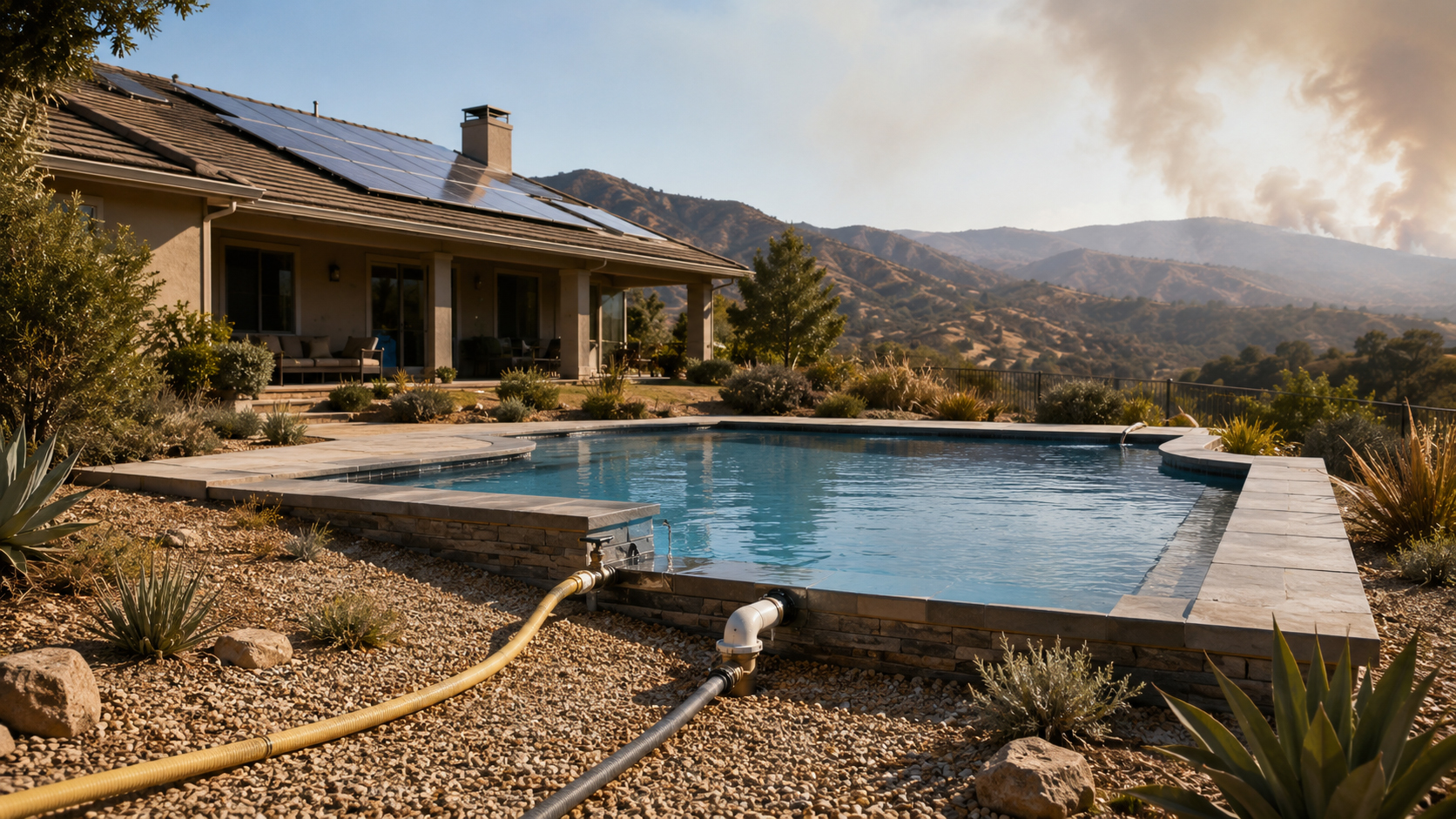
A pool, spa, cistern, or dedicated water tank may represent significant stored water. The challenge is not the existence of water. The challenge is safe, code-compliant access, pumping, filtering, backflow prevention, and delivery.
A pool-to-pump concept should never be improvised during a fire. Suction safety, pump priming, hose routing, electrical hazards, contamination prevention, and emergency use rules must be reviewed in advance.
A water readiness concept is useful only when it supports safer decisions. It must never encourage someone to ignore evacuation orders or remain in a dangerous fire zone.
The Fire Drum concept should never be used as justification to remain behind during evacuation.
A concept page is not engineering, permitting, inspection, listing, or fire-code approval.
Wildfires are unpredictable. Wind, embers, heat, access, smoke, and water supply can defeat equipment.
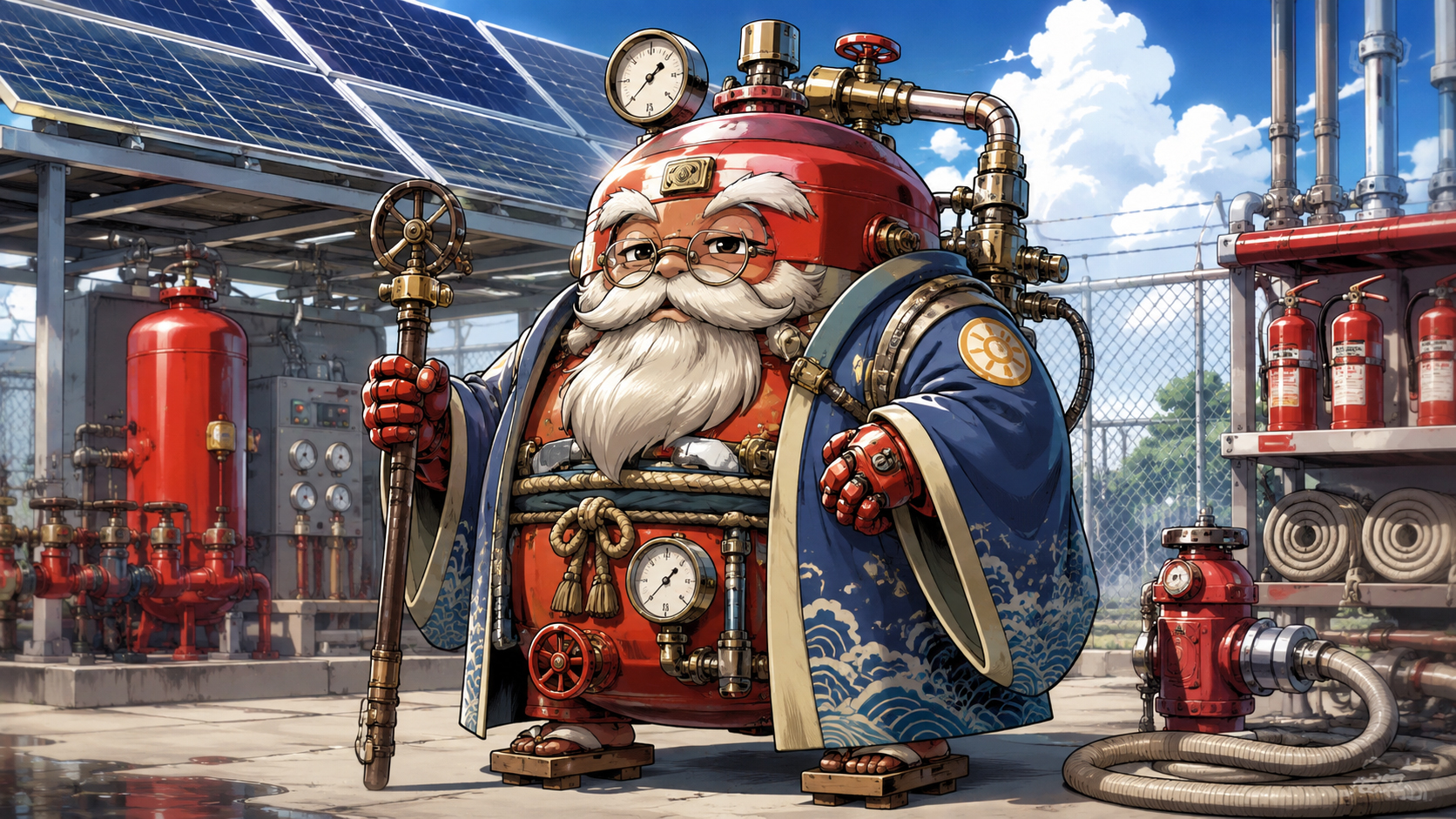
The manga character makes the serious lesson memorable: pressure is useful because it stores energy. That same stored energy is why tank ratings, relief valves, pressure controls, pipe strength, installation quality, and inspection matter.
Dedicated tanks, pools, hot tubs, wells, and water readiness questions.
Flow, pressure, pump duty cycle, tank ratings, and safe mechanical design.
Roof, yard, ember-zone, and perimeter water delivery concepts.
Critical-load planning for pumps, controls, and emergency water readiness.