Water volume
Pools can contain thousands of gallons, while hot tubs contain far less. The useful amount depends on access, pump intake height, debris, refill limits, and whether the water can be delivered at meaningful flow.
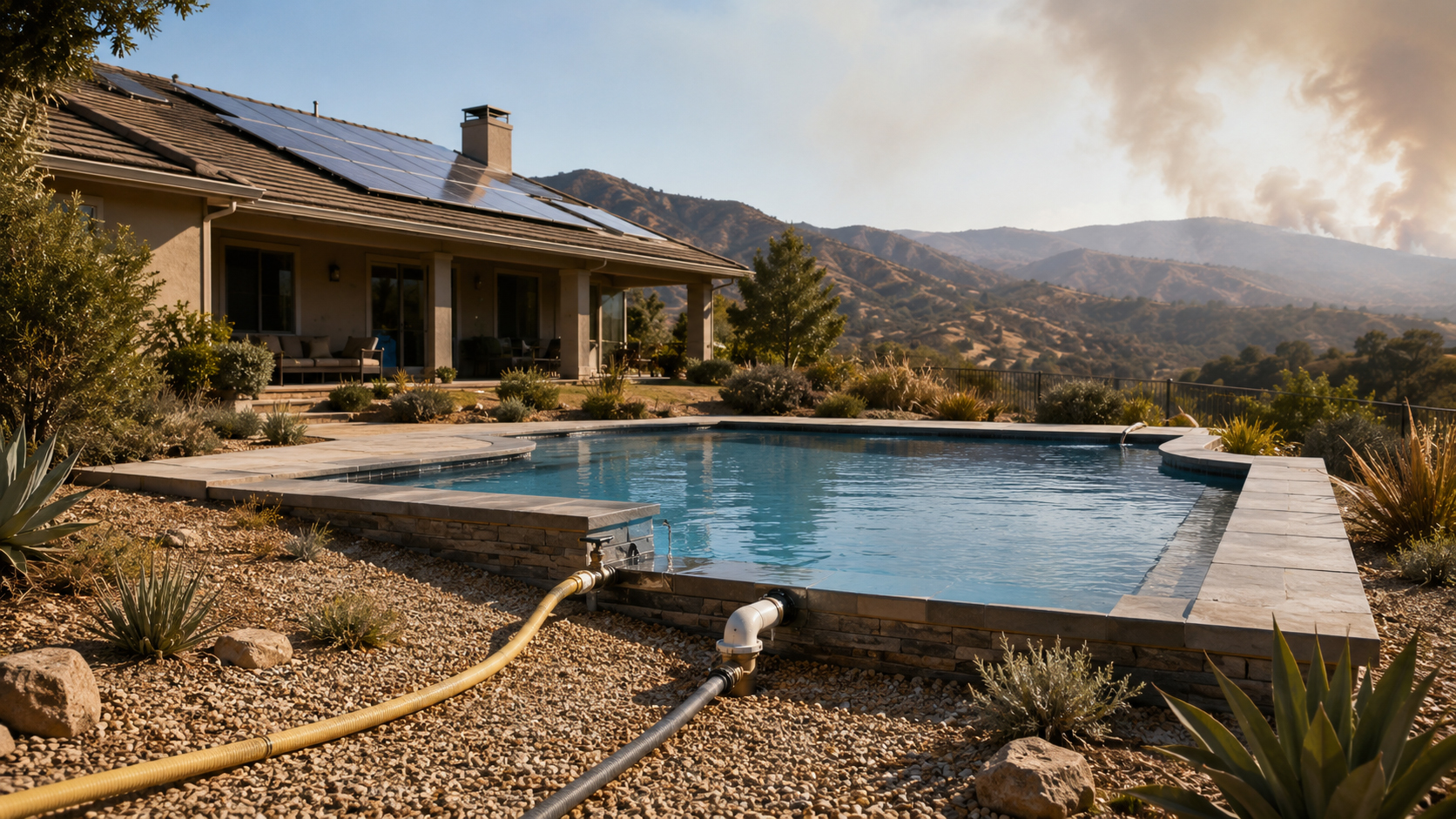
A pool, spa, or hot tub may already hold valuable stored water. The preparedness question is whether that water can be accessed safely, pumped reliably, protected from contamination risk, and used only within a professionally reviewed plan.
Many homes in wildfire country have pools, spas, hot tubs, decorative water features, or storage tanks. That water is not automatically fire protection. But it may become part of a serious readiness plan when access, pumping, pressure, safety, and legal use are reviewed before the emergency.
A backyard pool can look like an obvious emergency asset. In practice, the system succeeds or fails at the intake, pump, power source, hose, pipe, filter, valve, and outlet.
Pools can contain thousands of gallons, while hot tubs contain far less. The useful amount depends on access, pump intake height, debris, refill limits, and whether the water can be delivered at meaningful flow.
The pump must be able to draw water safely without dangerous suction, clogged intake, air leaks, priming failure, electrical risk, or damage to existing pool equipment.
Pool water is not domestic drinking water. Any connection to plumbing, hose bibs, sprinkler systems, or pumps requires backflow protection and professional review.
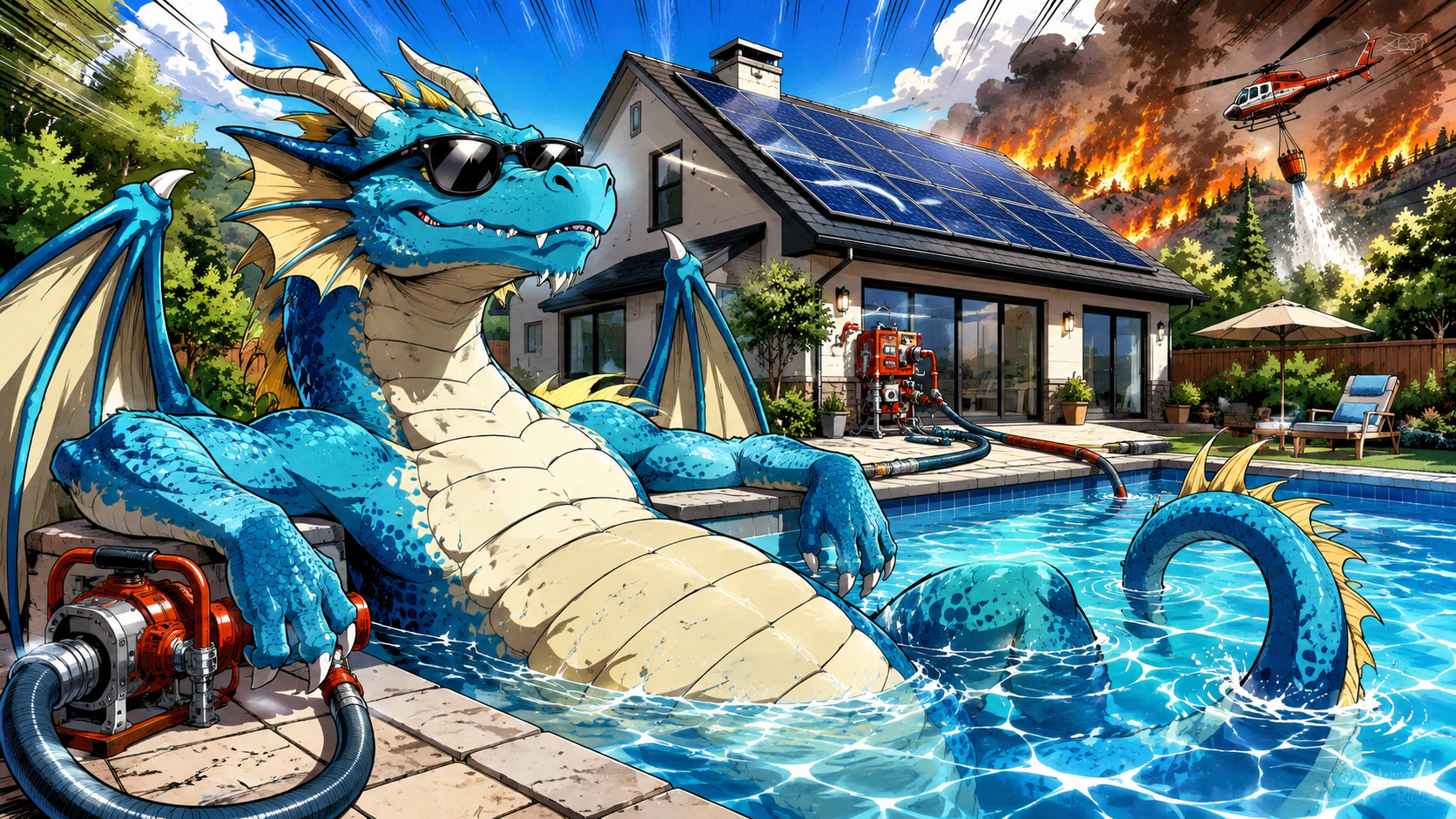
The manga lesson is simple: a pool is a beautiful backyard feature until the fire season turns it into a serious planning question. The water may help only if the system is ready, tested, and safe.
These are planning prompts for discussion with licensed professionals. They are not installation instructions.
Water may be drawn from a dedicated approved connection, portable intake, tank outlet, or other reviewed method. Skimmers, drains, suction ports, and improvised hoses can create hazards if used incorrectly.
Suction safety is not optional. A pump intake can trap hair, clothing, fingers, debris, or flexible materials. Any pool-related suction concept must be reviewed against applicable safety standards and local rules.
Leaves, ash, pool toys, dirt, algae, and plaster grit can damage pumps and clog nozzles. Intake screens, filters, strainers, maintenance access, and cleanout procedures must be planned.
Pumps, batteries, inverters, controllers, outlets, extension cords, and wet surfaces are a dangerous mix. Electrical work must be permitted, weather-rated, protected, grounded, and professionally installed.
A pool reserve may support a hose station, selected sprinkler zones, pre-wetting concepts, or equipment protection, but only if the flow and pressure at the actual outlet are calculated and tested.
Hot tubs and spas hold less water than pools, but they may be useful in limited preparedness concepts. The risks are different: smaller volume, hotter water, tighter equipment spaces, chemical concentration, cover access, and more electrical complexity nearby.
A spa reserve should be treated as a limited resource, not a whole-property water supply. Any use must avoid unsafe suction, electrical exposure, contamination, and damage to spa equipment.
A huge visible water source can create false confidence if the equipment path is weak, unsafe, or untested.
A pump may move water at low pressure but fail to deliver useful spray at the roof, slope, fence line, or hose end.
Improvised intakes can create entrapment, clogging, air ingestion, cavitation, or equipment damage.
A pool pump or transfer pump is useless during an outage unless its electrical supply is designed for backup operation.
Pool water must not be cross-connected into domestic plumbing. Backflow and contamination risks are serious.
Ash, leaves, grit, algae, and debris can stop sprinklers or nozzles just when they are needed.
A readiness plan that is never tested is a theory. Pumps, filters, hoses, valves, batteries, and controls age.
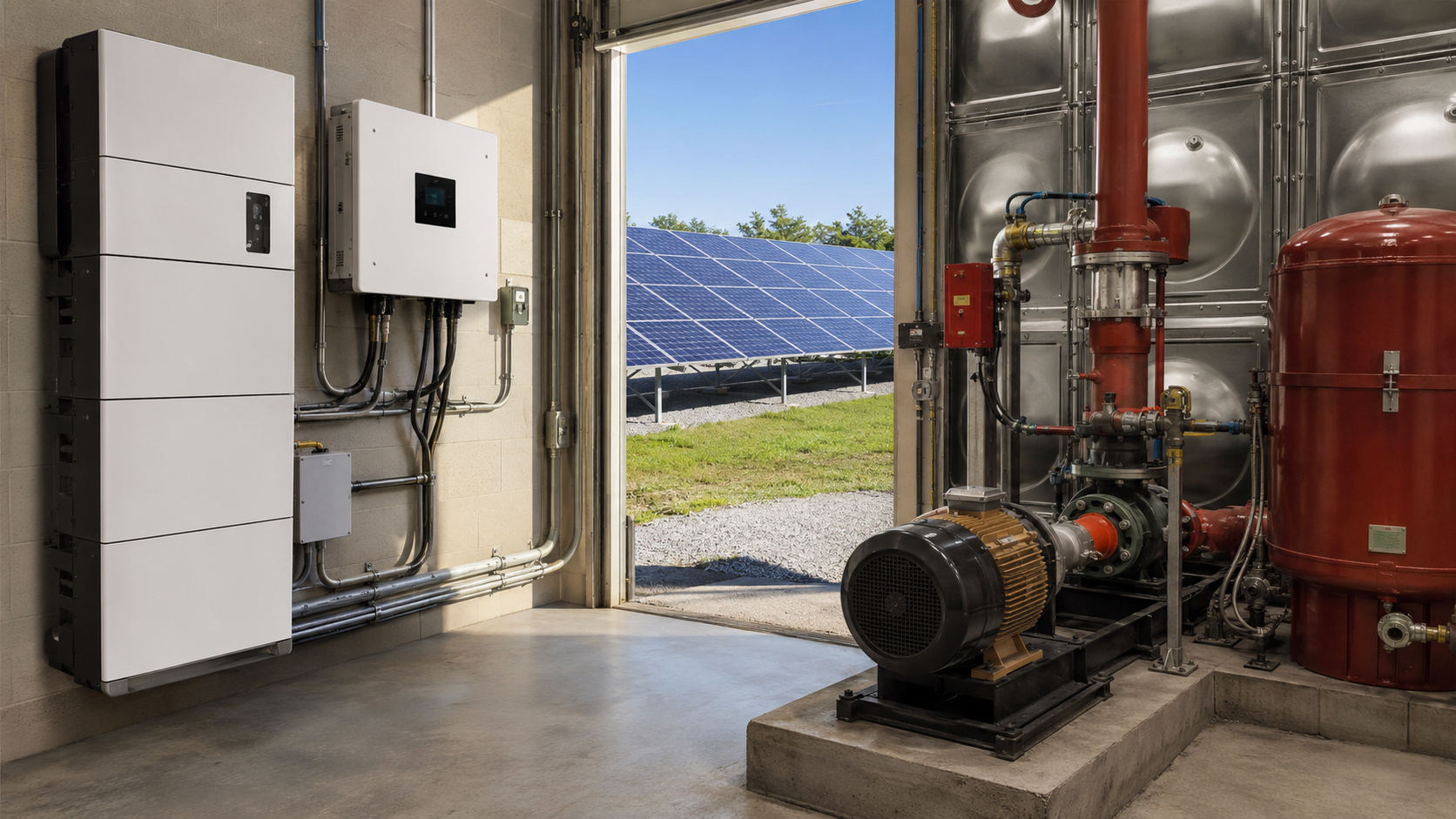
During wildfire conditions, utility power may be shut off or damaged. If a pool reserve plan depends on a pump, that pump needs a professionally designed power plan.
Solar and battery systems can support selected critical loads when sized correctly. Pump startup surge, run time, inverter capacity, wiring, breakers, disconnects, wet-location protection, and emergency labels all matter.
How many usable gallons are present? Where is the safe draw point? Can water be accessed without damaging pool equipment or creating suction hazards?
What flow and pressure are needed at the actual outlet? How much is lost through hose, fittings, elevation, filters, and nozzles?
Will the pump run during outages? Are batteries, inverter, wiring, breakers, controls, and wet-location protections designed for the actual load?
Has the plan been reviewed by qualified fire protection, plumbing, electrical, and local authority professionals? Does it support evacuation and defensible-space guidance?
Water-source planning for pools, tanks, wells, cisterns, ponds, and hot tubs.
Flow, pressure, pump limits, valves, gauges, and equipment safety.
Roof, yard, ember-zone, and perimeter delivery concepts.
The larger pressure-tank and pump-bank readiness concept.