Roof sprinkler concepts
Roof wetting may sound simple, but roof slope, wind, gutters, tile, shingles, vents, skylights, electrical equipment, structural attachment, drainage, and fall hazards all matter.
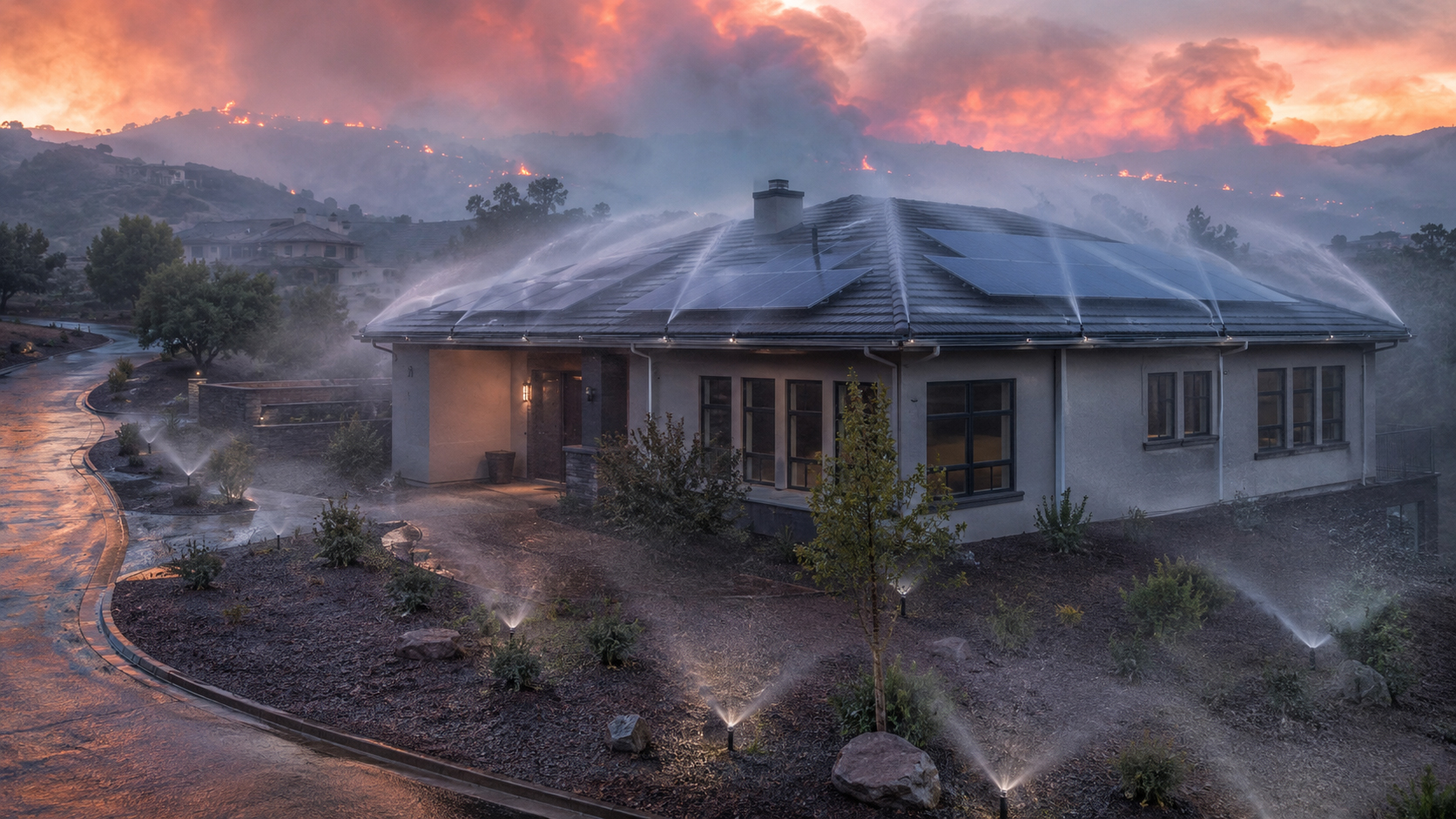
Roof and yard sprinklers can look reassuring, but useful wildfire readiness depends on coverage, water source, pressure, flow, wind, debris, pump power, maintenance, and local fire authority review.
Sprinklers can support preparedness conversations, especially around ember exposure and defensible-space water planning. But a weak spray, clogged nozzle, undersized hose, empty tank, dead battery, or wind-blown pattern can turn a promising idea into false confidence.
A serious plan separates different water delivery jobs. The roof is not the yard. The fence line is not the ember zone. Each area has different flow, pressure, and coverage needs.
Roof wetting may sound simple, but roof slope, wind, gutters, tile, shingles, vents, skylights, electrical equipment, structural attachment, drainage, and fall hazards all matter.
Yard sprinklers may support defensible-space moisture management in selected zones, but landscaping, slope, vegetation type, overspray, runoff, and water limits must be considered.
Fence lines, gates, outbuildings, decks, and equipment pads may need different coverage. Perimeter delivery can be pipe-based, hose-based, or portable only after review.
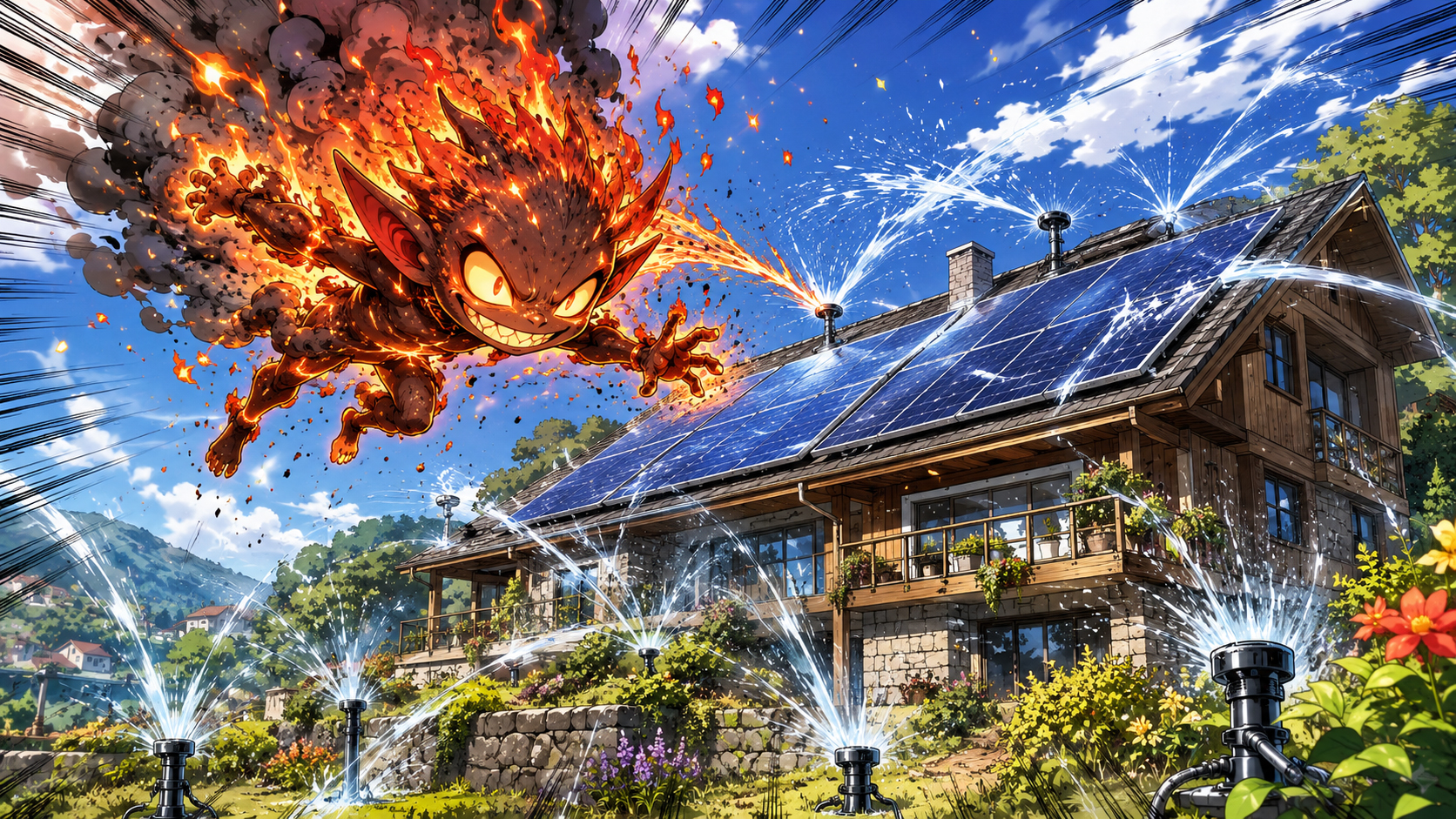
Many wildfire losses begin with embers landing where they should not: dry leaves, gutters, vents, decks, patio furniture, fences, mulch, or roof edges. Water readiness should support ember-risk reduction, not replace cleaning, hardening, and defensible-space work.
These are planning prompts for licensed professionals and local authority discussions. They are not instructions for installation.
Decide whether the concept is for roof wetting, gutter edges, deck exposure, yard zones, fence line, equipment pads, or portable hose stations. A vague target produces a vague system.
Sprinklers consume water quickly. A pool, tank, cistern, well, or domestic supply must be evaluated for usable volume, refill capability, drawdown, debris, and legal/emergency-use limitations.
Pressure at the pump is not pressure at the sprinkler. Pipe size, hose length, fittings, filters, check valves, elevation, and nozzle choice must be calculated before relying on the spray pattern.
If sprinklers depend on electric pumps, the pump circuit needs a properly designed power plan. Solar and battery backup can help only when sized, permitted, labeled, and maintained correctly.
Nozzles clog. Valves seize. Batteries age. Hoses crack. Pipes leak. Filters fill with debris. A sprinkler readiness concept requires a routine test and maintenance schedule.
A roof sprinkler concept must deal with actual roof geometry, surface type, runoff path, wind behavior, and equipment attachment. Water sprayed in the wrong direction may never wet the risk area.
Roof work also creates fall hazards and roof-leak risks. Any permanent roof-mounted piping, bracket, nozzle, valve, wiring, or control system must be reviewed for waterproofing, structural attachment, wind exposure, and code compliance.
A sprinkler can look dramatic in a test and still fail the actual readiness job.
A fine mist may look active but may not deliver enough water to the target surface under heat, wind, and ember conditions.
A nozzle that misses the gutter, deck edge, roof valley, or fence line may waste water while the risk area stays dry.
Wind can carry water away from the target. Testing only on a calm afternoon can create a false sense of readiness.
Ash, leaves, scale, algae, grit, and debris can clog nozzles. Filtration and maintenance access are not optional details.
A limited tank or pool reserve may be depleted faster than expected when multiple zones run at once.
A sprinkler concept should never encourage anyone to remain in place during evacuation orders or dangerous fire conditions.
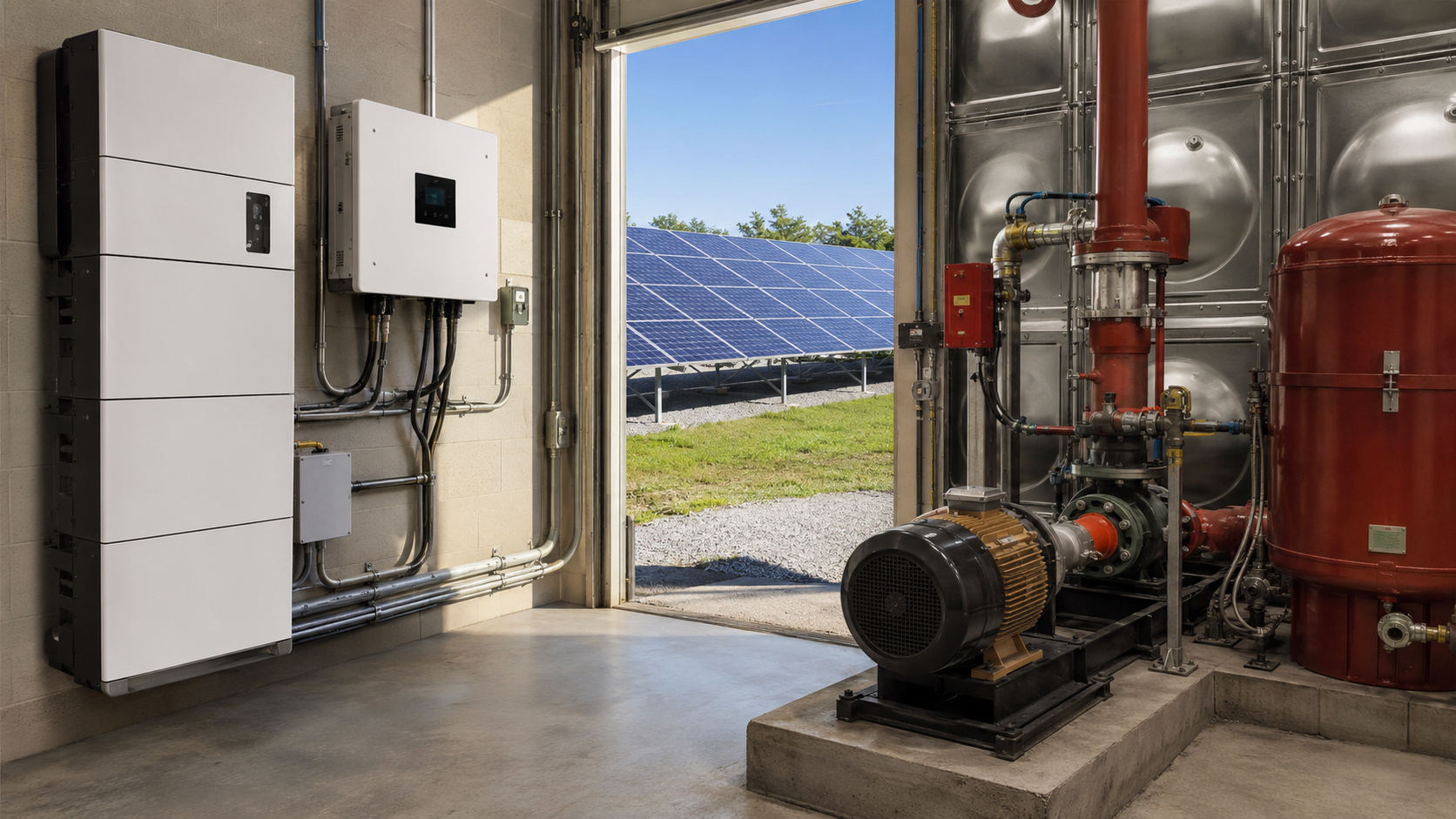
If a sprinkler concept depends on an electric pump, then the pump must be treated as a critical load. Solar and battery backup can support selected loads, but the engineering must match the pump’s real startup and runtime needs.
A proper design conversation should include pump surge, inverter capacity, battery duration, disconnects, breakers, weather exposure, controls, labels, testing, and service access.
What surfaces need water? Roof edge, gutter, deck, fence, equipment pad, vent area, wall exposure, landscaping, or hose station? Has the actual spray pattern been tested?
What pressure and flow are available at each nozzle? What is lost through pipe, hose, filters, fittings, elevation, and control valves?
How many usable gallons are available? How long can the selected zones run? What happens if utility water pressure drops or the pool/tank intake clogs?
Has the plan been reviewed by fire protection, plumbing, electrical, building, and local fire authority professionals? Does it support official evacuation and defensible-space guidance?
Pools, tanks, wells, cisterns, and water-source planning.
Flow, pressure, pump limits, valves, gauges, and equipment safety.
Critical-load planning for pump and control circuits.
How water readiness supports vegetation and ember-risk planning.