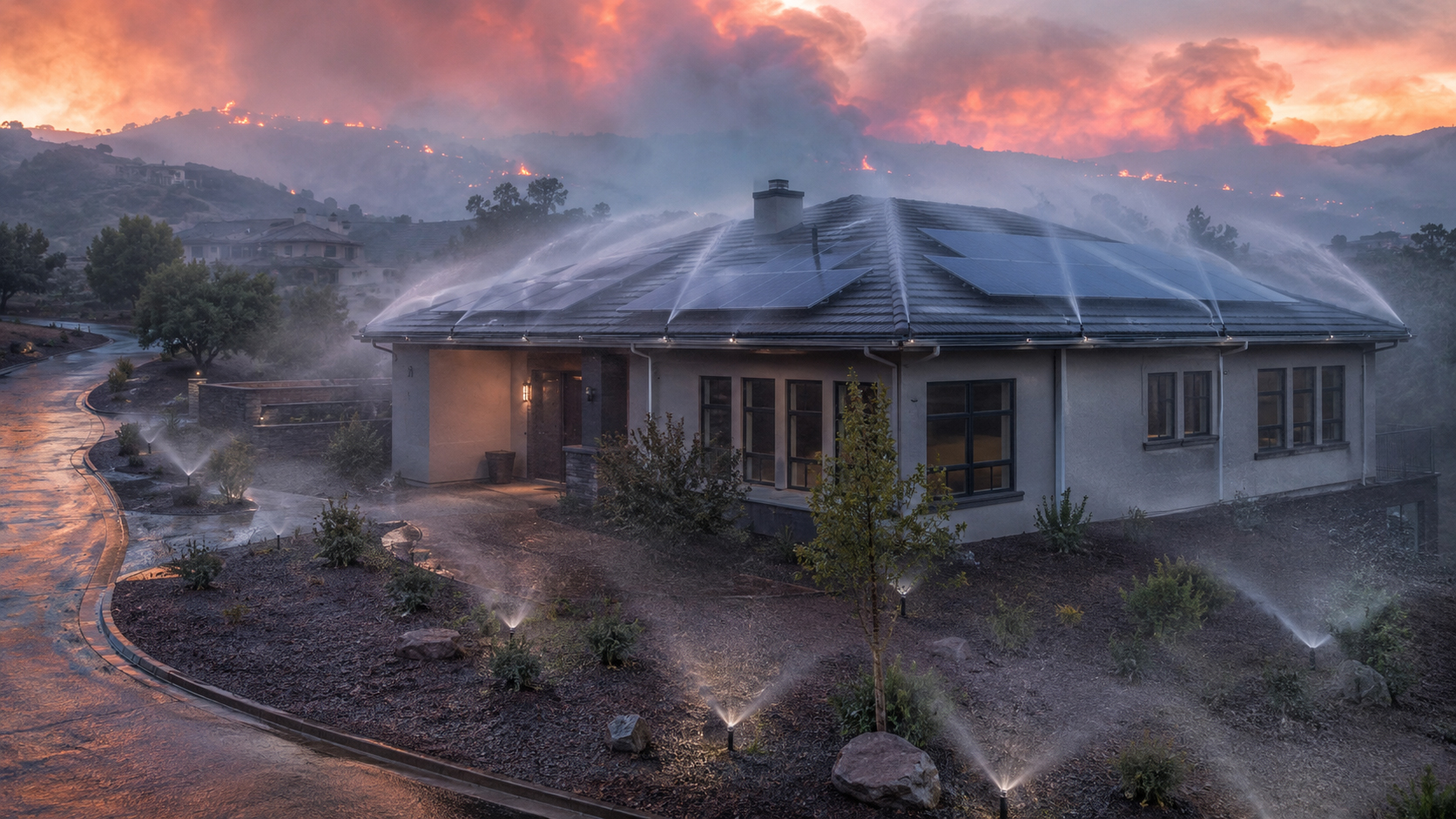
Home with roof and yard sprinkler water readiness concept during wildfire smoke conditions
Defensible-space water

Water supports defensible space. It does not replace it.

Stored water, pumps, sprinklers, hoses, and solar-backed backup power can support wildfire readiness, but defensible space still begins with vegetation management, home hardening, access, maintenance, evacuation discipline, and local fire authority guidance.

This page is educational only. Defensible-space requirements vary by location. Follow local fire authority, city, county, insurance, and emergency-management requirements.
The practical rule

Clear first. Harden first. Water second.

Water can help when it supports a clean, maintained, hardened property. It becomes much less useful when leaves are in gutters, wood piles are against the house, vents are exposed, weeds are dry, and combustible materials are sitting in the ember zone.

Important: Water readiness is not a substitute for defensible space, home hardening, evacuation orders, fire department instructions, or code-approved fire protection systems.

Defensible-space water should support

  • Vegetation management and dry-fuel reduction
  • Gutter, roof-edge, and debris maintenance
  • Deck, fence, patio, and equipment-pad risk reduction
  • Pre-fire hose and sprinkler readiness conversations
  • Solar-backed pump planning during power outages
  • Official fire authority and evacuation guidance
Three layers

Defensible space is not one thing. It is layered protection.

A water plan should be matched to the property’s real risk layers: the immediate ember zone, the managed yard, and the outer approach.

Immediate ember zone

The first few feet around the structure are critical. Leaves, mulch, furniture, doormats, wood trim, vents, deck gaps, and gutters can become ignition points. Water may support cleaning and wetting concepts, but fuel reduction comes first.
Managed yard zone

Irrigation, hose stations, and selected sprinklers may help maintain lower-risk landscaping, but plants, spacing, pruning, slope, dead material, and seasonal dryness still control the real hazard.

Outer approach zone

Roads, gates, fences, sheds, tanks, barns, slopes, and access routes matter. Water readiness may support hose connections or perimeter concepts, but only with practical flow, pressure, duration, and safe access.

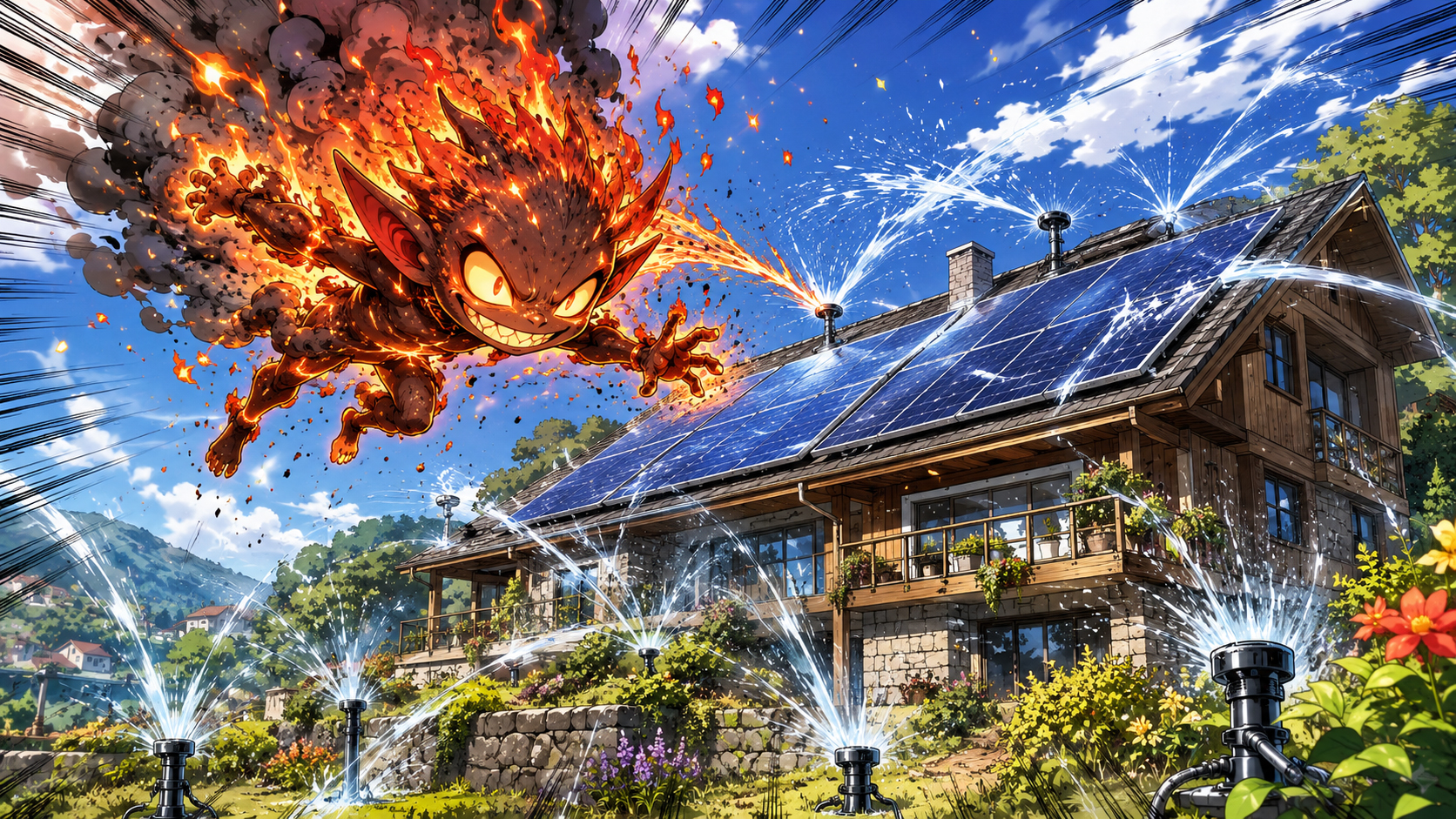
Manga Ember Goblin attacking dry leaves while water readiness protects the property
Ember-zone lesson

The ember looks tiny until it finds fuel.

Defensible space is often about denying embers an easy landing place. A sprinkler may wet a surface, but it cannot remove a pile of leaves, a dry chair cushion, a wood fence touching the house, or a vent opening that was never hardened.

Embers Dry leaves Gutters Decks Vents Fences
Water readiness chain

Use water to strengthen the defensible-space plan.

These prompts are for planning and professional review. They are not installation instructions.

Map the property’s fuel and ember risks.

Identify gutters, roof valleys, decks, vents, fences, sheds, slopes, dry vegetation, wood piles, patio furniture, mulch beds, propane areas, equipment pads, and access routes.

Remove what water should not have to fight.

Clean debris, trim vegetation, move combustibles, clear gutters, reduce dry fuel, separate fences from structures where appropriate, and follow local defensible-space rules.

Match water delivery to actual zones.

Decide whether water is for hose stations, roof-edge wetting, selected yard zones, equipment protection, deck exposure, perimeter support, or refill support. Each job has different requirements.

Confirm flow, pressure, and duration.

Defensible-space water must be measured at the actual outlet. Hoses, pipes, fittings, filters, elevation, valves, and nozzles can reduce pressure and flow dramatically.

Keep evacuation as the controlling rule.

Water readiness should improve preparation before an event, not encourage anyone to stay during unsafe conditions. Evacuation orders and fire authority instructions control.

Yard water reality

A green yard is not automatically a safe yard.

Irrigation can help some landscape areas, but defensible space is not just moisture. Plant choice, spacing, pruning, slope, dead material, mulch type, and distance from the structure all matter.

A water plan should not be used to justify keeping hazardous vegetation too close to a building. In wildfire readiness, water is support. Fuel management is primary.

Good water-support uses

  • Keeping reviewed landscape zones maintained before fire season
  • Supporting hose stations for cleanup and preparedness
  • Testing selected sprinkler zones under realistic pressure
  • Backing up pump circuits where utility outages are likely
Yard and roof sprinkler concept supporting defensible-space water planning
Mistakes to avoid

Water can create dangerous confidence.

The worst water plan is the one that makes a property owner feel protected while the basic risks remain untouched.

Leaving fuel in place

Water should not be expected to compensate for dry leaves, mulch, wood piles, overgrown brush, or combustible materials near the home.

Ignoring ember entry points

Vents, gaps, roof edges, decks, and gutters can matter more than dramatic water spray in the wrong location.

Relying on one garden hose

A hose may be useful for cleanup and small tasks, but hose length, pressure, flow, access, and personal safety limit usefulness.

Forgetting power outages

Electric pumps, valves, and controls may fail during shutoff conditions unless designed as protected critical loads.

No maintenance routine

Defensible space changes every season. Plants grow, leaves fall, hoses crack, filters clog, and batteries age.

Waiting too long

The middle of a fire event is too late to build a water strategy, test pumps, clear gutters, or read instructions.

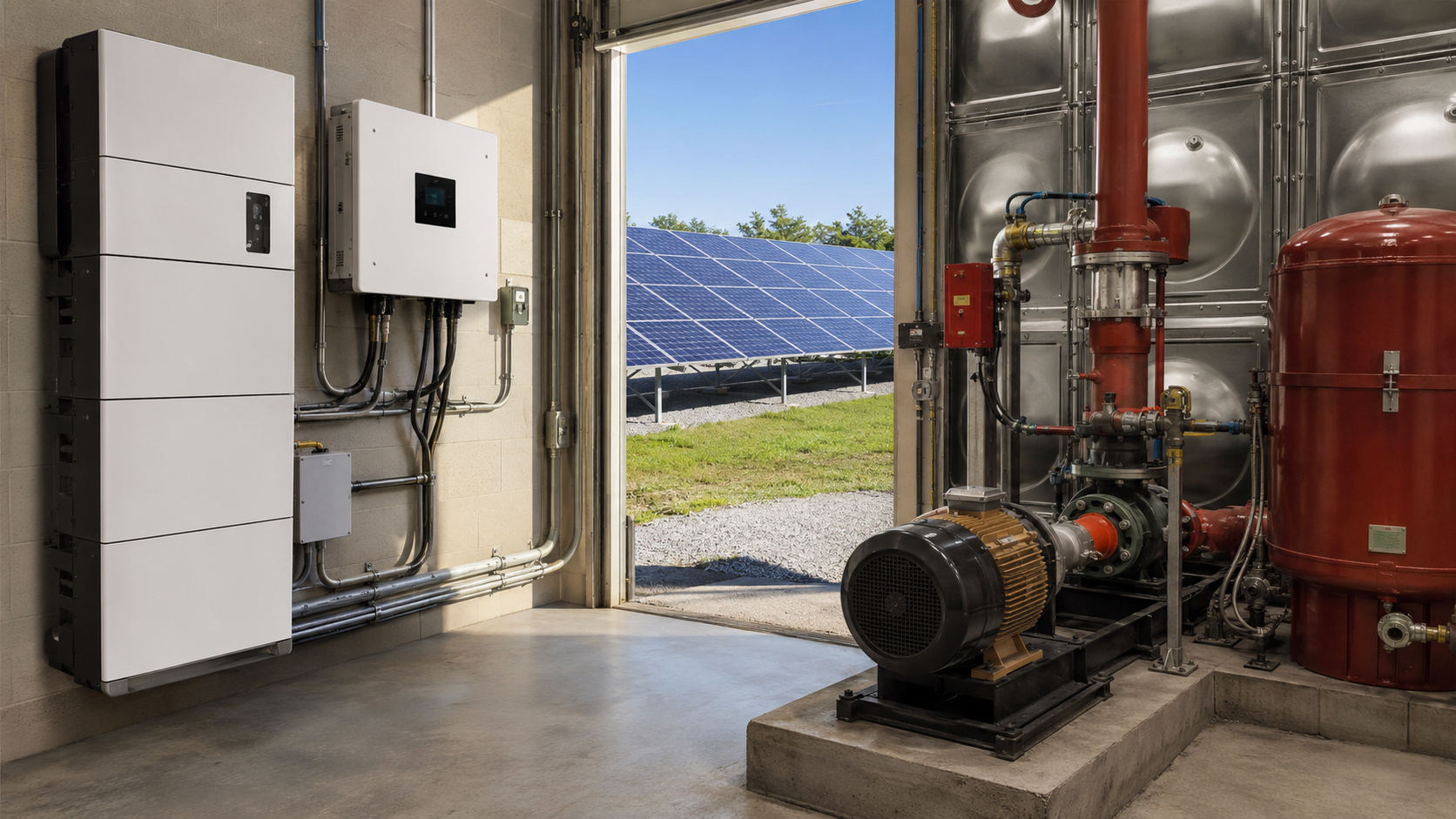
Solar battery backup equipment supporting defensible-space water pump readiness
Critical-load planning

If the pump is part of the plan, backup power is part of the plan.

Wildfire risk often overlaps with utility shutoffs and damaged infrastructure. Solar and battery backup can support selected pump and control loads, but the system must be engineered, permitted, labeled, maintained, and tested.

Defensible-space water planning should include pump startup surge, runtime, battery capacity, inverter limits, transfer method, weather exposure, emergency access, and service procedures.

Study solar battery pump backup

Pre-season checklist

Questions to answer before fire season.

Fuel and structure

Are gutters clean? Are combustible materials moved away? Are vents, decks, fences, roof edges, eaves, and openings reviewed? Has vegetation been managed according to local rules?

Water source

What water is available: pool, tank, well, cistern, domestic supply, or pond? How many usable gallons exist, and how long can selected zones operate?

Delivery method

Is the water delivered through hose stations, portable equipment, sprinkler zones, roof-edge concepts, or pressure tanks? Has actual outlet performance been tested?

Authority and evacuation

Has the plan been reviewed by qualified professionals and local authorities? Does everyone understand that evacuation orders override equipment plans?

Safety notice

Defensible-space water does not make a property fireproof.

Wildfire conditions are unpredictable. Wind, embers, radiant heat, smoke, access problems, water-supply failure, and power outages can defeat equipment. Water readiness must remain secondary to evacuation, official guidance, home hardening, and professional review.

  • Do not use water readiness as an excuse to delay evacuation.
  • Do not expect sprinklers or hoses to compensate for unmanaged fuel and ember hazards.
  • Do not install pumps, pressure tanks, roof piping, or electrical backup without licensed review.
Next pages

Continue the readiness study

Stored Water

Pools, tanks, wells, cisterns, ponds, and water-source planning.