Water tanks
Above-ground tanks can support preparedness planning when properly sized, supported, valved, labeled, protected, and positioned for access by pumps, hoses, or fire personnel.
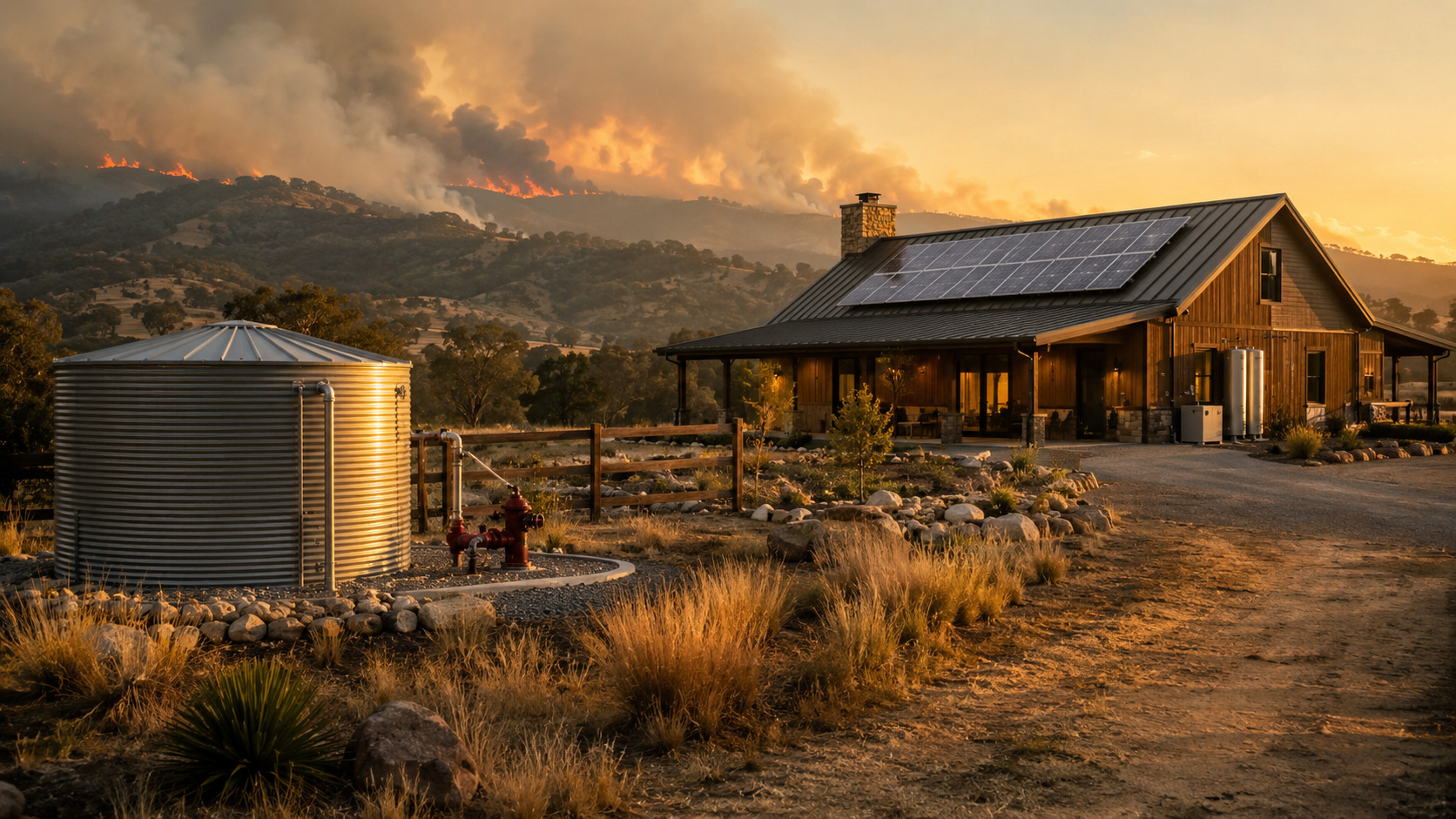
Ranches, hillside homes, barns, remote cabins, and off-grid properties may face weak water pressure, long response times, locked gates, power shutoffs, rough roads, and fast-moving fire conditions. Water readiness has to be planned before the smoke.
A city home may be minutes from a fire station. A ranch or remote property may not be. Roads, gates, terrain, water source, pump power, tank access, animal evacuation, and emergency staging become part of the fire-water conversation.
Ponds, tanks, wells, troughs, pools, irrigation systems, and cisterns may all be present. The real test is whether water can be delivered safely at useful flow and pressure when power, access, and time are stressed.
Above-ground tanks can support preparedness planning when properly sized, supported, valved, labeled, protected, and positioned for access by pumps, hoses, or fire personnel.
A well may be the main water source, but a well pump needs power. Backup power, pressure storage, pump limits, recovery rate, and electrical safety all matter.
Surface water may offer volume, but suction lift, mud, algae, debris, intake clogging, pump placement, priming, and distance can make delivery difficult.
Irrigation lines may support vegetation management, but they are not automatically fire systems. Flow, zone control, water duration, and emergency operation must be reviewed.
Some ranch homes have pools or spas that may hold useful water. Suction safety, filtration, chemistry, electrical isolation, and backflow protection matter.
Waiting until fire danger arrives to figure out pumps, hoses, tanks, adapters, fuel, batteries, or valves is not readiness. It is gambling.
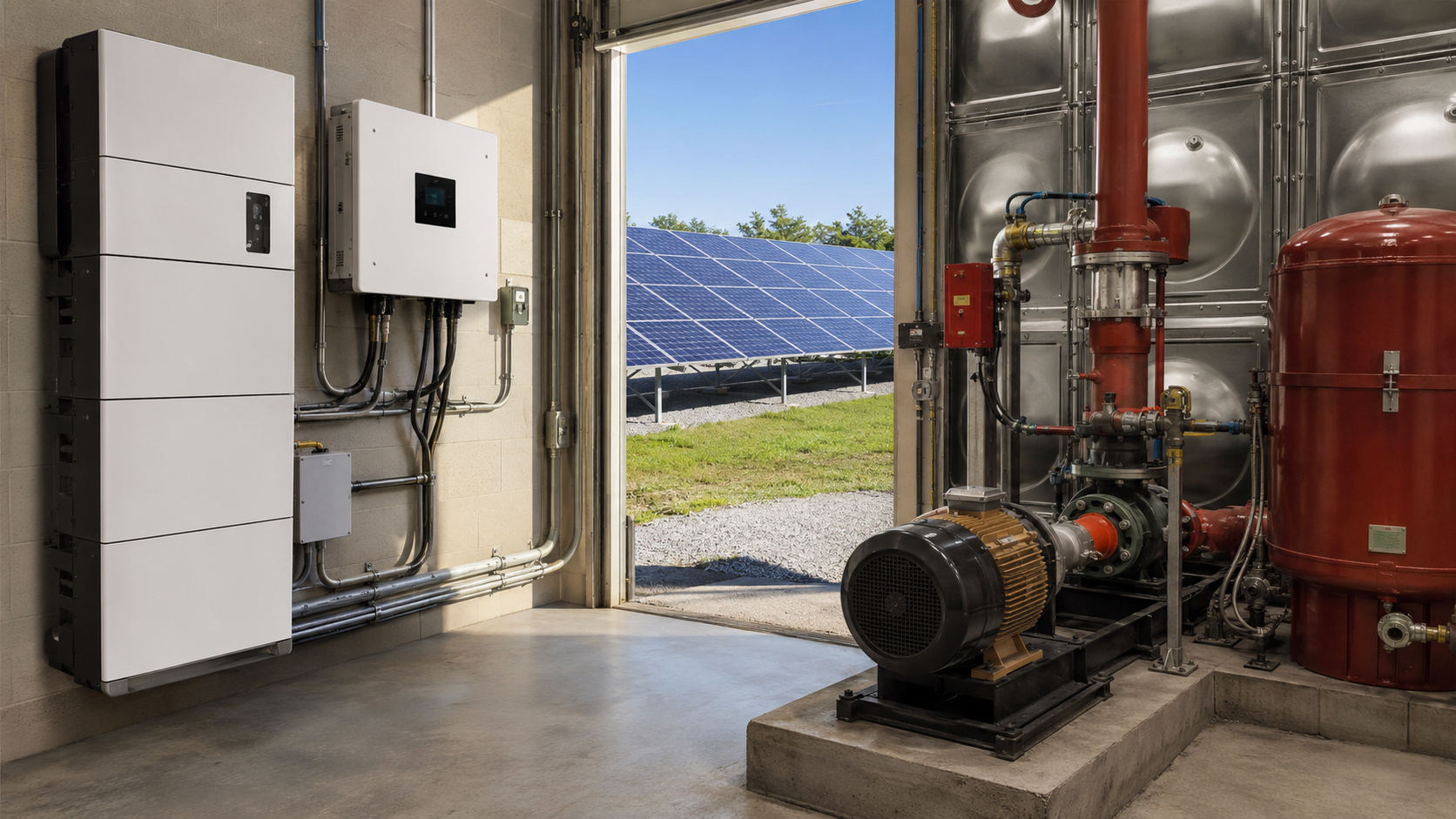
A water tank on a hill may have gravity pressure. A well, booster pump, pond pump, transfer pump, or sprinkler pump may need electricity. During wildfire conditions, utility power may be shut off or fail.
Solar and battery backup can support selected pump and control loads, but the pump’s startup surge, runtime, voltage, duty cycle, inverter capacity, and battery reserve must be engineered.
These are planning prompts for professional review. They are not installation instructions.
Identify the home, barn, shop, hay storage, animal areas, fuel storage, tanks, ponds, wells, pumps, hydrants, gates, turnarounds, slopes, bridges, and emergency access routes.
Evacuation, animal movement, vehicle access, and human safety come first. Water equipment should never encourage dangerous delay during evacuation orders or active fire conditions.
Decide whether the system supports hose stations, equipment pads, barn exposure, roof sprinklers, selected defensible-space zones, tank refill, or fire department access. Each job has different flow and pressure needs.
Determine how long each zone or hose station must operate, how many gallons are available, whether tanks can refill, whether wells can recover, and whether backup power can sustain pump operation.
Test from the actual water source to the actual outlet. Check flow, pressure, priming, battery runtime, valve operation, hose reach, nozzle pattern, labels, and access.
Barns, workshops, tractors, feed, fencing, horse trailers, livestock areas, propane tanks, diesel storage, hay, and access roads all change the fire-water plan.
Water readiness should support practical pre-season work: reducing fuel, clearing around structures, staging hoses, labeling valves, keeping roads passable, checking gates, confirming trailer access, and protecting essential pump circuits.
Gates, narrow roads, weak bridges, blocked turnarounds, and unclear addresses can slow emergency response.
A well or booster pump that loses power can make a full tank or good water source unreachable.
Mud, algae, leaves, ash, and debris can clog pumps, filters, nozzles, and sprinklers.
A hose station may look useful until slope, distance, friction loss, gates, or obstacles prevent use.
Water readiness must not distract from early animal movement, trailer staging, and evacuation discipline.
Pumps seize, batteries age, valves stick, labels fade, roads erode, hoses crack, and tanks leak.
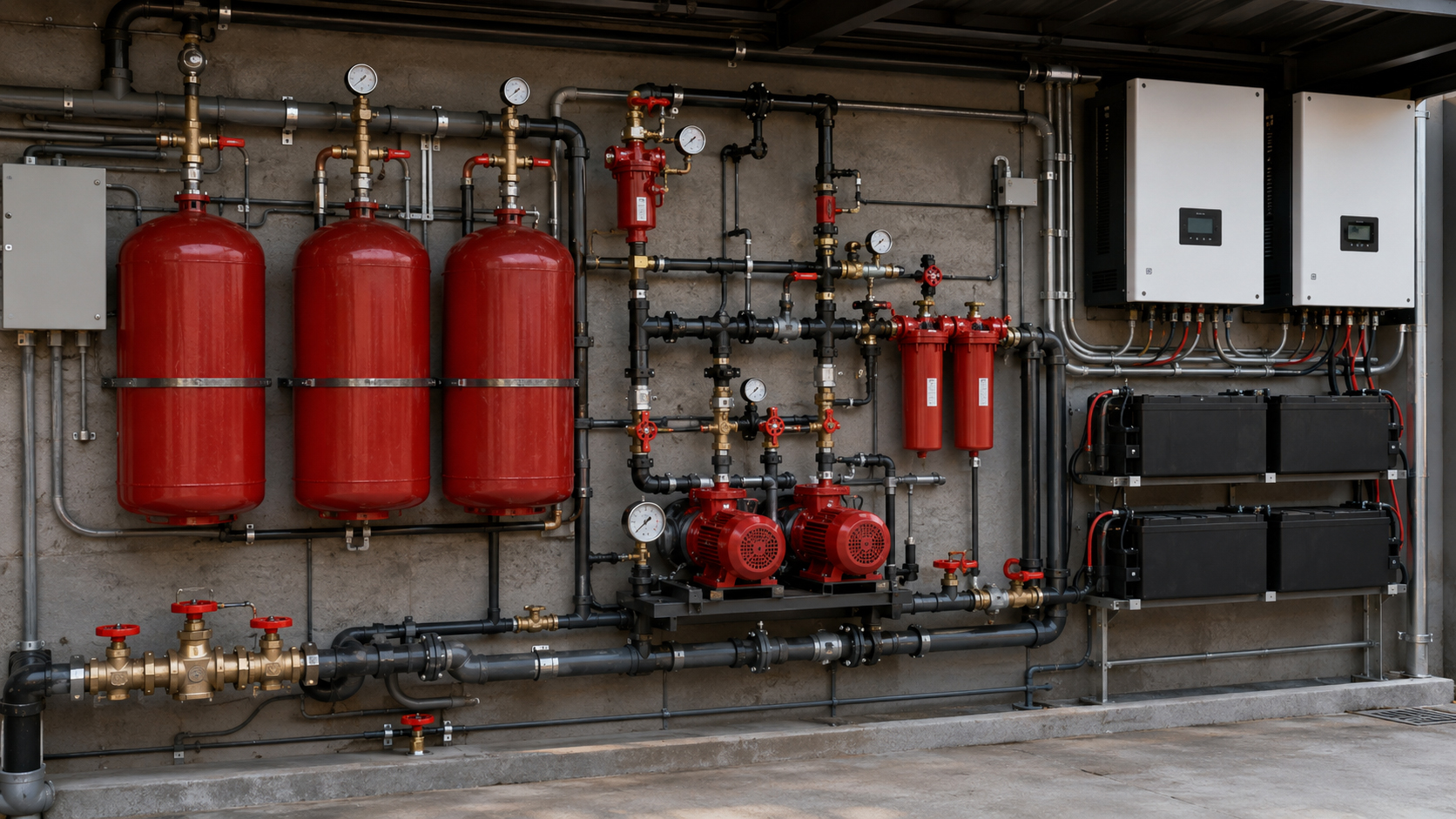
Remote property equipment should be labeled, accessible, protected from weather, and simple to understand. The wrong valve, wrong breaker, wrong hose, or wrong pump switch can waste critical time.
A good ranch readiness layout should make the emergency water path visible: source, pump, filter, pressure tank, valves, outlets, hose stations, power supply, disconnects, and manual override.
Are gates accessible? Are roads passable? Are turnarounds clear? Is the address visible? Can emergency vehicles find tanks, hydrants, pumps, or hose stations?
How many gallons are usable? Can the source refill? Can a well recover? How long can the selected hose or sprinkler zones operate?
Which pumps are critical? What are their startup surge and runtime demands? Are solar, batteries, inverters, breakers, controls, and transfer equipment properly designed?
Are trailers staged? Are animal areas clear? Is hay separated? Are fuel tanks, propane, shops, tractors, and equipment pads included in the readiness map?
Pools, tanks, wells, ponds, cisterns, and water-source planning.
Flow, pressure, pump limits, tank ratings, valves, and gauges.
How water readiness supports vegetation and ember-risk planning.
Why evacuation discipline remains the controlling rule.