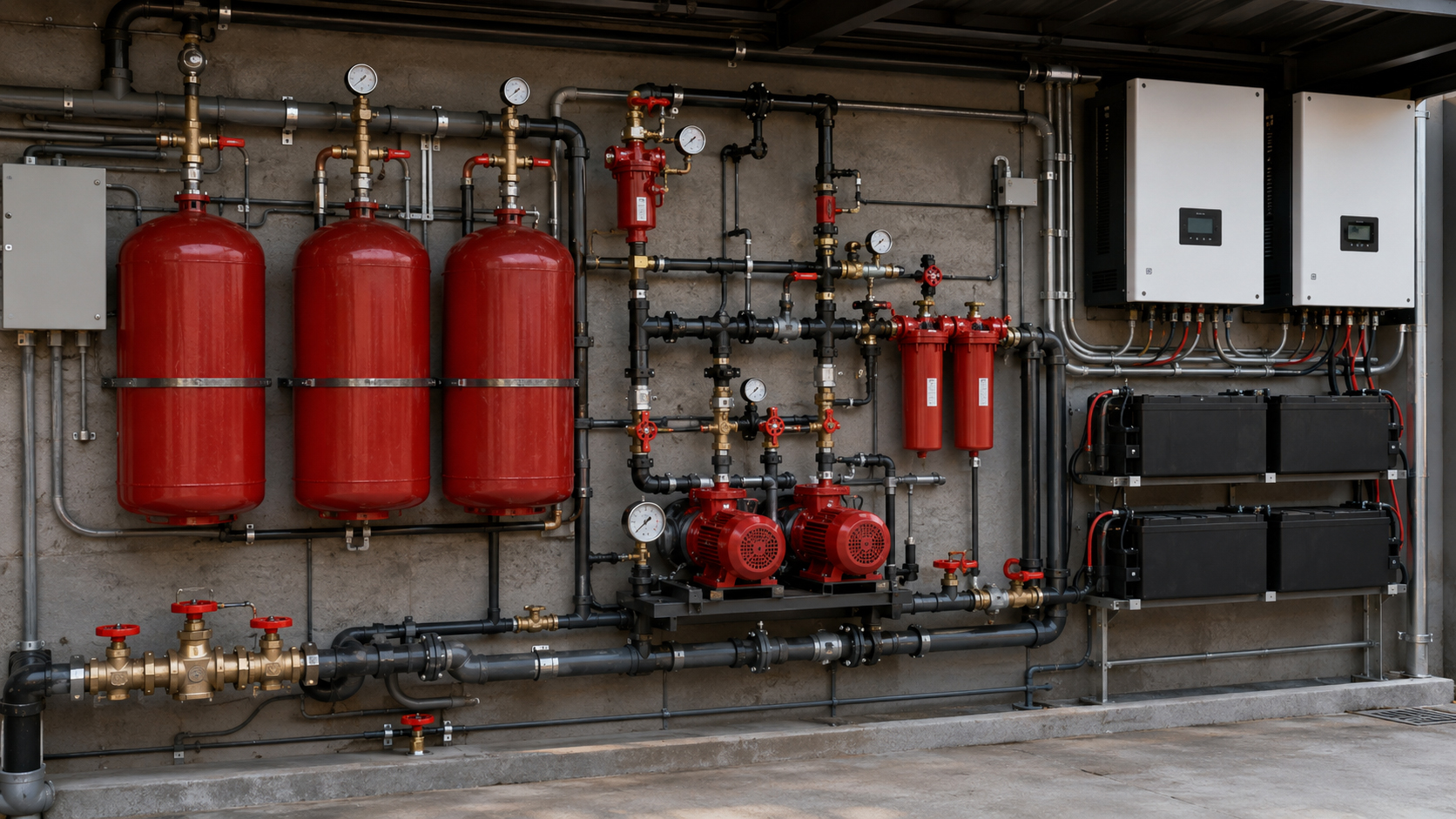
Panel 1: The Pump Boast
Solar Fire Boy points proudly. “This pump says high pressure. We are ready!”
Solar Fire Boy buys “a strong pump” and thinks the problem is solved. Then the Pump Triplets begin arguing about flow, pressure, startup surge, runtime, and who gets blamed when the sprinkler barely reaches the roof.
Solar Fire Boy sees big numbers on the box and assumes victory. Ember Goblin grins from the fence. Pressure Tank Sensei says nothing. Then the Pump Triplets wake up.
Solar Fire Boy points proudly. “This pump says high pressure. We are ready!”
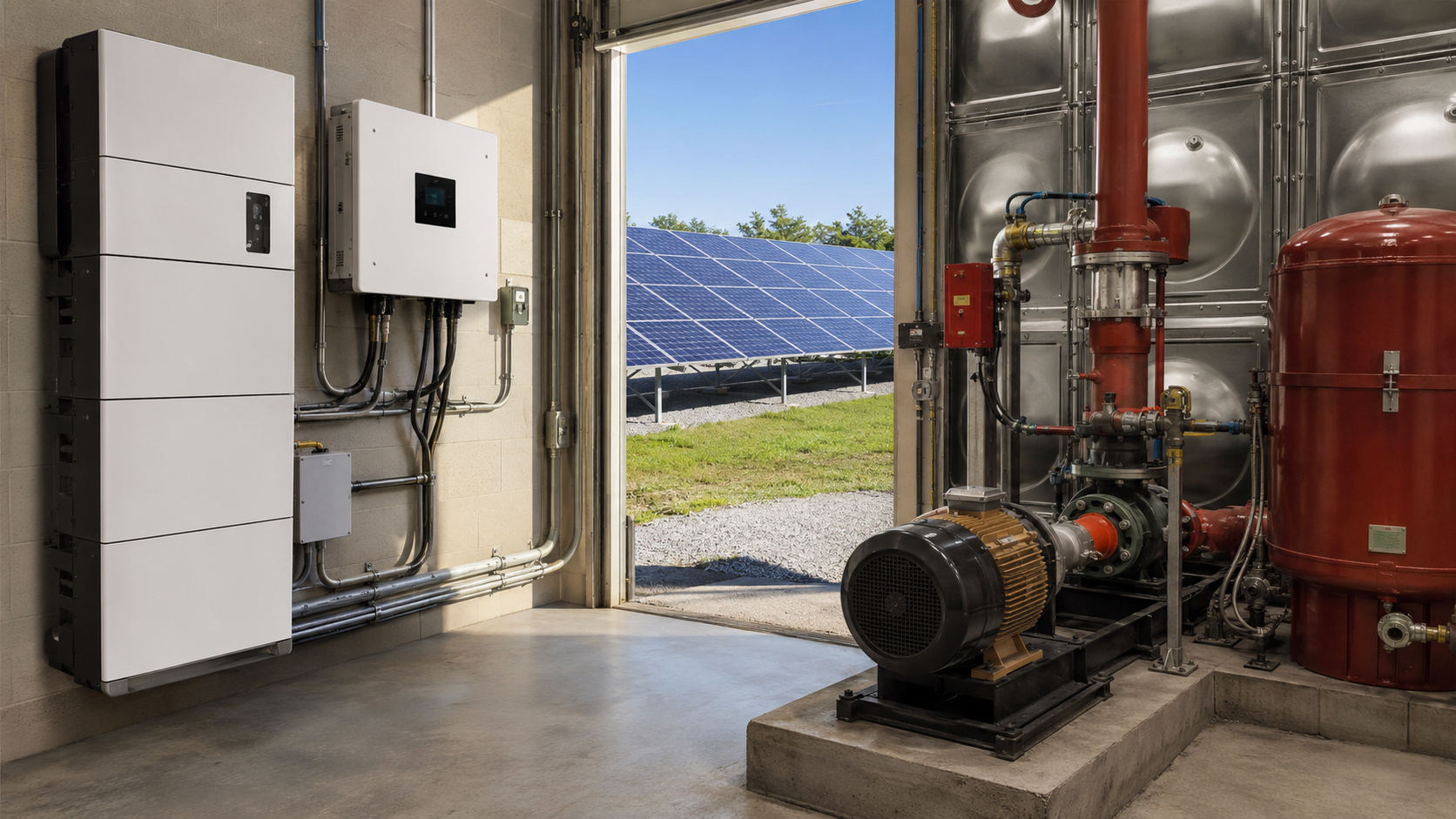
Battery Beast squints at the pump label. “Did anyone ask how hard this thing starts?”
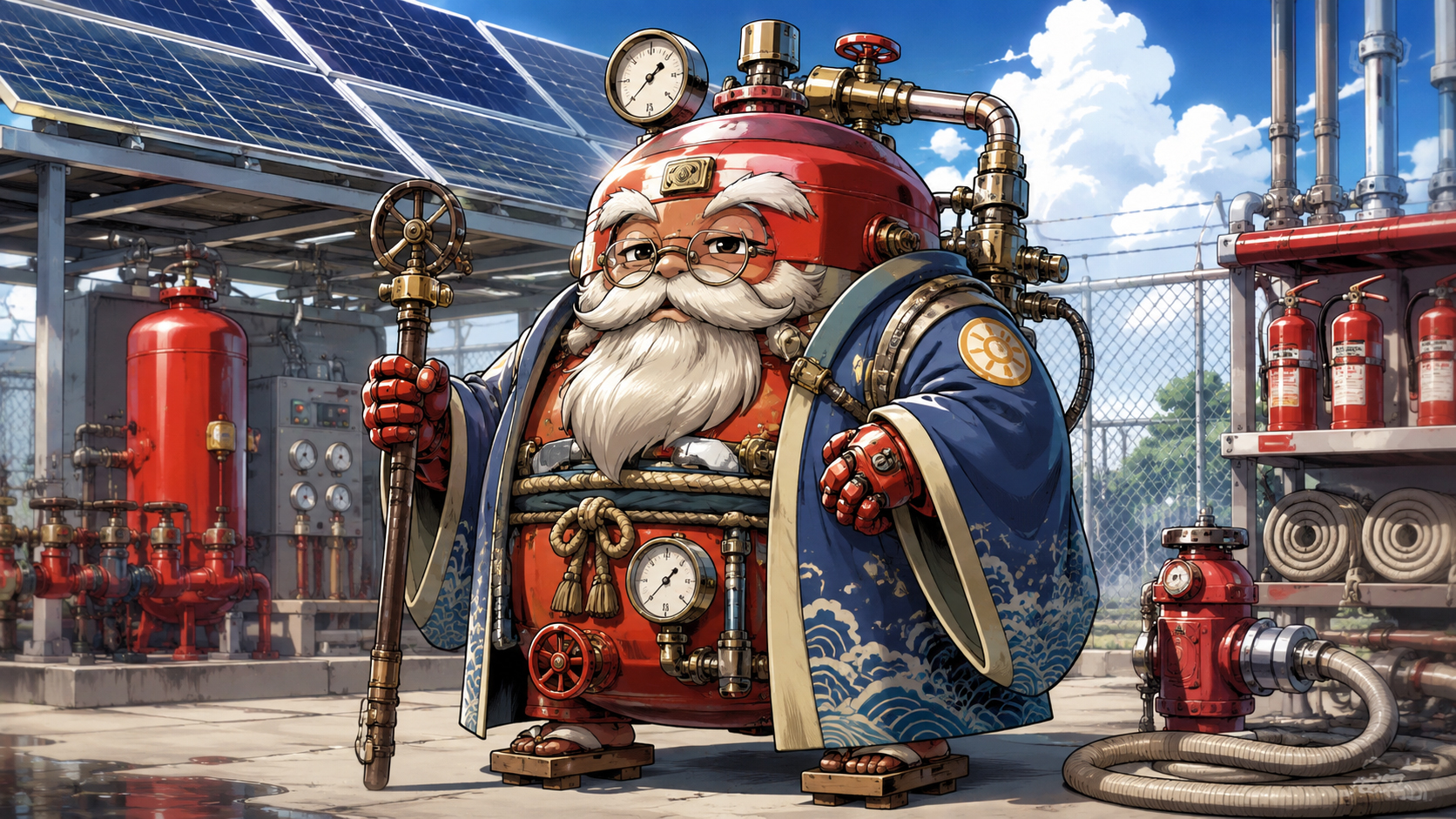
Pressure Tank Sensei taps the gauge. “A pump is not strong. A pump is correct — or incorrect.”
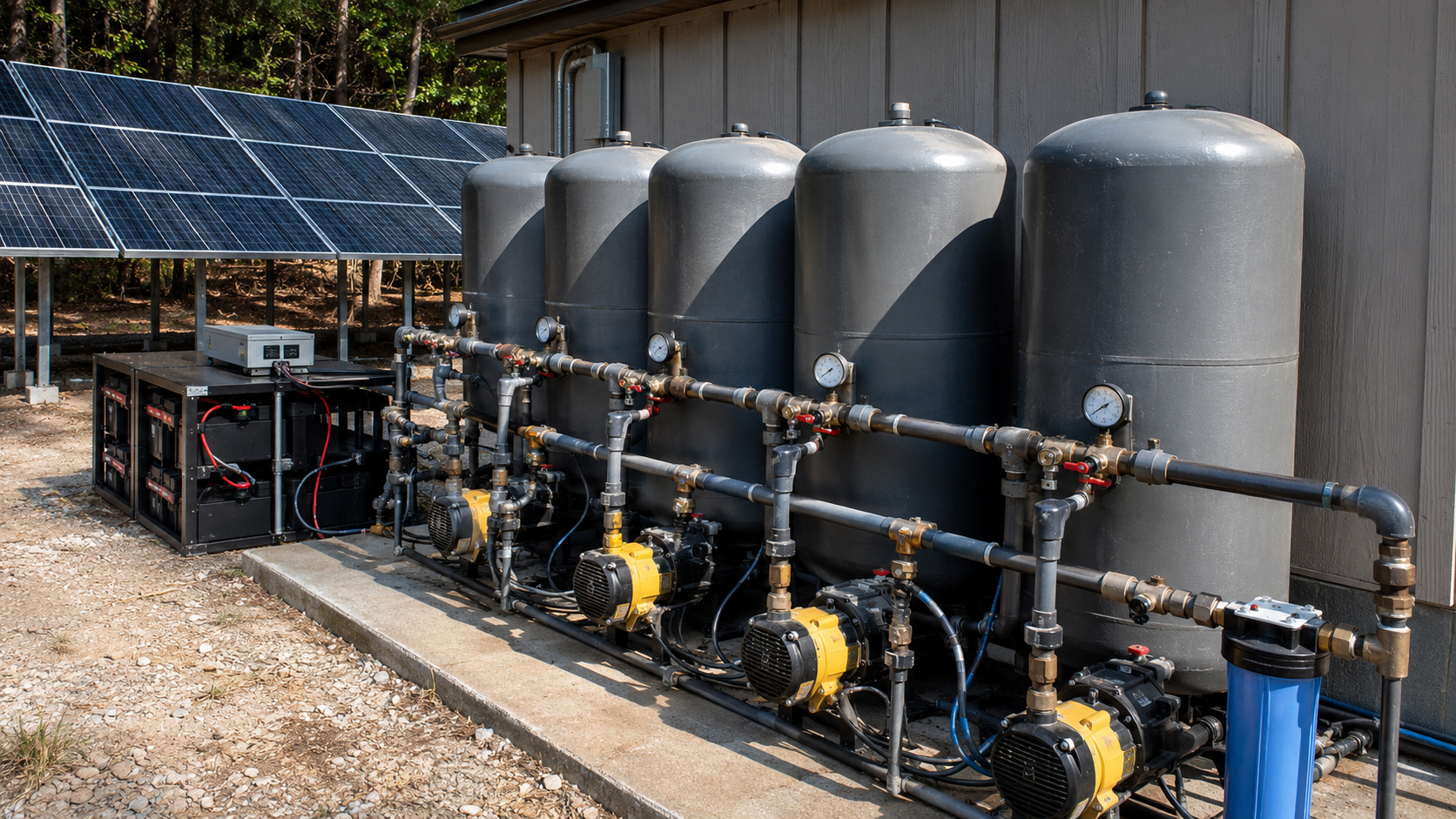
Three tiny pump spirits leap from the equipment wall. Flow wants more gallons per minute. Pressure wants higher PSI. Runtime wants everyone to stop overheating the motor and draining the battery.
Solar Fire Boy realizes the pump is not one question. It is a set of questions: how much water, at what pressure, through what pipe, over what distance, up what elevation, for how long, using what power source?
The pump roars. The gauge jumps. Solar Fire Boy cheers. Then the sprinkler pattern falls short, because the hose is too long, the pipe is too small, the filter is dirty, and the elevation stole the pressure.
Ember Goblin laughs. “You bought pump confidence. You did not buy system performance.” Pressure Tank Sensei nods. It is annoying when the villain is technically correct.
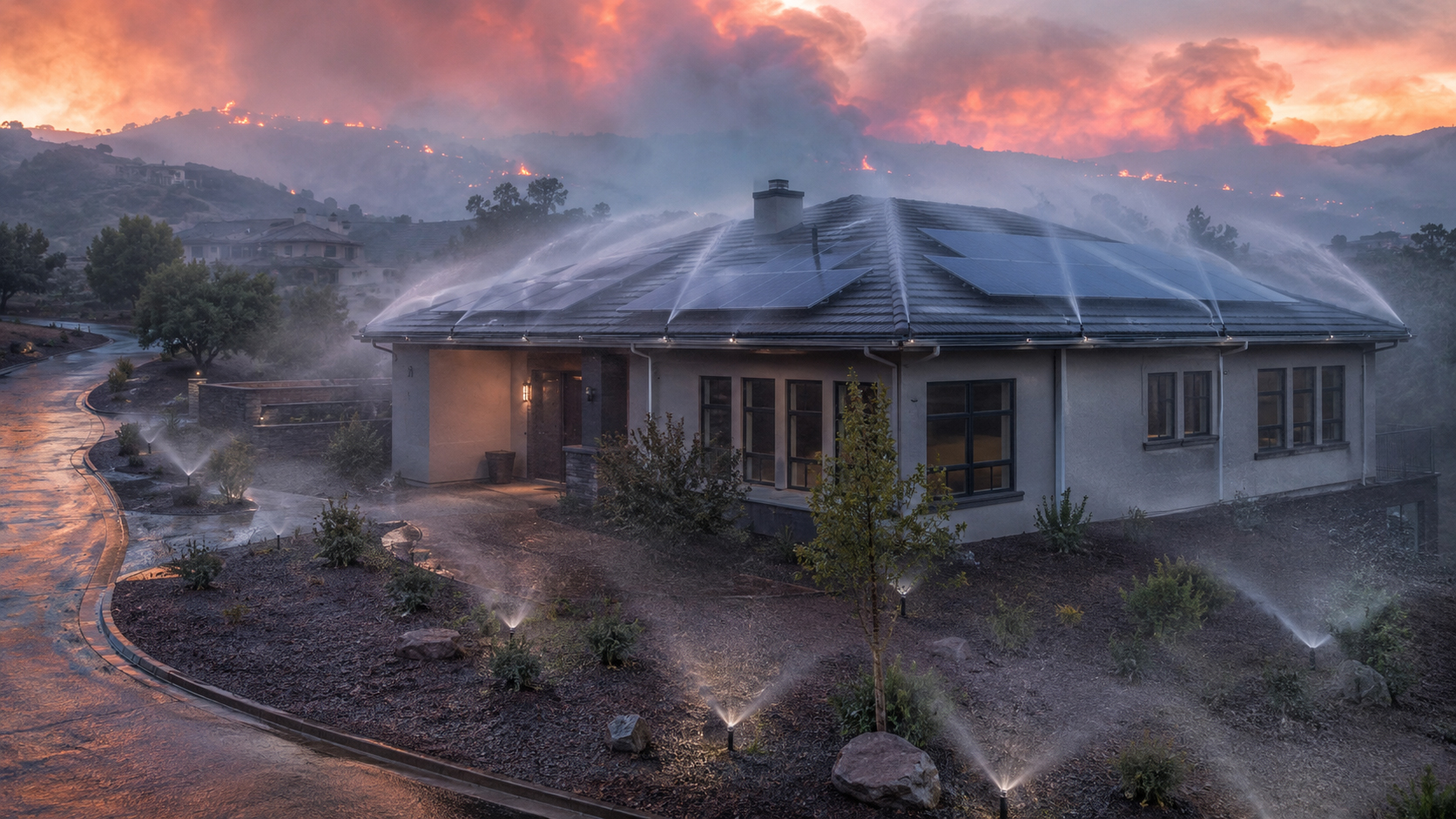
Pressure Tank Sensei makes Solar Fire Boy write the whole water path on a board. No shortcuts. No magic pump thinking.
Decide what the pump must actually do: feed a hose station, recharge pressure tanks, support a sprinkler zone, move pool water, fill a reserve tank, or run a perimeter line.
Account for hose length, pipe size, fittings, elbows, filters, check valves, backflow devices, elevation, nozzle selection, and pressure loss before selecting the pump.
Pump performance changes with pressure and head. The real question is how much water the pump delivers at the actual operating condition, not at a perfect laboratory point.
Pumps can require a high startup surge. The inverter and battery system must handle startup, continuous operation, heat, runtime, and any controls or valves that also need power.
Run the actual water source, actual pump, actual power source, actual hose or sprinkler, and actual outlet. The test must show useful flow and pressure where the water is needed.
Battery Beast explains that pump backup is not just “plug it into the battery.” The pump may start hard, run hot, and draw more power than expected when pressure rises.
The crew checks startup surge, continuous watts, battery reserve, inverter rating, critical-load panel design, transfer safety, disconnects, grounding, wet-location protection, and labels.
The system should start with the required outlet performance, not a pump label.
High pressure on a gauge does not guarantee enough gallons at the sprinkler or hose end.
Hose length, small pipe, elbows, valves, filters, and elevation can consume useful pressure.
A pump may run on a backup system after it starts, but fail if the inverter cannot handle startup demand.
Battery Beast cannot power every house load and still be expected to support emergency pump runtime.
A readiness system needs seasonal testing, filter checks, battery checks, valve checks, and nozzle checks.
The crew shortens the hose path, cleans the filter, checks the nozzle, verifies the battery, labels the critical-load circuit, and tests the outlet again. This time the spray reaches the target.
Pressure Tank Sensei still refuses to smile. “One good test is not a forever guarantee. Write the maintenance schedule.”
In Episode 3, Pool Dragon Reservoir learns that guarding thousands of gallons is not enough. The crew must solve safe suction, filtration, chemistry, backflow protection, and water access.
The Pool Becomes a Reservoir.
The real technical page behind the Pump Triplets.
The Battery Beast lesson in practical form.
Return to the full manga episode guide.