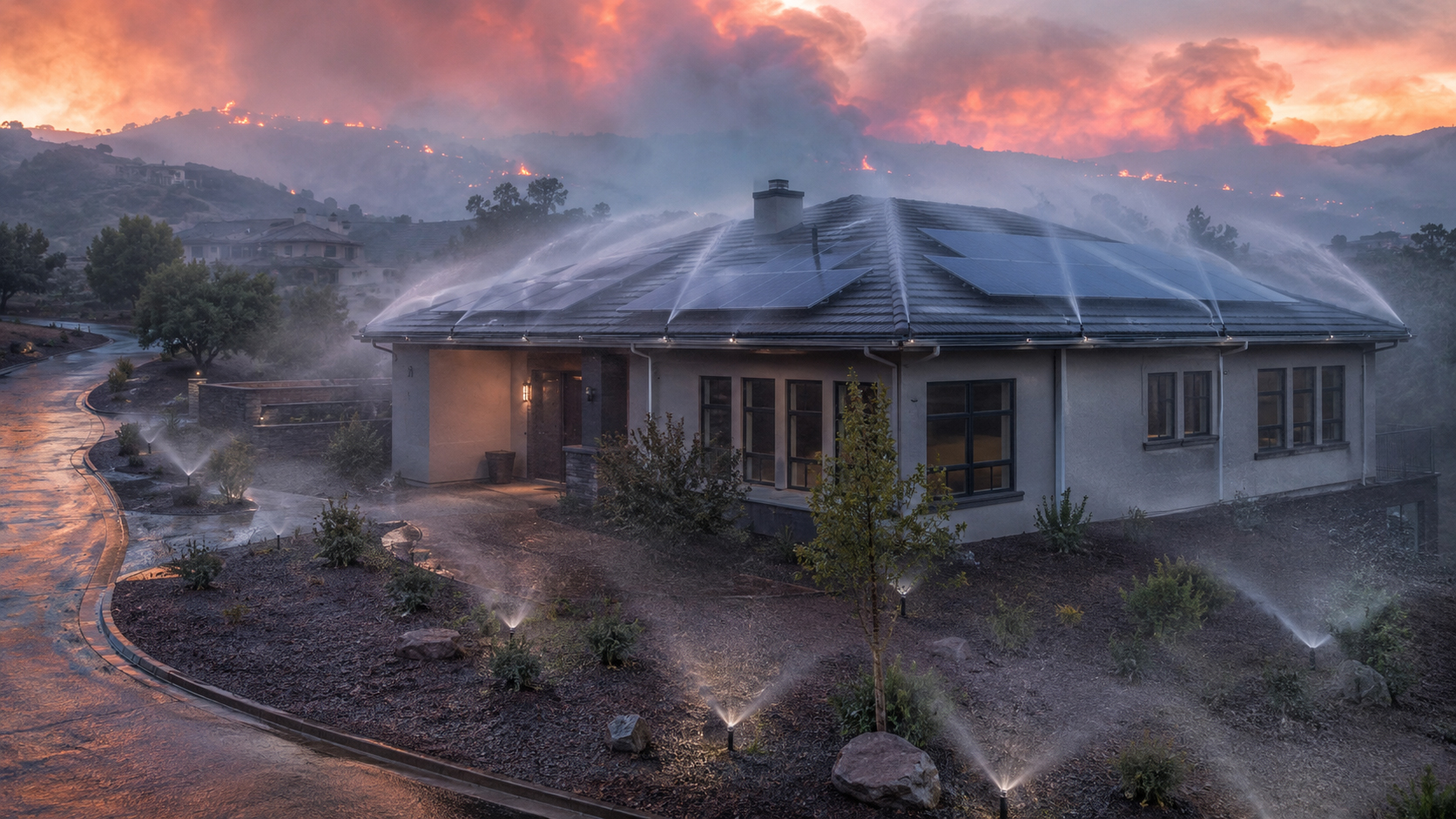
Panel 1: The Heroic Spray
Solar Fire Boy shouts, “Look at that arc!” Pressure Tank Sensei replies, “Now look where it lands.”
The crew finally turns on the sprinkler line. Water arcs into the smoky sky. Solar Fire Boy cheers. Ember Goblin laughs. Pressure Tank Sensei watches the spray drift sideways and says, “A beautiful spray is not the same as useful coverage.”
After cleaning gutters, checking the pool reserve, arguing with pumps, and charging Battery Beast, the crew is ready for the big sprinkler test. The first spray looks impressive. Then the wind arrives.
Solar Fire Boy shouts, “Look at that arc!” Pressure Tank Sensei replies, “Now look where it lands.”
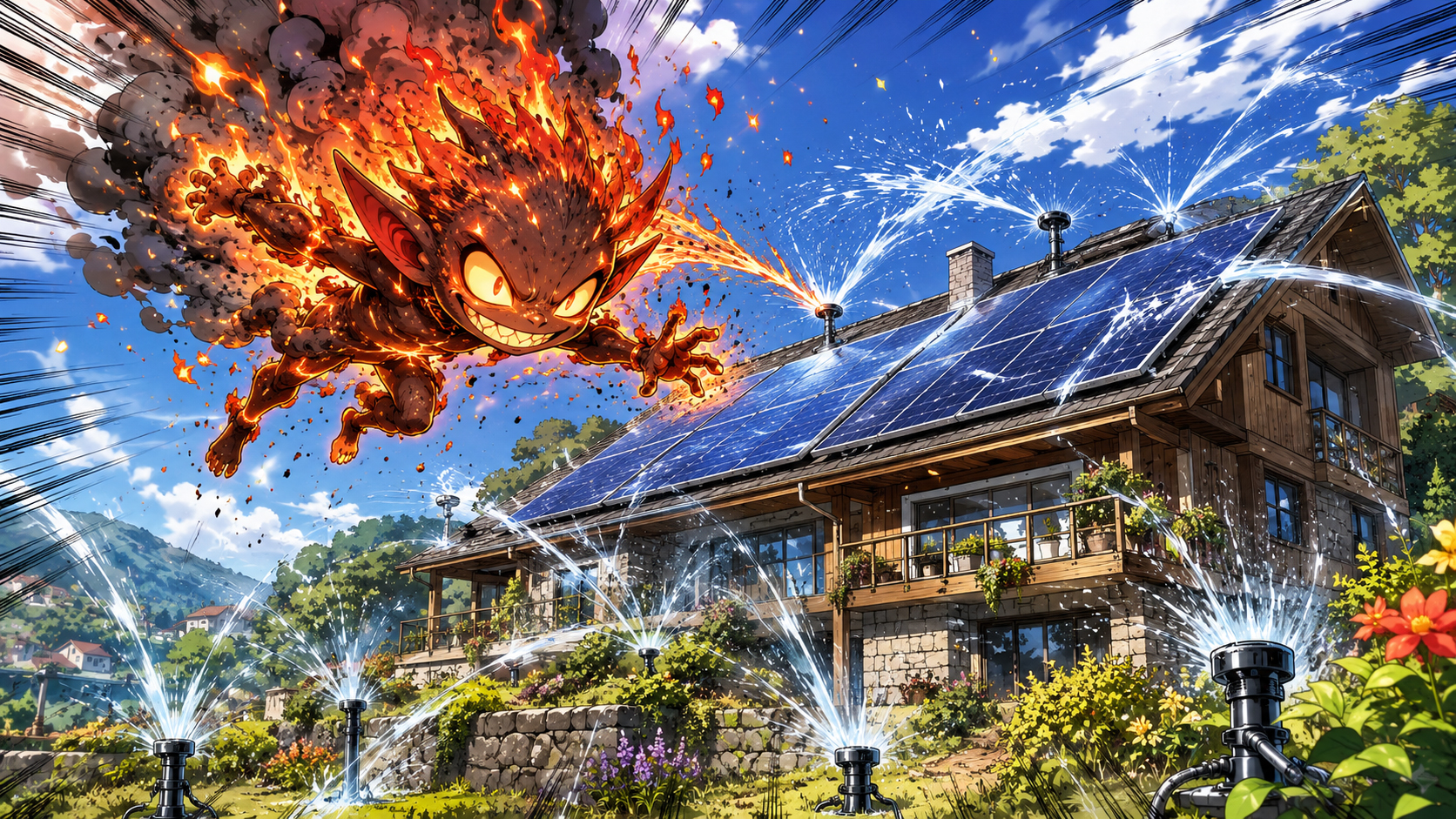
The goblin dances under a dry eave. “Your sprinkler is watering the driveway!”
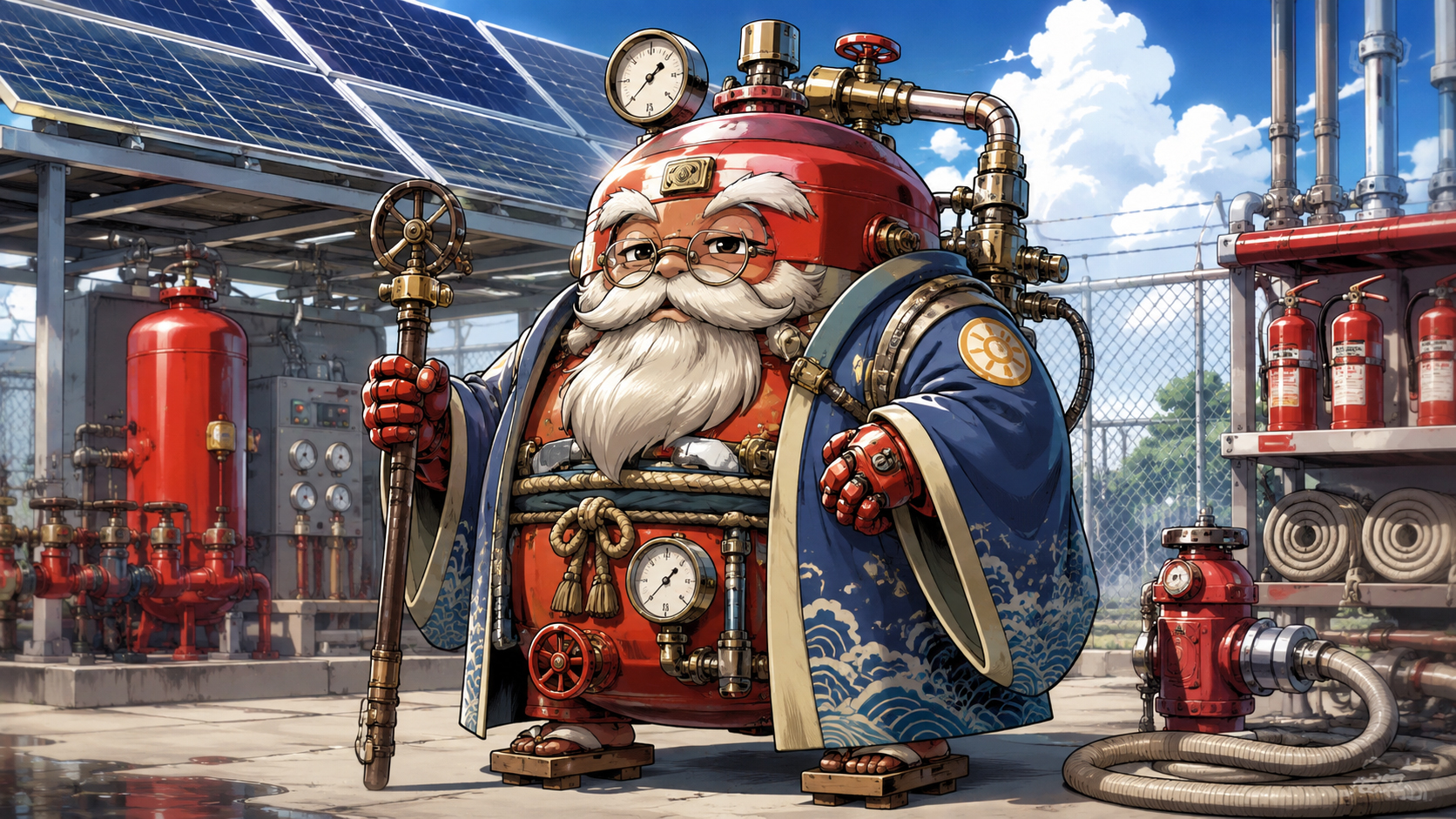
“Coverage is not emotion. Coverage is tested water on the actual target.”
Solar Fire Boy thought a dramatic arc meant the system worked. Pressure Tank Sensei points to the dry roof edge, the under-wetted fence line, the clogged nozzle, and the tank level dropping faster than expected.
A sprinkler concept has to be judged by real coverage, useful pressure, flow duration, nozzle location, wind behavior, water source capacity, maintenance, and backup power.
Wind pushes the water away from the gutter edge. Ember Goblin lands exactly where the spray missed. Battery Beast groans as the pump runs longer. Pool Dragon asks how many gallons are left.
The crew learns that a sprinkler test on a calm day is not enough. Wind direction, slope, roof geometry, nozzle angle, and target surface all change the real result.
Pressure Tank Sensei makes the crew stop cheering and start checking. The sprinkler line must prove itself where the water is supposed to help.
Decide whether the sprinkler is intended to wet roof edge, gutter zone, deck area, fence line, equipment pad, wall exposure, vegetation zone, or hose-station approach.
Pressure at the pump does not prove pressure at the nozzle. Hose length, pipe size, filters, elevation, valves, fittings, and nozzles all affect delivery.
Check where water actually lands. Test wind drift, dry spots, runoff, overspray, clogged nozzles, roof geometry, and whether the intended surfaces are reached.
A sprinkler line may drain a tank or pool faster than expected, especially if multiple zones run together. Readiness requires knowing how long the selected zones can operate.
Nozzles clog, valves stick, hoses crack, pumps age, batteries drain, and wind changes. Test before fire season and leave when authorities say to leave.

Battery Beast reminds the crew that sprinkler runtime is not free. The pump draws power, the water source drains, and the battery must still support the loads that matter.
Solar Fire Boy learns to stop saying “turn everything on.” The better question is: which zones matter, how long can they run, and what must remain available for evacuation and safety?
A dramatic spray pattern can miss the actual risk area and still look impressive.
Water may not land where it landed during a calm test.
Ember Goblin only needs the places the sprinkler misses.
Multiple zones can drain water, reduce pressure, and overload pumps or batteries.
Nozzles clog, filters fill, valves stick, hoses crack, pumps weaken, and batteries age.
A successful sprinkler test is not a reason to stay during evacuation conditions.
The crew adjusts nozzle angles, checks dry spots, cleans filters, tests the pump, confirms battery runtime, stages only selected zones, and writes the evacuation trigger in big letters.
Ember Goblin lands on the roof edge and gets splashed. He tries the fence line and finds it cleared. He tries the gutter and finds no leaves. Pressure Tank Sensei finally gives one tiny nod.
Water must move. Pumps must be sized. Pools must be accessed safely. Embers find weak details. Sprinklers must be tested where they matter. And evacuation always comes first.
Return to the manga episode guide.
The full technical concept page behind this episode.
Why water must support clearing, hardening, and ember-risk reduction.
The final rule: readiness does not replace leaving safely.