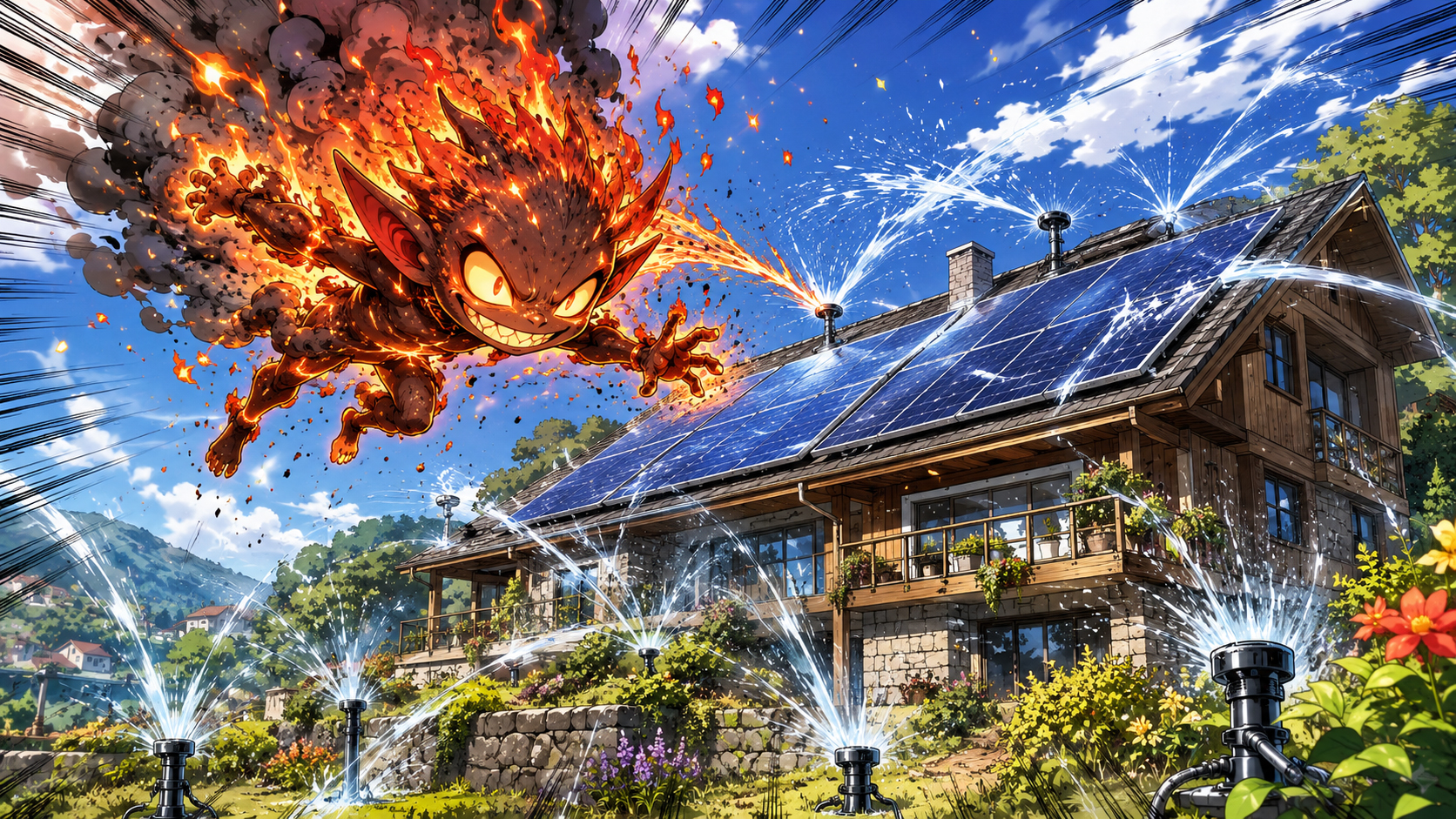
Panel 1: Ember Goblin Takes Flight
“I do not need the whole fire,” he cackles. “I only need one dry landing spot.”
Ember Goblin does not wait for the wall of flame. He rides the wind, skips over the road, lands in dry leaves, laughs at dirty gutters, and teaches the crew that the smallest spark can find the weakest place.
Solar Fire Boy watches the distant smoke and thinks there is still time. Then a tiny ember with goggles, wings, and terrible manners buzzes over the fence.
“I do not need the whole fire,” he cackles. “I only need one dry landing spot.”
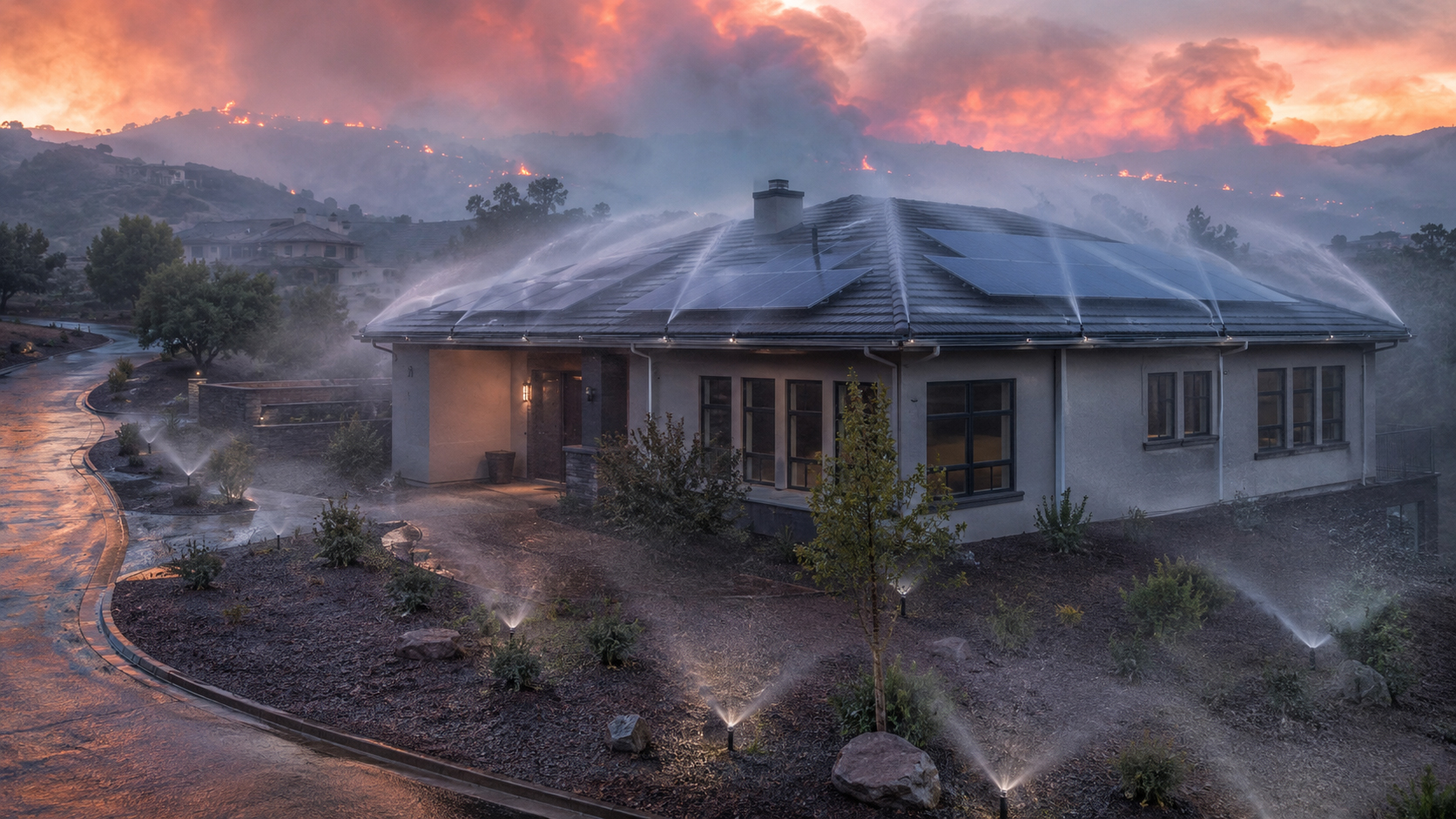
“We have water!” he says. Pressure Tank Sensei replies, “Good. Now show me the gutters.”
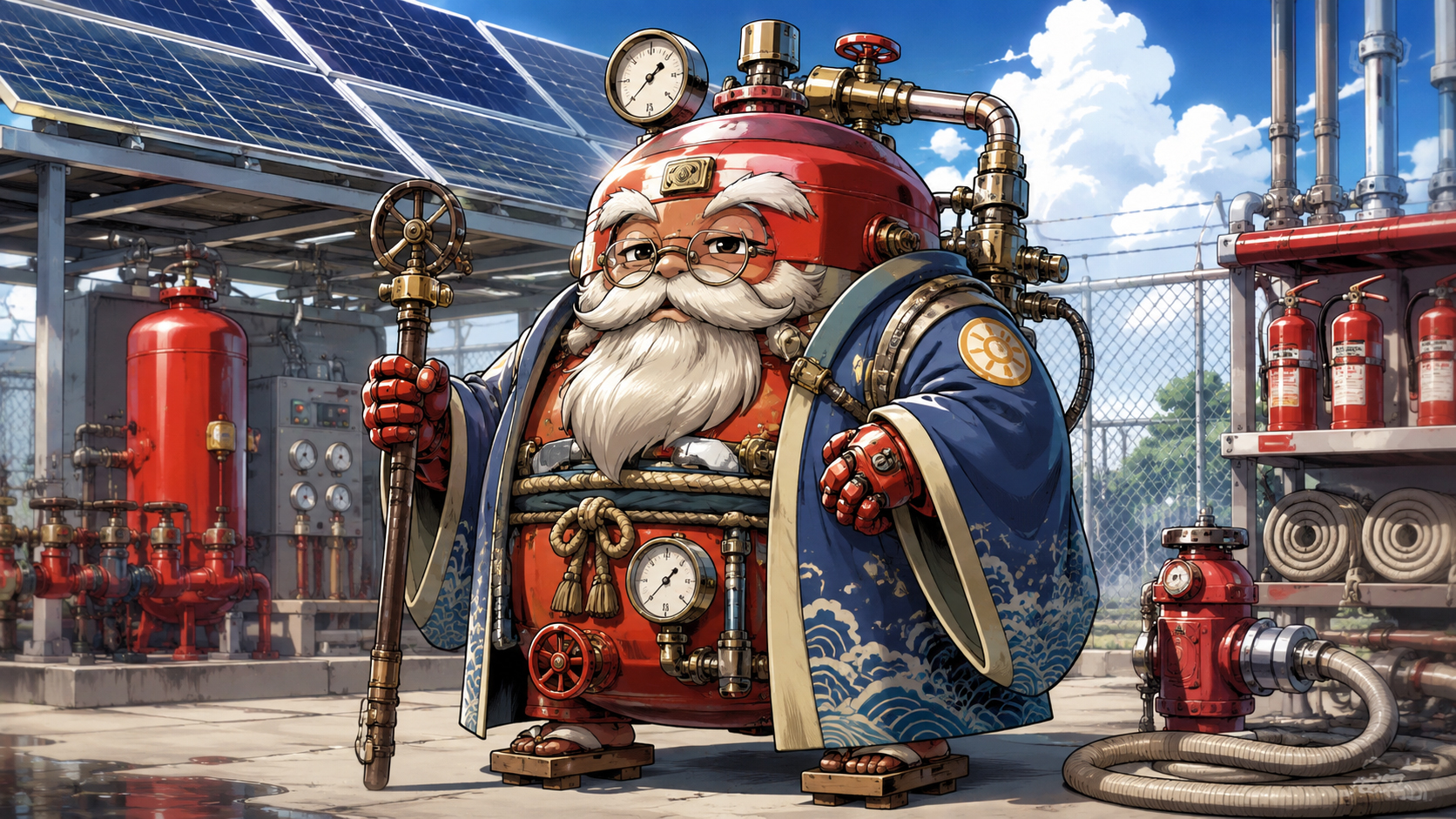
“The ember does not attack the strongest wall. It searches for the forgotten detail.”
The crew prepared water, pumps, pressure, and battery backup. But Ember Goblin is not impressed. He lands in dry leaves, peeks into a gutter, taps a wooden fence, checks the deck edge, and grins at the vent screen.
Water readiness can support defensible space, but it cannot replace it. A wetting concept is weaker when fuel remains against the structure.
He zips around the property like a malicious drone, taking notes on every weak spot: leaf pile under the deck, old cardboard in the side yard, pine needles in the gutter, a wood gate touching the house, and dry weeds near the equipment pad.
Solar Fire Boy wants to turn on all the sprinklers. Sensei stops him. “Water may help. But first, remove what should never be burning there.”
Pressure Tank Sensei gives Solar Fire Boy the ember-zone checklist. The checklist starts with fuel reduction, not equipment pride.
Remove leaves, needles, mulch, cardboard, wood piles, dry weeds, furniture cushions, and combustible materials from the areas closest to the structure according to local defensible-space guidance.
Ember Goblin loves hidden fuel. Gutters, roof edges, deck cracks, and corners can collect dry material that water may not reach effectively during wind-driven conditions.
Vents, eaves, fences, gates, trellises, patio covers, and attached wood elements can create paths for ember ignition or fire spread. Water is support, not the whole solution.
Hose stations, sprinkler concepts, roof-edge wetting, or equipment-pad water may support the plan only when flow, pressure, coverage, and duration are tested and reviewed.
Defensible-space work and water testing happen before the emergency. During evacuation conditions, the correct move is to leave, not to fight Ember Goblin personally.
The crew cleans the gutters, moves the wood pile, clears the deck, checks the vents, and removes dry material near the fence. Only then does the sprinkler test matter.
The spray pattern is checked at the actual target. Wind drift is noted. The water source duration is measured. The pump and battery are tested together. Ember Goblin hates boring verification.
A property can be threatened by embers before the main fire front arrives.
Sprinklers and hoses should not be expected to compensate for dry leaves, mulch, and combustible clutter.
Gutters, roof valleys, deck gaps, vent areas, fence connections, and corners can collect ignition material.
Water spray can miss the target when wind changes direction or speed.
The middle of a fire event is not the time to clean gutters, drag hoses, or troubleshoot valves.
Ember-zone preparation is done early. Evacuation instructions still control.
Solar Fire Boy learns the sequence: clear fuel, harden weak points, prepare water, test pump power, verify sprinkler coverage, label valves, and set the evacuation trigger.
Ember Goblin flies toward the clean gutter, finds nothing, and screams: “Who removed my tiny kingdom of dry leaves?”
In Episode 5, the team tests a dramatic sprinkler pattern and learns that coverage, pressure loss, wind drift, limited gallons, and maintenance decide whether water reaches the target.
The Sprinkler Line Stand.
The full concept page behind the ember-zone lesson.
Coverage, pressure, wind, duration, and testing.
Return to the full manga episode guide.